

Best Home Lifts for Split-Level Homes
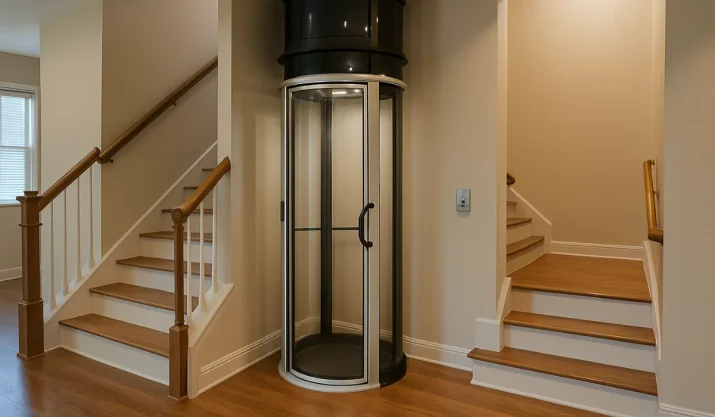
Table of Contents
Living in a split-level house has its benefits. But it can pose serious challenges for those with limited mobility. Navigating a split-level home can be especially challenging for seniors or other loved ones with disabilities.
The short staircases between partial floors may seem harmless, but a single misstep can lead to a dangerous fall. Installing a Home Lift is an innovative, practical solution that can provide both safety and convenience for everyone in your home.
In this article, we’ll walk you through the best types of residential home lifts for split-level homes, how they work, and what to expect during installation. We’ll also guide you on how to choose the right one for your needs, lifestyle, and budget.
Key Takeaways:
- Shaftless and pneumatic home lifts are the most space-efficient options for split-level homes or multi-level homes. These home lift options require minimal construction and do not require an home lift shaft.
- Home lift alternatives, such as stair lifts and vertical platform lifts, are cost-effective and take up less space compared to full home lifts. These options are ideal for users who can or cannot transfer out of a wheelchair or use any mobility aids.
- Choose an home lift model that offers strong safety features if you are installing a Home Lift in your home for seniors or users with limited mobility, in case of an emergency.
- Home Lift companies that specialize in installing home lift systems in multi-level homes and split-level homes can offer customizable, code-compliant installation.
Why split-level homes need special home lift solutions
The primary difference between split-level homes and traditional two-story houses lies in the design of their staircases and floor levels. Split-levels usually have two or more short staircases that connect to partial living areas. On the other hand, a two-story home features full-level separation.
The layout of split-levels creates offset living spaces that require flexible home lift solutions for better accessibility. However, it also poses several challenges, including:
- Limited vertical space between landings
- Narrow stairwells and floor plans
- Difficulty retrofitting without disrupting daily life
Due to these constraints, selecting a compact and adaptable Home Lift is crucial. The right lift will add both convenience and safety for residents and guests alike.
Best types of Home Lifts for split-level homes
Let’s examine the most popular and functional home lift options that work well in split-level layouts.
1. Shaftless Home Lifts
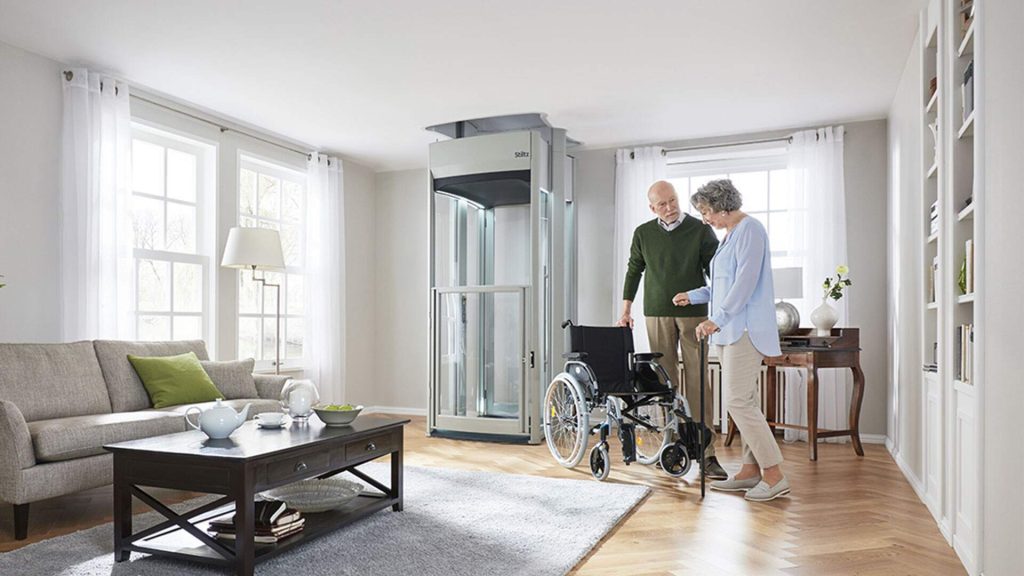
Shaftless home lifts, such as those manufactured by Stiltz, are an excellent option for homes with split levels. This type of home lift doesn’t need a separate shaft or machine room, making them easier to install in existing spaces, unlike traditional home lifts.
These compact lifts can travel between two levels and are often placed in unused areas such as hallways, corners, or closets. The compact size of shaftless home lifts makes them particularly suitable for homes with limited floor space or short staircases.
Best for:
Homes with only a second floor or limited space
Pros:
- Less maintenance and fewer issues over time
- Takes less room
- Easier to install than traditional home lifts
- Lower construction costs
Cons:
- Typically limited to two floors
- Has a lightweight capacity compared to other residential home lifts
- May not be able to accommodate wheelchairs or large mobility devices, depending on the model
2. Pneumatic vacuum home lifts
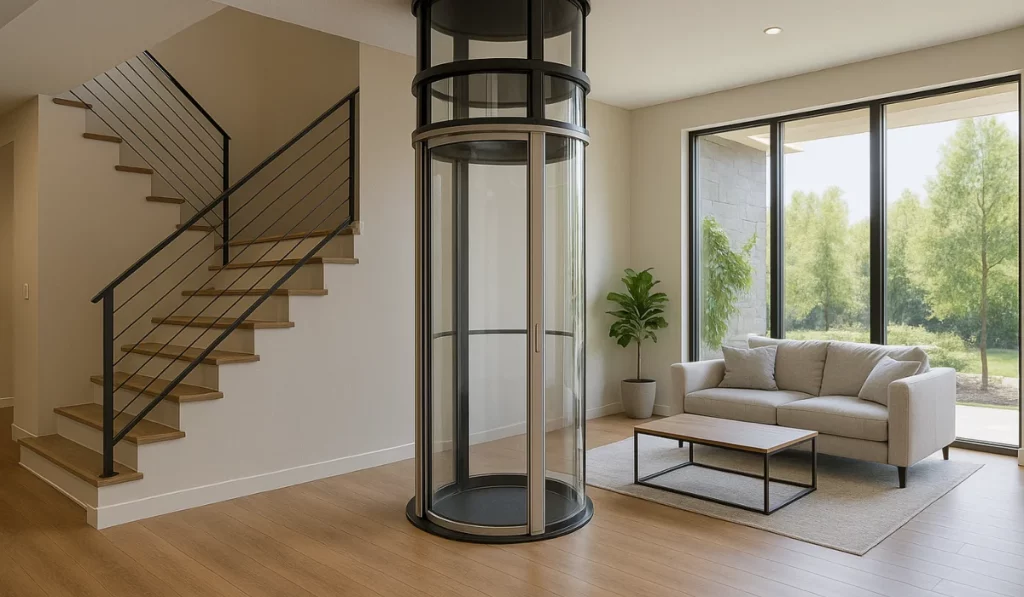
Pneumatic vacuum home lifts utilize air pressure to lift and lower the cab, providing a sleek and modern solution for split-level or multi-story homes. This type of residential home lift does not rely on cables or pulleys. It also requires less structural work and can often be installed with minimal home modifications.
Pneumatic home lifts not only offer convenience. It can also increase the visual appeal of your home.
Best for:
The quietest ride
Pros:
- Smooth, quiet ride
- Panoramic views through transparent cab walls
- Compact design, small footprint
- Easier to retrofit in existing homes
Cons:
- Maintenance issues are more common
- Higher upfront cost than traditional options
- Its weight capacity may not be able to accommodate wheelchairs or heavy items
- Fewer customization options in terms of materials and finishes
3. Hydraulic or cable-driven residential home lifts
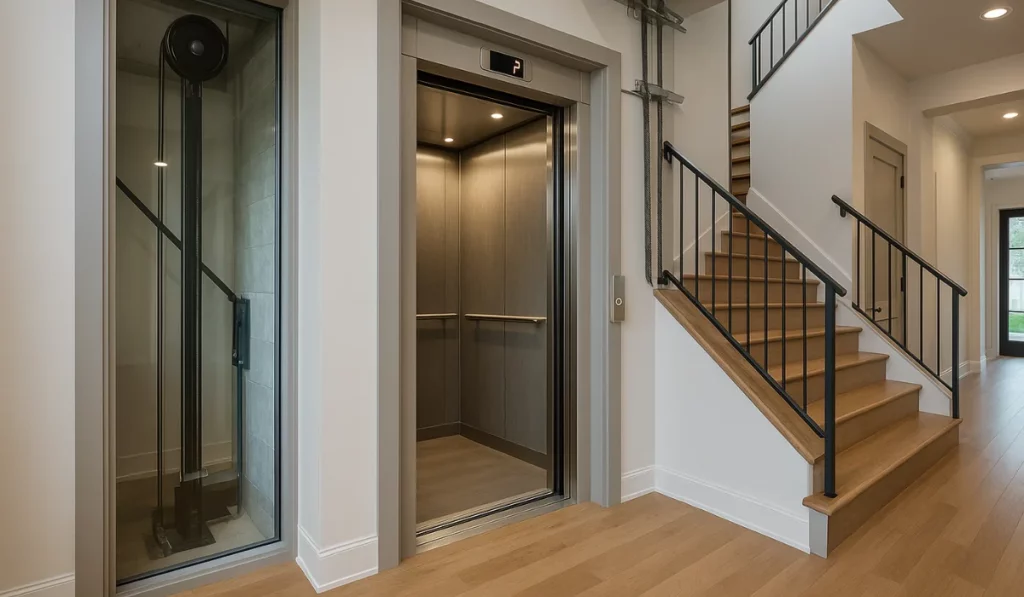
The most commonly used residential lifts are hydraulic or cable-driven home lifts. These systems are larger and more powerful, making them better suited for a new home or full remodels.
While they require more space, including a separate machine room, hydraulic home lifts are the more durable option. Plus, there is more flexibility in design options for this type of home lift.
This type of home lift offers powerful performance and customization, but is best suited for homes where space and remodeling plans allow for more extensive installation.
Best for: New home builds or major home renovations where space and time allow.
Pros:
- Hydraulic home lifts can carry heavy weights, allowing them to accommodate wheelchairs, mobility aids, or multiple passengers.
- Strong and reliable performance over time.
- Wide range of design and cabin layout options.
Cons:
- Most expensive maintenance
- Requires more space for the home lift shaft and machine room.
- Longer and more complex installation process.
- Higher long-term maintenance needs compared to shaftless or pneumatic home lift systems.
Alternatives: Stair lifts and vertical platform lifts
If installing a whole-Home Lift at your home is not doable at the moment, there are still home accessibility options you can consider:
Stair lifts
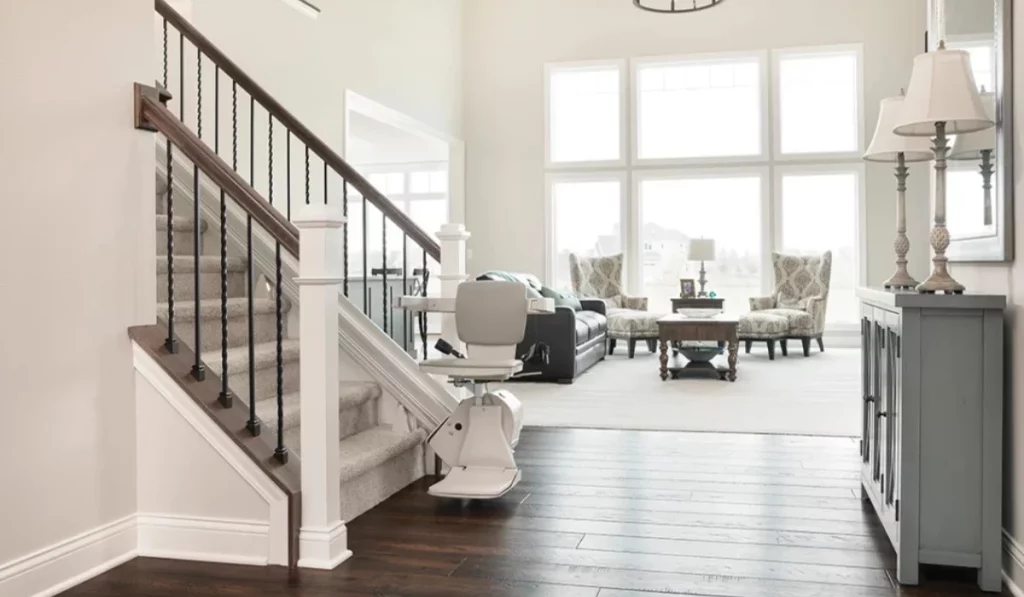
A stair lift, also known as a chair lift or stair chair, is a motorized seat that travels along a rail mounted to your stairs. It’s an excellent option for navigating short flights of stairs, especially in split-level homes.
Stair lifts are a simple and effective solution for improving daily accessibility on partial staircases.
Best for: Individuals with limited mobility who are still capable of transferring independently.
Pros:
- Budget-friendly, compared to Home Lifts.
- Fast and easy to install with minimal remodeling.
- There are indoor and outdoor stair chair models available.
Cons:
- Not ideal for users who need assistance transferring in and out of the seat.
- Can take up stair space and limit access for others.
- Only suitable for seated use.
Vertical platform lifts
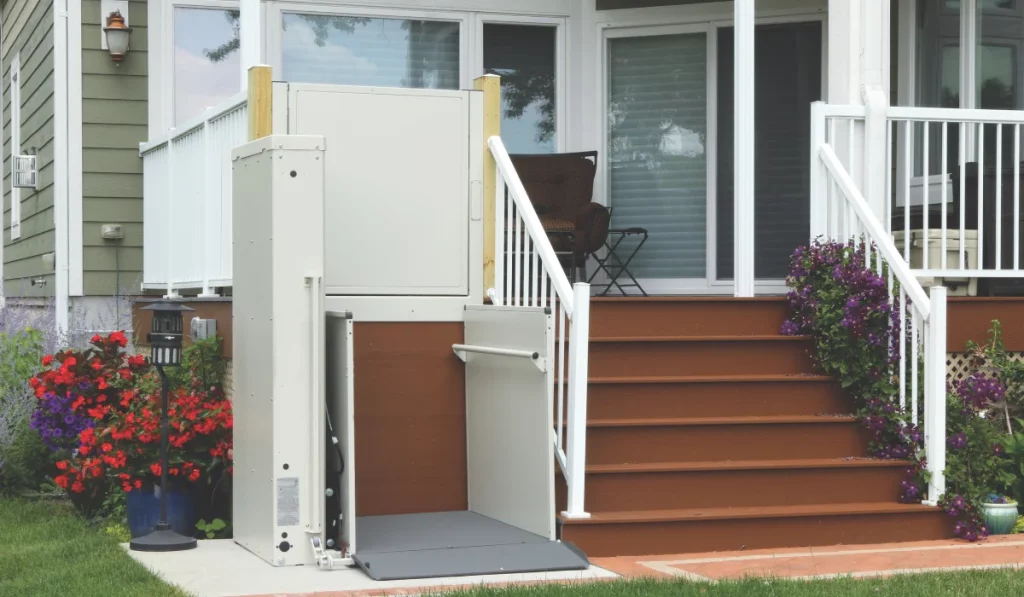
Vertical platform lifts are a great option if you or a loved one uses a wheelchair and needs assistance moving between levels in your split-level home. This type of lift works like a mini home lift and is ideal for users who cannot transfer from their mobility aid.
They are a practical solution when full home lifts are unnecessary, but stair lifts won’t meet accessibility needs.
Best for: Individuals who require a stable seating surface or use a chair, particularly for accessing decks, garages, or short indoor level changes.
Pros:
- Fully wheelchair-accessible.
- Easier to install than a full home lift.
- Suitable for indoor and outdoor use.
Cons:
- Takes up more space than a chair lift.
- May require a small landing or enclosure for safety.
- Not ideal for long vertical travel.
Key considerations when choosing a Home Lift
A Home Lift is a significant investment for your home. Before choosing, here are some essential things you should keep in mind to select the best possible option:
Safety features
One of the primary features you should look for when considering a Home Lift is its safety features. Some of the things you should check for include:
- Emergency stop buttons
- Backup batteries for power outages
- Door interlocks
- Smooth start/stop motion
Safety is your top priority, especially when considering a home lift for wheelchair users and older adults who are aging in place.
Customization options
Home Lift companies offer a wide range of Home Lift options to suit your needs and complement your home’s style. Various finishes, cab sizes, and materials are available for you to choose from.
You can personalize the look to match your decor, choose compact designs for tight spaces, or select features that support specific medical or mobility requirements, such as wider doors or fold-down seats.
Installation requirements
Home Lift installation depends on several factors, including your:
- Floor-to-ceiling height
- Wall structure
- Availability of space for a machine room (if needed)
Partnering with an experienced home lift company helps ensure a proper fit and that everything meets your local building codes and safety standards.
Cost and value
Prices for Home Lifts vary. Shaftless and pneumatic home lifts tend to be more cost-effective than traditional shaft models in split-level homes. However, the lift’s cost cannot dictate its long-term value. Remember to consider its ease of use, quality of life, and home resale potential before choosing the home lift system for your home.
Why California Mobility?
At California Mobility, we can help you transform your split-level home into a haven with the addition of Home Lifts, stair lifts, and wheelchair lifts. We appreciate Californian architecture as much as you do.
We want to provide you with mobility solutions that won’t disrupt your home’s aesthetic. You can count on us to deliver home accessibility that combines style and safety.
You’re welcome to visit a local showroom to see the different home lift models in person or schedule a home consultation to receive personalized advice tailored to your home’s layout. Contact us today for a free quote!