

What Is A Shaftless Home Lift? Pros, Cons, Costs, And Best-Fit Homes
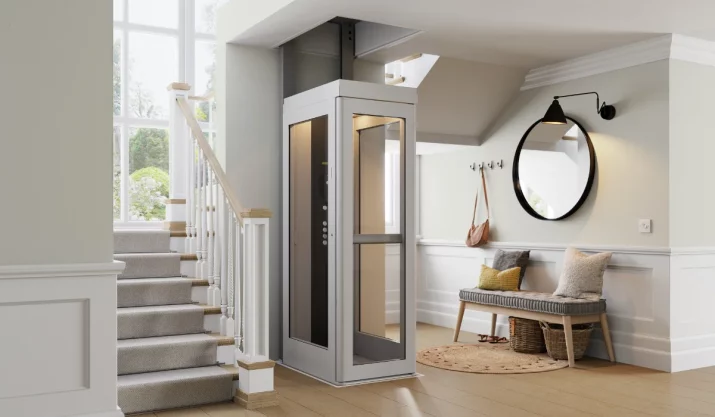
Table of Contents
Stairs can become harder to use as mobility changes. For many homeowners, a stair lift helps at first but may not support long-term needs. When carrying items, using a wheelchair, or planning to stay in your home long term, stairs can feel limiting.
A shaftless Home Lift offers a compact, space-saving way to move between floors. Unlike a traditional home lift, it does not need a full shaft or machine room. This design makes it a practical option for existing homes with limited space.
This article explains what a shaftless Home Lift is, how it works, typical costs, and which homes are a good fit. It also compares this option to a platform lift, wheelchair lift, pneumatic vacuum home lifts, and other home lift systems.
Key Takeaways:
- A shaftless Home Lift uses a compact design with a small footprint.
- It works well for retrofitting an existing home with minimal disruption.
- Costs are often lower than those of a traditional Home Lift.
- Professional home lift installation supports safe and reliable operation.
How A Shaftless Home Lift Works
A shaftless Home Lift moves along a guide rail rather than within a full home lift shaftway. The cab travels through a simple floor opening that closes when the home lift moves to another level. There is no separate shaft built around the home lift.
Many models use battery operation or include a battery backup system. This feature allows the home lift to lower safely during a power outage. Standard safety features often include interlocks, grab bars, handrails, and emergency controls. Some designs also include glass panels that fit well in a modern home.
If you are unsure whether your home layout can support this system, a professional installer can review your space and design. This review helps explain the installation process before work begins.
Pros And Cons Of A Shaftless Home Lift
Before choosing a shaftless Home Lift, consider both the benefits and potential trade-offs side by side.
| Pros | Cons |
|---|---|
| Uses a small footprint that fits into many homes | Lower weight capacity compared to a heavy-duty traditional home lift |
| Does not require a whole home lift shaft or a separate machine room | May not fit larger wheelchairs or more than one rider |
| Works well when a chair lift no longer provides enough support | Some homes need structural changes around the floor opening |
| Supports wheelchair access in multi-level homes | Not ideal for homes needing high-capacity or frequent multi-user travel |
| Often costs less than a full residential home lift | Limited customization compared to larger home lift systems |
At California Mobility, we help homeowners review these pros and cons side by side. If a shaftless Home Lift is not the best fit, we can also explain when a platform lift or wheelchair lift may be a better option for your home and mobility needs.
Shaftless Home Lift Cost And Installation
The cost of a shaftless Home Lift is often lower than that of a traditional home lift. The lower price is due to reduced construction and the absence of a machine room. Final pricing depends on travel height, finishes, safety features, and whether retrofitting is required.
Even with a simpler design, installation still requires trained professionals. Electrical work, guide rail installation, and safety testing must comply with California building codes and ADA standards. Certified professionals also test the battery backup systems during the final inspection.
Our team manages the entire process, which helps reduce delays and unexpected issues.
Best-Fit Homes For Shaftless Home Lifts
A shaftless Home Lift is best suited for two-story homes with limited space. Modern layouts, condos, and townhomes often work well. It also suits existing homes where owners want less disruption during installation.
This type of home lift may not replace a stair lift for short-term use or a full residential home lift for higher weight limits. Comparing options like a home lift, platform lift, or wheelchair lift helps identify the right solution.
Choosing The Right Shaftless Home Lift In California
Selecting a shaftless Home Lift comes down to finding a solution that fits your home layout and supports how you move through your space each day. A clear plan and expert input can help avoid surprises during installation and after the system is in use.
At California Mobility, we provide in-home evaluations to help homeowners understand their options.
Contact us today to schedule a consultation and get a clear path forward.