

Grants for People With Disabilities Available to Californians Beyond Home Repairs

Table of Contents
- How Grants for People With Disabilities Work in California
- Assistive Technology and Mobility Equipment Funding
- Vehicle Modifications, Education, and Job Training
- Medi-Cal Waivers, Independent Living Centers, and Nonprofit Assistance
- Home Accessibility Grants and Other Ways to Pay
- How to Search, Qualify, and Apply for Grants for People With Disabilities
- Finding the Right Disability Support for Your California Home
- Grants for People With Disabilities: FAQs
Grants for people with disabilities in California can help with more than home repairs. Depending on your needs and eligibility, funding or services may be available for assistive technology, mobility equipment, vehicle modifications, education, job training, medical support, and home accessibility. The challenge is that not all assistance comes as a traditional grant. Find out where Californians can look for help, how major programs differ, what they may cover, and how to prepare before applying.
Key Takeaways
- Disability funding in California can come through grants, Medi-Cal programs, vocational rehabilitation, veterans benefits, independent living services, and nonprofit organizations.
- Assistive technology, mobility equipment, vehicle modifications, education, job training, and home accessibility often follow different approval and eligibility rules.
- Home upgrades such as wheelchair ramps and stair lifts are one part of a broader support plan that may also include equipment, transportation, employment services, and community-based care.
How Grants for People With Disabilities Work in California
Searching for disability grants in California can be confusing because many useful programs aren’t technically grants. Some authorize equipment or services. Others pay approved providers, fund training, or help with costs connected to health care, employment, or independent living.
The most useful starting point is the expense itself. Once you know whether you need a wheelchair, communication device, vehicle modification, training program, or home accessibility upgrade, you can focus on the agencies that handle that type of request.
| Type of Assistance | How It Usually Works | Examples |
| Direct grant | Money is awarded for an approved expense | Education, equipment, accessibility projects |
| Health coverage | An eligible item or service is authorized | Medical equipment, certain support services |
| Vocational rehabilitation | Services support an employment objective | Training, technology, transportation |
| Veterans benefit | Assistance follows federal eligibility rules | Adaptive vehicles, housing modifications |
| Nonprofit assistance | Funding follows the organization’s mission | Equipment, transportation, accessibility |
| Equipment loan or reuse | Devices are borrowed or redistributed | Assistive technology, mobility devices |
Why the Funding Type Matters
The application process changes with the program. A nonprofit may ask about income, diagnosis, or location. Medi-Cal may require medical documentation and prior authorization. Vocational rehabilitation looks at whether the requested service supports an agreed employment goal.
That’s why broad searches for financial assistance for people with disabilities can produce mixed results. A program may be highly relevant even if it never uses the word “grant.”
Assistive Technology and Mobility Equipment Funding
Assistive technology funding can support tools that help with communication, computer access, mobility, hearing, work, or daily activities. Which program makes sense depends largely on what the equipment is for.
Assistive Technology Through Vocational Rehabilitation
If a disability creates a barrier to employment, the California Department of Rehabilitation may be a useful starting point. Its Vocational Rehabilitation Program works with eligible Californians who need services to prepare for, obtain, retain, regain, or advance in employment.
Services are tied to rehabilitation and employment goals rather than offered as unrestricted cash. Depending on the person’s approved plan, support may involve assistive technology, training, transportation-related services, or other tools needed for work.
California also has assistive technology demonstration, lending, and reuse programs. These can help when you want to try a device before buying it or when another funding source doesn’t cover the full cost.
Wheelchair and Mobility Equipment Funding
Mobility equipment funding often follows medical coverage rules. A manual wheelchair, power wheelchair, or other mobility device may require a prescription, evaluation, prior authorization, or purchase through an approved supplier.
Before buying equipment, ask the program what documentation it expects. Paying first can create problems if the program only covers purchases that were approved in advance.
Equipment lending or reuse may also help with temporary needs. These programs can be useful while you’re waiting for coverage or when you need a device that doesn’t fit another funding category.
Vehicle Modifications, Education, and Job Training
Transportation and employment needs often overlap. You may be able to work or attend school but still need an accessible vehicle, adaptive driving controls, or specialized technology to participate.
Vehicle Modification Grants and Adaptive Equipment
Vehicle modifications can include hand controls, steering adaptations, pedal extensions, transfer equipment, and wheelchair lifts. Adaptive vehicle funding may be available through vocational rehabilitation, veterans benefits, nonprofit programs, or a combination of sources.
Vocational rehabilitation may consider transportation-related services when they support an approved employment objective. The U.S. Department of Veterans Affairs also offers an Automobile Allowance and Adaptive Equipment benefit for qualifying veterans and service members who meet its disability requirements.
A vehicle purchase and its adaptive equipment aren’t always treated as the same expense. Ask what the program will authorize before signing a purchase agreement or scheduling modifications.
Education Grants and Job Training
People searching for education grants for disabled adults should separate standard financial aid from disability-related employment services. Federal or state financial aid may help with tuition, while vocational rehabilitation can address education or training that supports an approved employment plan.
The employment gap helps explain why these services matter. The U.S. Bureau of Labor Statistics reported that 22.8% of people with a disability were employed in 2025, compared with 65.5% of people without a disability.
If training is part of your plan, ask whether tuition, books, equipment, transportation, or disability-related services can be considered. Each funding source sets its own limits and approval requirements.
Medi-Cal Waivers, Independent Living Centers, and Nonprofit Assistance
Medi-Cal can play an important role in disability financial assistance, but it isn’t a general cash grant. Coverage depends on the person’s eligibility, medical needs, service category, and the specific program involved.
How Medi-Cal Waivers Fit In
California operates Home and Community-Based Services programs for eligible people who need long-term services and support. These programs are designed to help qualifying people receive services in community settings instead of institutional care.
The California Department of Health Care Services administers waiver programs with different eligibility and service rules. A waiver may include certain community-based supports, but participation doesn’t mean every piece of equipment or home modification is covered.
Ask about the exact service you need. Questions such as “Is this wheelchair covered?” or “Is this home modification an allowable service under my program?” are more useful than asking whether Medi-Cal offers disability grants.
Independent Living Centers in California
Independent living centers in California can help when your needs cross more than one system. Their services may include information and referral, peer support, independent living skills, advocacy, and help finding local disability resources.
They can be especially useful if you’re unsure whether to start with a health plan, vocational rehabilitation counselor, housing program, or nonprofit. Some centers also know about equipment reuse, transportation programs, or local assistance that can be difficult to find through a broad online search.
Where Nonprofit Funding Fits
Disability nonprofit grants are often narrower than government assistance. One organization may serve people with a specific diagnosis, while another may focus on veterans, children, mobility equipment, or residents of a certain county.
Read the eligibility rules before investing time in an application. Check geographic limits, income requirements, disability criteria, eligible expenses, and whether applications are currently open. Funding can also run out, so an older list of grants isn’t proof that money is still available.
Home Accessibility Grants and Other Ways to Pay
Home accessibility grants are only one part of the disability funding picture. A person who needs a wheelchair ramp may also need a wheelchair, accessible transportation, or personal assistance. Someone installing a stair lift may be managing separate medical or employment needs at the same time.
Funding Ramps, Stair Lifts, and Other Home Improvements
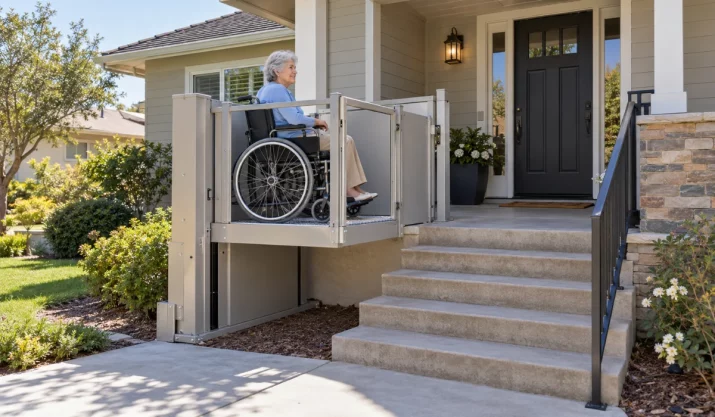
Common projects include ramps, stair lifts, doorway changes, bathroom modifications, home lifts, and residential lifts. People often search for wheelchair ramp funding, stair lift financial assistance, or home modification grants for disabled people, but no single California program automatically pays for every project.
Possible sources include qualifying veterans benefits, public programs, local housing assistance, nonprofit funding, and private payment. Each program decides which improvements qualify and what documentation is required.
The home itself also affects the decision. Stair configuration, ramp slope, available landing space, doorway width, wheelchair dimensions, and future mobility needs can all change which solution makes sense.
Veterans and Home Accessibility
Veterans with qualifying service-connected disabilities should check whether federal housing or adaptive equipment benefits apply. These programs use specific disability and property requirements, so eligibility should be confirmed before work begins.
A veterans’ benefit, nonprofit award, Medi-Cal service, and local housing grant can all have very different rules. Treat each one as a separate funding path rather than assuming the same application process applies across programs.
How to Search, Qualify, and Apply for Grants for People With Disabilities
The most efficient funding search starts with a specific expense. Instead of writing down “mobility help,” identify whether you need a power wheelchair, vehicle hand controls, tuition for a training program, a communication device, or a ramp.
Then connect that expense to its purpose. Medical needs usually point toward health coverage. Employment-related costs may lead to vocational rehabilitation. Veterans programs have their own pathway, while home accessibility may require checking several possible sources.
What to Prepare Before You Apply
| Step | What to Do |
| Define the expense | Name the exact equipment, service, course, or modification |
| Identify the purpose | Medical, employment, education, transportation, or home access |
| Review eligibility | Check disability, income, residency, age, veteran status, and program rules |
| Gather documents | Collect prescriptions, medical records, benefit information, and employment or education plans |
| Request estimates | Get itemized equipment or construction quotes when required |
| Confirm authorization | Ask whether approval must happen before purchase or installation |
| Keep records | Save applications, estimates, approvals, and correspondence |
Documentation can vary widely. A medical equipment request may require a prescription and clinical evaluation. Vocational rehabilitation may ask how the service supports an employment plan. A nonprofit may request proof of income, diagnosis, residency, or financial need.
Check Approval Rules Before Spending Money
Prior authorization deserves particular attention. Some programs require approval before you order equipment, modify a vehicle, or begin construction. If you spend the money first, reimbursement may not be available even when the item itself would otherwise qualify.
It can also make sense to investigate more than one source when program rules permit it. A health plan might cover medical equipment while vocational rehabilitation handles job-related technology, or a nonprofit might help with a cost another program excludes.
Finding the Right Disability Support for Your California Home
Grants for people with disabilities are only one part of California’s support system. Depending on your needs, the better route may be vocational rehabilitation, Medi-Cal services, veterans benefits, an independent living center, assistive technology support, or a nonprofit program.
Home accessibility becomes a separate practical decision once stairs, entry steps, or movement between floors are the barrier you need to solve. The right ramp, stair lift, home lift, or residential lift should fit both the person using it and the physical layout of the property.
California Mobility is a family-owned company that works with California homeowners on stair lifts, ramps, and home lifts. If a home accessibility project is the next step for you or a family member, contact California Mobility to discuss the layout of your home, the access problem you need to solve, and which type of mobility solution may fit.