

The Adjustable Twin Bed for Elderly Sleepers in Smaller Rooms
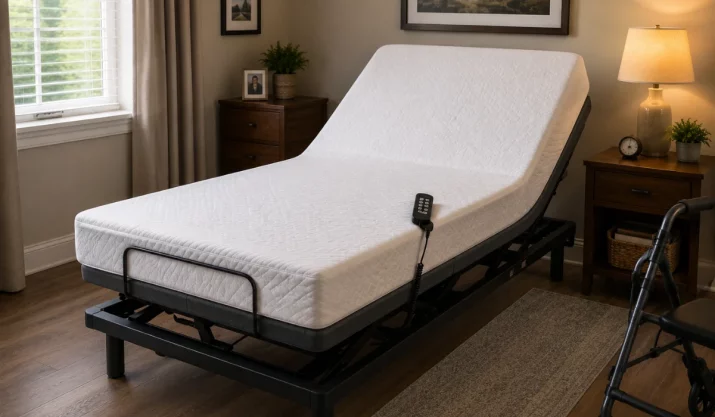
Table of Contents
Choosing a bed for a small bedroom involves more than checking the mattress width. The sleeper needs enough room to rest, sit at the edge, stand, and move toward the door without bumping into furniture. A cane, walker, nightstand, or caregiver may also need space beside the bed.
An adjustable twin bed for elderly sleepers can help solve that layout problem. It uses less floor space than a full or queen bed while giving the sleeper control over head and leg position. That movement can help with reading, resting, or moving from a flat position toward sitting.
Still, the smallest bed is not always the best bed. Mattress length, transfer height, remote design, wall clearance, and repair access can affect daily use more than massage settings or phone charging ports. A useful purchase starts with the person and the room, not the feature list.
Why Adjustable Twin Beds Fit Smaller Bedrooms
A twin adjustable bed for seniors leaves more open floor area than wider mattress sizes. That space can support a clearer route to the bathroom or leave room for mobility equipment beside the bed.
The National Institute on Aging states that older adults generally need seven to nine hours of sleep each night. Pain, medication effects, insomnia, and health conditions can interrupt that sleep, so a compact bed still needs to provide comfort for a full night.
Most electric adjustable beds for seniors divide movement into two sections. The upper part raises the head and torso. The lower part supports the knees, legs, or feet. These changes do not treat a medical condition, but they give the sleeper more control than a fixed frame.
How Much Space Does a Twin Bed Save?
A standard twin mattress uses about 8.3 fewer square feet than a full mattress and about 13.5 fewer square feet than a queen. Those numbers describe the mattress surface, not the full frame, but they show why twin beds often work in compact rooms.
The saved space can be used for a walker, stable nightstand, chair, or open walking route. It can also give a caregiver room to stand beside the sleeper.
A narrow mattress has limits. A person who turns often or needs hands-on help may feel restricted on a twin. Measure the room, then consider how the sleeper moves at night and gets out of bed in the morning.
Twin or Twin XL: Choosing the Right Size
Twin and Twin XL mattresses have almost the same width. Twin XL adds five inches of length, which can suit a taller adult without taking more space beside the bed.
| Bed Size | Common Mattress Size | Approximate Area | Common Fit |
|---|---|---|---|
| Twin | 38 x 75 inches | 19.8 square feet | Shorter adults and rooms with limited length |
| Twin XL | 38 x 80 inches | 21.1 square feet | Taller adults who still need a narrow bed |
| Full | 54 x 75 inches | 28.1 square feet | One sleeper who wants more turning room |
| Queen | 60 x 80 inches | 33.3 square feet | Larger rooms or two sleepers |
These measurements are common industry sizes. The adjustable base may extend past the mattress because of upholstery, brackets, motors, or a retainer at the foot.
When a Standard Twin Works
A regular twin can suit an adult who sleeps comfortably on a 75-inch mattress. It may also fit a room where a longer base would block a closet, dresser, doorway, or walkway.
Check the sleeper while lying flat. The heels should stay on the mattress rather than hanging over the edge. There should also be enough room below the feet when the head and knees are raised.
When Twin XL Is Worth the Extra Length
A Twin XL adjustable bed for seniors gives a taller sleeper more legroom without increasing the bed’s width. That can be a better long-term choice when a standard twin feels close to the sleeper’s full height.
The extra five inches still affect the room. Open closet doors and dresser drawers during measurement. Walk from the proposed bed location to the bathroom. A base can fit between two walls and still interfere with normal movement.
Bed Height, Transfers, and Room Layout
Bed height affects sitting and standing. A low surface can require deep bending through the knees and hips. A tall surface may leave the feet unsupported when the person sits at the edge.
A practical starting point places both feet on the floor with the knees in a comfortable position. The sleeper should not need to slide down from the mattress or pull on furniture to stand.
People with poor balance, recent surgery, one-sided weakness, or difficult transfers may need advice from a physical or occupational therapist. The right height varies from one person to another.
Calculate the Finished Height
An adjustable bed height for elderly users includes the legs, moving frame, and mattress. Looking at mattress thickness alone can lead to a bed that sits several inches too high.
| Bed Part | What to Measure | Possible Problem |
|---|---|---|
| Base legs | Floor to bottom of frame | Legs place the mattress too high |
| Adjustable frame | Full platform thickness | Product page leaves out this measurement |
| Mattress | Actual thickness | Thick mattress changes transfer height |
| Floor surface | Carpet, pad, or rug | Soft flooring affects stability |
| Bedding | Length below mattress edge | Loose fabric catches feet or walker legs |
Some bases use stackable leg sections. Others can sit on an approved platform. Do not remove or replace structural legs unless the manufacturer permits the change.
Keep a Clear Walking Route
The Centers for Disease Control and Prevention (CDC) reports that more than 14 million adults age 65 and older, or one in four, report a fall each year. About 37% of those who fall report an injury that requires medical treatment or limits activity for at least one day.
An adjustable bed for a small bedroom cannot remove fall risk, but the room layout can reduce avoidable obstacles. Run power cords along the wall. Keep shoes, bins, pet beds, and loose rugs out of the walking route. Place the lamp, phone, glasses, and remote where the sleeper can reach them without leaning toward the floor.
A walker should approach the bed from the user’s preferred side. Caregivers also need enough room to assist without standing between the mattress and a wall.
Controls and Features That Matter
Adjustable beds often include massage settings, USB ports, mobile apps, voice commands, and saved positions. These features matter only when the sleeper can use them without frustration.
For most older users, the remote, motor, bed height, and service support deserve attention first.
| Feature | What to Look For | Daily Benefit |
|---|---|---|
| Remote | Large buttons and clear symbols | Easier position changes at night |
| Flat preset | One separate button | Returns the bed to a flat position |
| Adjustable legs | Approved height choices | Helps match the sleeper’s transfer needs |
| Under-bed light | Soft light aimed at the floor | Shows cords and nearby objects |
| Backup lowering | Clear battery function | May lower the bed during an outage |
| Quiet motor | Smooth movement under weight | Reduces nighttime disruption |
| Mattress retainer | Secure approved design | Limits mattress movement |
| Local service | Available parts and repair process | Reduces delays after a fault |
Pick a Remote That Feels Simple
The remote should be understandable without reading a manual each time. Head and foot buttons need clear separation. Raised controls, lighting, or strong contrast may help someone with reduced vision.
Wireless remotes can disappear under blankets or furniture. Ask about replacement cost and availability. Wired controls stay attached but add another cable to manage.
A phone app can work as a backup. It should not replace a handheld control for someone who does not keep a smartphone beside the bed.
Ask What Backup Power Does
“Battery backup” can describe several different systems. One bed may lower toward flat once. Another may need batteries installed by the owner. Some backup features save memory settings but do not move the frame.
Read the manual before purchase. Ask which functions work during an outage and whether the sleeper can activate them without assistance.
Mattress Fit and Bed Rail Safety
The mattress for an adjustable bed for seniors needs to bend many times without damage. Foam, latex, and many flexible hybrid mattresses are sold for adjustable use. A rigid innerspring mattress may resist the movement or wear faster.
The mattress manufacturer should approve the model for an adjustable base. The base manufacturer should also accept the mattress type, thickness, and weight.
Balance Flexibility With Edge Support
A thick mattress may not follow the frame closely. A thin mattress may bend well but feel less supportive. The right choice depends on the sleeper’s body weight, preferred feel, and method of getting out of bed.
Edge support matters because many older adults sit before standing. The side should compress without collapsing so far that the sleeper slides forward. Test the mattress at the same finished height planned for the bedroom.
Use the mattress retainer supplied with the base. Added straps or homemade brackets can interfere with moving parts.
Treat Portable Bed Rails With Care
Portable rails are sold as handles, assist bars, guards, and bed canes. They do not fit every frame, and they are not suitable for every sleeper.
The U.S. Food and Drug Administration (FDA)’s adult portable bed rail safety guidance states that deaths and injuries involving falls and entrapment have been reported with adult portable rails and hospital bed rails. Gaps between the rail, frame, and mattress can trap part of the body.
An adjustable frame changes position, which can change those gaps. Use a rail only when the manufacturer approves it for the exact mattress and base. A person with confusion, memory loss, poor judgment, or uncontrolled movement may need another type of transfer aid.
Buying a Bed That Fits Daily Life
Start with measurements, then review delivery, warranty, returns, and repair service. Adjustable bases are heavy, and some boxes cannot pass through narrow halls or turn on stairs.
Ask whether delivery includes assembly, testing, packaging removal, and old-frame removal. “In-home delivery” may mean the crew brings the boxes inside without building the bed.
Read the warranty by component. Motors, electronics, remotes, frames, labor, and transportation may have different coverage periods. A long parts warranty offers little value when no technician serves the area.
Return terms also vary. Many bases become final sale after assembly. A mattress trial may not apply to the adjustable frame underneath it.
Review These Details Before Ordering
Confirm the following in writing:
- Complete assembled width and length
- Finished height with the selected mattress
- Maximum supported weight
- Approved mattress types
- Required wall clearance
- Backup-lowering function
- Replacement remote cost
- Delivery and setup terms
- Parts and labor coverage
- Local repair availability
- Return and restocking charges
These details affect daily use more than the number of presets or massage speeds.
Plan for Better Access Throughout Your Home
An adjustable twin bed for elderly sleepers can support aging in place when a larger frame would crowd the bedroom. Twin XL adds legroom without adding width, while a regular twin may fit better where room length is limited.
The right choice should reflect how the person sleeps, stands, walks, and receives help. Bedroom access may be only one part of a wider mobility concern. California Mobility installs stairlifts and domestic lifts for homeowners who need better access between floors. Contact us to discuss the barriers in your home and the equipment that may fit.