

A Walker Bag Keeps Essentials Close Without Tipping the Frame
Table of Contents
- How a Walker Bag Makes Daily Activities Easier
- Best Walker Bag Style for Your Frame
- How to Pack a Walker Bag Without Affecting Stability
- What Everyday Essentials Belong in a Walker Pouch?
- How to Choose a Walker Bag That Fits Your Routine
- Make Everyday Mobility Easier With the Right Support
- Frequently Asked Questions About Walker Bags
A walker bag keeps your phone, wallet, medications, and other small essentials within reach without taking your hands off the support handles while walking. For instance, you’re moving from the kitchen to the living room with your phone ringing and your reading glasses still on the counter. A pouch attached to your walker lets you bring those items along without juggling them.
The trick is choosing a bag that fits your frame and doesn’t interfere with balance. Side bags, front pouches, and under-seat storage each work differently, and factors such as weight distribution, attachment points, and packing habits determine how practical they are for daily use.
Key Takeaways
- Choose a bag that fits your walker. Side bags, front pouches, and under-seat storage serve different needs, but the accessory must be compatible with your specific frame.
- Keep the load light and secure. Weight distribution, center of gravity, and attachment location affect walker stability. Avoid overloading pockets or hanging heavy items from handles.
- Pack for your actual routine. A phone, wallet, labeled medications, and a few personal items are usually more useful than a large assortment of belongings you rarely need.
How a Walker Bag Makes Daily Activities Easier
A walker gives you support as you move, but it also occupies the hands you would normally use to carry things. Holding a phone or wallet while gripping the handles can interfere with proper walker use. A walker storage bag solves the carrying problem by giving those belongings a secure place on the equipment.
Separate storage pockets can also save you from searching for your essentials throughout the day. You might keep your phone in one compartment, your glasses in another, and your identification in a zippered section. The bag travels with your walker, so you don’t have to remember where you left each item.
Keeping Belongings Accessible Without Reaching While Walking
Accessibility isn’t just about having your belongings nearby. You also need to retrieve them comfortably. A walker pouch with easy-to-open closures may be helpful if arthritis or reduced hand strength makes small zippers difficult to manage.
Even when your phone is ringing, stop in a stable position before opening the bag. Reaching into a pocket while moving can distract you from controlling the walker and maintaining your balance.
Best Walker Bag Style for Your Frame
Walker accessories come in different sizes and mounting styles. A standard walker has a different frame from a two-wheeled walker or a four-wheeled rollator walker. That distinction matters because a bag that fits one mobility device may obstruct the grips, brakes, or folding parts of another.
Before choosing a walker organizer, check which storage accessories your equipment’s manufacturer approves. Then compare the three common designs based on the items you carry and where you’ll use the walker.
| Walker Bag Style | Main Advantage | What to Watch For |
| Side bag | Compact storage for a phone, keys, tissues, and glasses | Uneven loads, loose straps, and interference with folding |
| Front pouch | Several compartments for organizing daily essentials | Leg clearance, sagging fabric, and blocked frame parts |
| Under-seat storage | A designated carrying space on certain rollators | Model compatibility, load capacity, and brake or folding clearance |
1. Side Bags for Smaller Personal Items
A walker side bag is useful when you carry only a few lightweight belongings. Many designs have individual pockets, making it easy to separate your keys from your phone or keep tissues handy. Because the bag sits along one side of the frame, avoid concentrating excessive weight in it.
2. Front Pouches for Organized Storage
A front walker pouch typically stretches across an approved section of the frame, giving you several compartments in one location. Look for secure attachment points and a design that doesn’t hang into your walking space. A pouch that swings against your legs or catches on the frame isn’t a suitable option, regardless of how much storage it offers.
3. Under-Seat Bags for Compatible Rollators
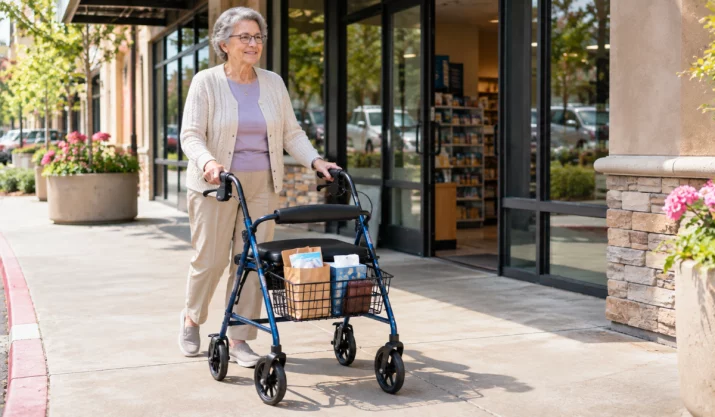
Some rollator walkers have built-in or manufacturer-approved under-seat storage. These compartments can carry personal belongings without adding another bag to the handles. However, a rollator’s seat doesn’t mean you can attach any bag beneath it. Check the manufacturer’s instructions to confirm compatibility and permitted weight limits.
How to Pack a Walker Bag Without Affecting Stability
A walker bag changes how weight is distributed across your mobility aid. How much you carry matters, but so does where the load sits. A heavy pouch hanging away from the frame creates different forces than a small, secure bag attached at an approved location.
Why the Center of Gravity Matters
The center of gravity is the point where an object’s weight effectively acts. Adding a bag changes the combined weight distribution of the walker and its contents. The farther a heavy load hangs from the frame, the more leverage it can create, especially when turning or moving over uneven surfaces.
Consider what happens when someone hangs a full shopping bag from one walker handle. That load may pull the equipment sideways or make it easier to tip under certain conditions. Keeping loads light and using approved storage locations helps avoid unnecessary changes to the walker’s handling.
The concern is especially relevant for older adults. According to the Centers for Disease Control and Prevention (CDC), more than 14 million adults aged 65 and older report falling each year. Although this statistic doesn’t specifically involve walker bags, it shows why fall prevention and safe use of mobility aids deserve attention.
Safety Checks Before Using a Loaded Walker Bag
There’s no universal weight capacity for walker bags. The accessory’s rated load doesn’t automatically establish what your walker can safely support. Check the instructions for both products, and don’t assume that extra pockets mean extra carrying capacity.
| Safety Check | What to Do |
| Attachment security | Make sure straps and fasteners remain secure with the bag loaded. |
| Weight distribution | Follow approved loading instructions and avoid heavy, uneven loads. |
| Handle access | Keep grips and brake levers completely unobstructed. |
| Walking clearance | Check that the bag doesn’t touch your legs, wheels, or the floor. |
| Frame operation | Confirm that folding parts and other moving components work normally. |
| Movement and balance | Watch for pulling, rocking, swinging, or unfamiliar resistance. |
If your walker behaves differently after you attach a bag, stop using the accessory and reassess the fit. A physical or occupational therapist can help determine whether your current setup supports your mobility needs.
What Everyday Essentials Belong in a Walker Pouch?
A useful walker bag holds the things you reach for regularly, not everything you might need during the day. For most seniors, that means a few compact personal belongings kept in designated pockets. Carrying less also makes it easier to find an item without sorting through a crowded compartment.
Use this packing checklist to plan what belongs in your bag, keeping the manufacturer’s load restrictions in mind.
| Everyday Essential | Packing Tip |
| Cell phone | Store it in a secure pocket where it won’t slip out when you turn. |
| Wallet and identification | Carry essential cards in a compact wallet. |
| Medications | Use appropriately labeled containers and follow storage instructions. |
| Reading glasses | Protect the lenses with a lightweight case. |
| House keys | Keep them inside a zippered pocket where they can’t catch on the frame. |
| Tissues | Choose a small travel packet instead of a full box. |
| Emergency contact information | Keep a contact card in an identifiable compartment. |
Take Extra Care With Medications and Heavy Objects
A walker storage bag can be convenient for carrying medicine you need during an outing, but not every medication can be stored under the same conditions. Check individual labels, particularly when carrying medications outdoors in California’s warmer weather.
Large water bottles, groceries, and other bulky objects need separate consideration. Avoid hanging heavy shopping bags from walker handles or packing a pouch beyond its approved limit. If carrying larger items is part of your routine, ask your mobility equipment provider about an appropriate alternative.
How to Choose a Walker Bag That Fits Your Routine
Start by identifying your walker’s manufacturer and model number. Check its instructions for approved walker accessories, attachment locations, and carrying restrictions. A bag described as universal may still interfere with a particular frame, so adjustable straps alone don’t guarantee compatibility.
Next, think about how you use your walker. Someone moving mainly between rooms might prefer a small pouch for glasses and a phone. A person who regularly leaves home for appointments may benefit from secure compartments for identification, medications, and other personal belongings.
Check the Bag’s Fit Around Your Home
In a California home with narrow hallways or closely arranged furniture, a bulky walker side bag may catch on doorframes or nearby objects. Check how much space the loaded bag occupies when you turn through the rooms you use most. The accessory shouldn’t force you to change your normal walking path or posture.
Caregivers can help evaluate pocket access, closures, and secure attachment while the user is stopped. The American Academy of Orthopaedic Surgeons explains how proper walker positioning and technique support safer movement. If a bag makes someone grip the handles differently, lean sideways, or adjust their usual steps, reconsider the accessory before using it regularly.
Make Everyday Mobility Easier With the Right Support
A walker bag can make everyday routines more manageable by keeping small essentials nearby while leaving your hands available to control the frame. Side bags, front pouches, and under-seat compartments offer different advantages, but compatibility, careful packing, and proper weight distribution should guide your choice.
Still, carrying personal belongings is only one part of maintaining accessibility at home. Stairs, raised entrances, and changes in floor level can present separate challenges that a walker accessory can’t solve. California Mobility provides accessibility options, such as ramps, stair lifts, and home lifts, to help seniors and people with mobility limitations access more areas of their homes. If you’re looking for practical ways to make your home easier to navigate, contact California Mobility to discuss your living space and the available options.