

The Walker Basket Upgrade That Makes Errands Simple Again

Table of Contents
- How a Walker Basket Makes Everyday Errands Easier
- Which Walker Basket Style Works Best for You?
- How to Use a Walker Basket Without Affecting Stability
- How to Choose a Walker Basket That Fits Your Frame
- Are Walker Trays and Cup Holders Worth Adding?
- Make Everyday Errands Easier With the Right Walker Basket
- Frequently Asked Questions About Walker Baskets
A walker basket makes everyday errands easier by giving you a secure place to carry small purchases and personal belongings while keeping your hands available to use your walker. Instead of balancing a shopping bag on your wrist, you can keep your wallet, phone, and other essentials together.
Whether you’re picking up prescriptions at a California neighborhood pharmacy or bringing mail into the house, the right walker basket can help you manage familiar tasks with less assistance. Choosing one comes down to basket style, frame compatibility, weight limits, and knowing how to load it without affecting your balance.
Key Takeaways
- Choose a basket that fits your walker and routine. Wire, plastic, and fabric baskets offer different storage options, while clip-on and built-in designs have different installation requirements.
- Check weight limits and stability before carrying anything. A secure attachment and properly distributed load help prevent items from shifting or interfering with walker movement.
- Keep everyday tasks manageable. Use your basket for lightweight essentials, consider compatible trays or cup holders for other needs, and consult a therapist or healthcare provider if your stability changes.
How a Walker Basket Makes Everyday Errands Easier
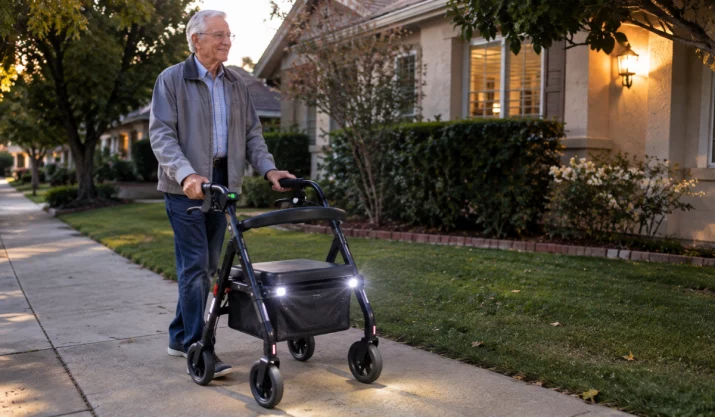
A basket for a walker gives you somewhere to put the things you’d otherwise have to carry by hand. That might mean a prescription package from the pharmacy, a wallet during a shopping trip, or a few envelopes collected from your mailbox. You can keep those items together without constantly looking for a place to set them down.
Carrying groceries with a walker becomes more manageable when you’re only picking up a few lightweight purchases. A greeting card, toothpaste, and a small package may fit comfortably, depending on the basket’s dimensions and load rating. Heavy bottles and several canned goods are another matter and may be unsuitable for the accessory.
Small Household Tasks Count, Too
A walker storage basket isn’t limited to shopping trips. You can use it to carry reading glasses, a phone, or a book between rooms, reducing the need to make extra trips or ask someone to retrieve small belongings.
These practical benefits make walker accessories useful for seniors who want to maintain their routines. However, the basket should carry belongings without changing how you grip or operate your walking aid. It doesn’t provide additional support for your body.
Which Walker Basket Style Works Best for You?
Walker baskets commonly come in wire, plastic, and fabric designs. Each offers a different approach to storage, but material alone doesn’t determine how much weight an accessory can hold. The manufacturer’s specifications and attachment system are what matter.
Before choosing a walker basket for seniors, think about what usually goes inside it. Someone who carries mail and packaged purchases may prefer a rigid compartment, while a person who mainly carries a phone and glasses might appreciate separate pockets.
Wire, Plastic, and Fabric Baskets
| Basket Type | Main Advantage | What to Check |
| Wire | Rigid shape and visible contents | Openings, liners, and mounting hardware |
| Plastic | Solid storage compartment that’s often easy to clean | Dimensions, attachment points, and clearance |
| Fabric | Soft storage with pockets on some models | Sagging, fasteners, and material wear |
Wire baskets are useful when you want to see what’s inside, although small objects may slip through the openings without a compatible liner. Plastic baskets help contain loose belongings, while fabric organizers can separate frequently used items into pockets.
Clip-On vs. Built-In Walker Baskets
A clip-on walker basket attaches to an existing frame using compatible hardware. Some designs are removable, making them convenient when you need to fold your walker for a car trip. Check that the walker basket attachment is approved for your specific model before installing it.
Built-in baskets come with certain walking aids, particularly some rollators. Their storage position is part of the original design, although capacity and removal instructions still vary. If you’re buying a new mobility aid, compare integrated storage with the option of adding a compatible basket later.
How to Use a Walker Basket Without Affecting Stability
Adding a basket changes what your walker carries, and the load can affect how the equipment handles. Heavy objects, uneven packing, or items that shift while you’re moving may make the walker harder to control. The attachment itself can also cause problems if it swings or interferes with the frame.
Falls are already a concern for older adults. The Centers for Disease Control and Prevention (CDC) reported that more than one in four U.S. adults aged 65 and older fall each year. This statistic doesn’t measure accidents involving walker baskets, but it shows why stability deserves attention when using mobility equipment.
1. Check the Walker Basket Weight Limit
There isn’t a universal walker basket weight limit. Every model has its own specifications, and its approved capacity depends on the basket’s construction and mounting system.
Don’t confuse this with the walker’s user-weight capacity, which is a separate measurement. If the basket’s instructions don’t identify an approved cargo load, contact the manufacturer or equipment provider rather than guessing.
2. Load Items Without Creating a Tipping Risk
Place belongings securely inside the basket and distribute their weight evenly. Avoid stacking purchases where they could fall out, block your view, or shift as you move. Don’t hang extra grocery bags from the walker handles to make up for limited basket space.
Stop on a stable, level surface when adding or removing items. Reaching into the basket while walking or leaning too far forward to retrieve something can make maintaining your balance harder.
3. Pay Attention to Changes in Walker Movement
A properly installed basket shouldn’t obstruct the wheels, brakes, handgrips, or folding components. If the attachment starts rubbing against a wheel, pulling the walker to one side, or making it difficult to move normally, stop using it until the problem has been addressed.
If your walking stability changes, speak with your physical therapist, occupational therapist, or healthcare provider. They can assess whether the accessory, your walker setup, or your mobility needs require attention.
How to Choose a Walker Basket That Fits Your Frame
Walker compatibility matters because standard folding walkers, two-wheeled walkers, and four-wheeled rollators have different frame arrangements. An attachment that fits one type may interfere with another, even when the devices look similar.
Start by identifying your walker’s make and model. Compare that information with the basket manufacturer’s compatibility instructions, including approved mounting points and any restrictions involving brakes, wheels, or folding mechanisms.
Match the Basket to Your Lifestyle
If you frequently drive to appointments or visit family, consider a removable walker basket that allows the frame to fold as intended. For mostly indoor use, check whether the attachment clears doorways, furniture, and narrow hallways. A bulky basket can become inconvenient if you regularly move through tight spaces.
You should also be able to reach your belongings without uncomfortable bending or twisting. MedlinePlus explains proper walker positioning and movement. Any basket you install should allow you to maintain the walking technique recommended for your equipment.
Are Walker Trays and Cup Holders Worth Adding?
A basket is useful for personal belongings and small purchases, but other walker attachments serve different purposes. The right choice depends on what you want to carry and whether the accessory works with your existing equipment.
Walker Trays for Household Tasks
A walker tray provides a surface for transporting suitable lightweight objects, such as a book or folded napkins. It can be useful during household activities, although tray designs and installation requirements vary.
Some trays must be removed before a walker can fold. Never lean on a tray or use it to support your body unless its manufacturer expressly approves that use.
Cup Holders for Everyday Convenience
A walker cup holder can keep a compatible water bottle within reach during an outing or while spending time at home. Look for one that secures the container without blocking your hands, walker controls, or normal movement.
Closed bottles reduce the chance of spills, while hot drinks require extra caution. Before combining a tray, cup holder, and basket, confirm that the manufacturer permits those accessories to be used together.
Make Everyday Errands Easier With the Right Walker Basket
The best walker basket fits your equipment, accommodates the belongings you regularly carry, and stays secure during normal use. A suitable design, approved weight capacity, and careful loading can make errands and household tasks easier without compromising the way you use your walking aid.
Of course, carrying small items is only one part of getting around comfortably. Steps, uneven entrances, and changes between floors can present challenges that a walker accessory can’t address. California Mobility offers ramps, stair lifts, and home lifts that help address barriers that can make moving around the home more difficult.
If getting around your home has become challenging, contact California Mobility to discuss accessibility solutions suited to your space and needs. Paired with a properly fitted walker basket, the right home setup can help make everyday routines more manageable.
Frequently Asked Questions About Walker Baskets
Can you attach a basket to any walker?
No. Walker baskets aren’t universally compatible with every frame. Standard walkers, folding walkers, and rollators can require different mounting systems. Check your walker’s model and the accessory manufacturer’s instructions before purchasing. The basket shouldn’t interfere with the wheels, handgrips, brakes, or folding mechanism.
How much weight can a walker basket hold?
The maximum weight depends on the basket and its attachment system. There isn’t one capacity that applies to every model. Check the manufacturer’s approved cargo limit and avoid exceeding it. The walker’s user-weight rating doesn’t tell you how much weight its basket can safely carry.
Can a walker basket cause a walker to tip?
A poorly mounted or overloaded basket can affect walker stability, particularly when its contents shift or the load is uneven. Keep items securely inside the basket and follow the manufacturer’s limits. If your walker feels harder to control after adding an accessory, stop using it and have the setup assessed.