

The Walker With Tennis Balls Tradition and What Works Better Now
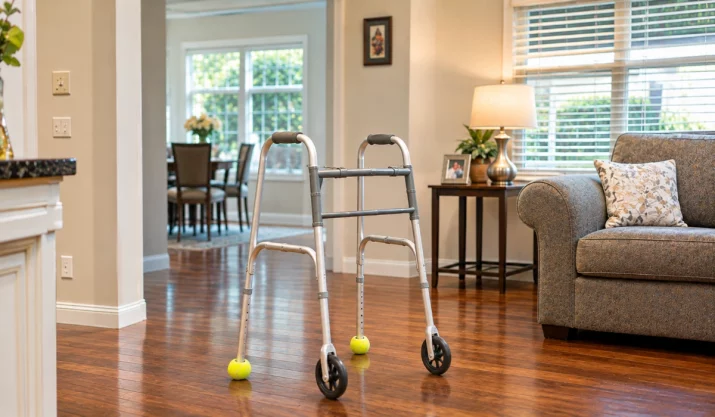
Table of Contents
- Why Do People Put Tennis Balls on Walkers?
- What Are the Problems With a Walker With Tennis Balls?
- What Works Better Than Tennis Balls on a Walker?
- Which Walker Accessories Work Best Indoors and Outdoors?
- When to Replace Tennis Balls or Upgrade Your Walker
- Make Everyday Movement Easier With California Mobility
- Frequently Asked Questions
A walker with tennis balls is a familiar solution for helping walker legs slide across indoor floors without lifting the entire frame with every step. It works because the rounded balls reduce dragging on certain surfaces, but they can wear unevenly, collect dirt, and provide less grip than standard rubber tips.
If you’ve used tennis balls on a walker for years, there’s no reason to dismiss what has worked for you. Still, purpose-built walker glides, ski-style tips, and wheeled options offer different ways to move, depending on your flooring, balance, and daily routine.
Why Do People Put Tennis Balls on Walkers?
A standard walker typically has four legs fitted with rubber tips. Those tips create friction against the floor, helping the walker stay in place when someone puts weight on it. The drawback is that users generally need to lift the frame to move it forward.
Tennis balls change how the rear walker legs contact the ground. Their rounded shape and felt covering allow them to slide across certain surfaces instead of gripping the floor like rubber. For someone who finds repeated lifting tiring, that can make walking around the house easier.
The tradition also makes sense from a practical standpoint. Tennis balls are inexpensive and readily available, so families have long used them as homemade walker accessories. However, the opening cut into a tennis ball may not fit securely, and the material wasn’t manufactured specifically for mobility equipment.
What Are the Problems With a Walker With Tennis Balls?
A walker with tennis balls can work comfortably on a smooth hallway floor. Trouble often starts when the attachments become worn or the walking surface changes. Here are three limitations worth watching.
Uneven Wear and Loose Attachments
Every time the walker moves, the tennis balls rub against the ground. Over time, the felt can thin, the balls may flatten, and the openings can stretch or tear.
One ball may wear faster than the other, particularly if you place more pressure on one side or frequently turn in the same direction. This can change how evenly the walker moves. A loose ball may also shift on the walker leg instead of staying securely attached.
Marks on Hardwood and Other Floors
Tennis ball felt can collect sand, dust, and grit. When those particles get dragged across hardwood, vinyl, or finished tile, they may leave marks or contribute to scratches.
That doesn’t mean every tennis ball will damage your flooring. The risk depends on how clean the attachments are and the condition of the floor finish. If you notice streaks along your walking route, inspect the balls for trapped debris or worn material.
Less Predictable Grip
Tennis balls are used because they slide, but reduced friction isn’t helpful in every situation. Smooth tile, damp entryways, and uneven pavement can change how the walker responds when you push it forward or put weight on it.
Walker safety deserves attention, especially for older adults who rely on walking aids for support. The Centers for Disease Control and Prevention (CDC) reports that more than 14 million Americans aged 65 and older experience a fall each year. This statistic covers falls generally, not incidents involving tennis balls, but it helps explain why reliable mobility equipment matters.
What Works Better Than Tennis Balls on a Walker?
Several walker tennis ball alternatives are available, but they don’t all serve the same purpose. Some help walker legs slide, others increase friction against the ground, and wheeled models change how the entire walking aid moves.
Walker Glide Caps and Ski-Style Tips
Walker glide caps are manufactured attachments designed to fit compatible walker legs. They provide a sliding surface without relying on a tennis ball that someone has cut by hand.
Walker ski glides have a longer, curved shape that helps the rear legs move across suitable flooring. Depending on their design, they may also pass over certain floor transitions more smoothly than flat-ended accessories.
Both products offer a defined design and model-specific fitting options, but they still wear with use. Check the manufacturer’s instructions before choosing replacements, since not every glide fits every walker.
Rubber Walker Tips and Wheeled Options
Standard rubber tips provide friction rather than encouraging sliding. They’re suitable for walkers designed to be lifted and placed firmly on the ground, although damaged or worn rubber can affect traction.
A two-wheel walker has wheels at the front and typically uses rubber tips or compatible glides on its rear legs. The front wheels roll forward, reducing the need to lift the whole frame.
A four-wheeled rollator works differently. It generally includes hand brakes and allows continuous rolling movement, but it may provide less support for users who need to put substantial weight through a stationary walker.
How Walker Accessories Compare
| Walker Option | Main Function | What to Watch For |
| Tennis balls | Help rear legs slide on some indoor floors | Felt wear, loose openings, and trapped dirt |
| Walker glide caps | Provide a manufactured sliding surface | Model compatibility and surface suitability |
| Walker ski glides | Use a curved profile to help rear legs slide | Thresholds, abrasive surfaces, and wear |
| Rubber tips | Create friction against the ground | Cracked or worn rubber |
| Two-wheel walker | Rolls forward on front wheels | Proper fitting and rear-leg contact |
| Four-wheeled rollator | Uses four wheels and typically hand brakes | Braking ability, balance, and support needs |
Purpose-built glides may be easier to replace consistently because they’re sold as specific walker accessories. However, there’s no established universal lifespan advantage over tennis balls. Actual durability depends on the product, frequency of use, and walking surface.
Which Walker Accessories Work Best Indoors and Outdoors?
Think about the surfaces you cross during an ordinary day. You might move from bedroom carpet onto hallway flooring, step through a raised doorway, and head toward a concrete patio. Each transition changes how the walker contacts the ground.
Hardwood, Tile, and Carpet
Clean tennis balls and compatible walker glides may slide comfortably across smooth hardwood, laminate, and vinyl. However, polished or wet flooring requires caution because the attachments may move more freely than expected.
Carpet presents a different challenge. Thick fibers can create resistance, while raised thresholds may catch worn balls or glides. Check how your walker moves between rooms rather than judging an accessory on one section of flooring.
Concrete, Sidewalks, and Outdoor Paths
California homes often connect indoor living areas with patios, driveways, and garden walkways. These routes may include rough concrete, sidewalk joints, cracks, and gravel.
Abrasive ground can accelerate wear on sliding accessories, while uneven surfaces may catch walker legs. Certain wheeled walkers are designed for outdoor use, but their suitability depends on wheel design and the user’s balance and strength.
MedlinePlus cover walking techniques and navigating everyday obstacles. If you regularly use your walker outdoors, a physical therapist can help determine which configuration provides appropriate support on your usual routes.
When to Replace Tennis Balls or Upgrade Your Walker
There’s no reason to replace a familiar walker setup simply because newer accessories exist. The more useful question is whether your current attachments remain secure, predictable, and suitable for where you walk.
Signs Your Walker Tips Need Replacement
Inspect the tennis balls for torn felt, flattened sections, widened openings, and trapped debris. If one ball repeatedly catches against the floor or slips out of position, stop using that attachment until the issue is addressed.
Replacement walker tips and glides should match the manufacturer’s specifications. Even when two walker legs look similar, they may require different attachment sizes or designs.
When a Different Walking Aid May Help
Sometimes worn accessories aren’t the main problem. If you’re struggling to lift the frame, leaning heavily on the walker, or feeling less steady when turning, changing the tips alone may not help.
The National Institute on Aging discusses how balance problems, health conditions, and hazards around the home contribute to falls. A physical therapist or occupational therapist can assess whether a standard walker, two-wheel walker, or another mobility aid better suits your needs.
Make Everyday Movement Easier With California Mobility
The walker with tennis balls tradition has lasted because it solves a practical problem. Still, worn attachments and changing mobility needs can make another option worth considering. Purpose-built glides, rubber tips, and wheeled walkers each offer different benefits when properly matched to the user and walking environment.
Sometimes the bigger obstacle is the home itself. A step at the front entrance, a raised doorway, or a staircase between living areas can make getting around difficult, even with a well-fitted walker. Residential ramps and stair lifts can address some of these barriers without requiring you to avoid parts of your home.
California Mobility is a family-owned company helping California homeowners improve accessibility through professionally installed ramps, stair lifts, and home lift solutions. If steps or difficult entrances are limiting your mobility, contact California Mobility to discuss practical improvements suited to your home and daily routine.