


An Adjustable Bed Wedge Delivers the Incline Without the Motor
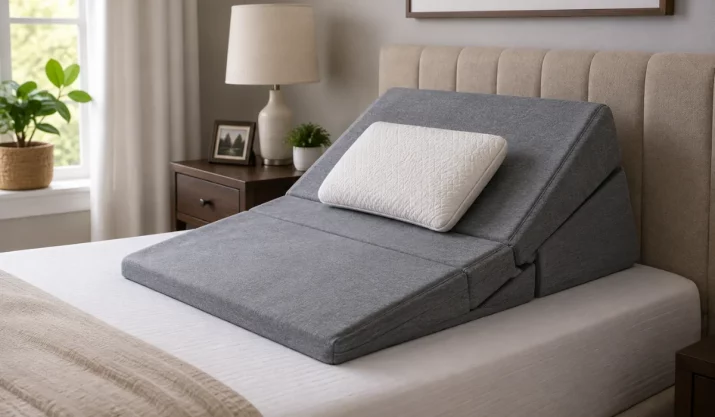
Table of Contents
A powered bed is not the only way to rest at an angle. An adjustable bed wedge creates a raised surface with shaped foam, folding panels, or removable layers. It works with the bed already in the room and needs no outlet, remote, or moving frame.
This type of adjustable incline pillow suits people who want steady upper-body support rather than a bed with several mechanical positions. It can support reading, resting, and certain nighttime comfort needs. It also gives someone a way to try inclined sleep before replacing a mattress foundation.
A manual wedge cannot move while the user is lying down. It will not raise the head and legs through separate sections, either. Its value comes from doing one job with few parts: creating a repeatable incline without a motor.
What Is an Adjustable Bed Wedge?
An adjustable bed wedge is a firm, sloped support that raises part of the body above the mattress. Most personal models sit on top of the bed. A full-width mattress wedge may sit underneath, so buyers should follow the placement directions for their product.
Several products fall under the same name. A folding wedge pillow uses connected foam panels that open into different shapes. A layered model changes height when the user adds or removes sections. A standard bed wedge pillow has one fixed slope and offers no adjustment.
Some sellers also use the term for inflatable mattress lifters with electric pumps. Those are powered products, despite the similar name. Someone looking for a bed wedge without electricity should check whether the angle comes from foam sections or an air chamber.
How the Foam Holds the Angle
A firm foam core carries the user’s weight and keeps the slope from collapsing. Some models add a thin memory foam layer for cushioning. A wedge that compresses like a regular pillow may lose much of its advertised height beneath the shoulders.
Length matters as much as height. A long incline pillow can support the head, shoulders, and upper torso on one gradual slope. A short model may lift the head while leaving the shoulders low, which can place the neck at an awkward angle.
Width affects movement during sleep. A narrow wedge may work for a back sleeper who stays centered, while a side sleeper may need more room to turn. Nonslip fabric can reduce movement against the mattress, though a steep wedge may still allow the body to slide.
Why People Choose an Inclined Position
People use wedge pillows for several reasons. Some need back support while reading or watching television. Others find that sleeping flat causes discomfort and want a gradual upper-body elevation instead of a pile of ordinary pillows.
Reflux is one reason people search for an adjustable sleeping wedge. The National Institute of Diabetes and Digestive and Kidney Diseases states that 20% of the U.S. population experienced reflux symptoms at least once a week.
The American College of Gastroenterology advises raising the head of the bed about 6 to 10 inches for nighttime reflux. Its patient guidance also states that ordinary pillows do not create the same type of upper-body incline. Stacked pillows can bend the neck or waist while leaving much of the torso flat.
A systematic review found signs that head-of-bed elevation may improve reflux symptoms, though the available studies had limitations. That finding supports careful language. A wedge may help some users, but it should not be presented as a cure or a replacement for medical care.
Reading, Resting, and Recovery
A steeper foam configuration can support the back during reading, meals, or television viewing in bed. It may feel steadier than loose pillows that shift beneath the shoulders. The wedge still needs enough width and firmness to remain stable when the user changes position.
Some people use an incline after a medical procedure. The correct angle depends on the procedure, the incision area, and the person’s health. A surgeon or care team should approve the sleeping position and length of use.
People also try upper-body elevation for congestion or snoring. A new position may feel more comfortable, but ongoing loud snoring can point to sleep apnea. A wedge pillow for sleeping does not replace testing or prescribed breathing equipment.
Adjustable Bed Wedge vs. Powered Adjustable Bed
A wedge and a powered bed both change body position, but the mechanism and experience differ. The wedge creates a preset slope through its shape. A powered base bends compatible mattress sections through motors and hinged parts.
| Feature | Adjustable Bed Wedge | Powered Adjustable Bed |
|---|---|---|
| Adjustment | Foam folds or removable layers | Motors move hinged sections |
| Power | None for a manual model | Electrical outlet required |
| Position changes | User rearranges the wedge | User presses a remote button |
| Upper-body range | Several preset angles | Wider range of angles |
| Leg support | Separate wedge required | Often included in the base |
| Mattress | Usually keeps the current mattress | Mattress must suit an adjustable base |
| Portability | Can be moved or stored | Heavy and designed to stay in place |
| Shared bed | May affect one part of the bed | Split models can have separate controls |
| Mechanical parts | No wiring or motor | Contains motors, controls, and hinges |
A non-motorized bed incline works well when the preferred angle stays the same for most of the night. It can also suit a renter, guest room, or household that wants to keep its current mattress.
A powered base offers more control. It may fit someone who changes position often, needs separate leg elevation, or cannot lift and fold a foam support. Remote adjustment can also support independence for a person with limited arm strength.
What the Wedge Cannot Replace
An adjustable wedge pillow can replace a powered base for a narrow task: holding the upper body at one of several set angles. It cannot create independent head and foot positions or change angle while the user remains in bed.
The wedge also affects only the area beneath it. The rest of the mattress stays flat, which can leave a noticeable edge under the lower back. On a shared bed, the raised surface may take up space needed by the second sleeper.
Benefits and Limits to Consider
The main appeal of an adjustable bed wedge is simplicity. It adds an incline without electrical equipment or a replacement frame. Many folding models can also be moved to another room or stored when a flat mattress is preferred.
Its drawbacks often appear after several hours. A steep incline can cause the body to slide toward the foot of the bed. Dense foam may hold heat, and a short wedge can press against the back, ribs, or hips.
| Possible Benefit | Related Limit |
|---|---|
| Works with the current bed | Changes the mattress feel |
| Uses no electricity | Must be adjusted by hand |
| Offers repeatable positions | Cannot stop between preset angles |
| Supports reading and resting | A sitting angle may be too steep for sleep |
| Can be moved between rooms | Large models can be bulky |
| Has no motor that may need repair | Foam can soften with use |
| May support one sleeper | Can create an uneven shared surface |
| Costs less than many powered beds | Comfort depends on fit and construction |
Fit Matters More Than Maximum Height
The tallest wedge is not always the best choice. A lower model with a long slope may distribute pressure better than a tall wedge with a short rise. Body size, sleep position, and mattress firmness all change how the product feels.
Side sleepers need enough width to turn without rolling off the slope. Back sleepers often benefit from support that reaches through the shoulders. Stomach sleepers may find that upper-body elevation changes the position of the neck and lower back.
Manual handling deserves attention. A large foam wedge may be awkward for someone with arthritis, shoulder pain, balance problems, or lifting restrictions. Simple construction does not mean every user can move it without help.
How to Choose and Set Up the Right Wedge
Start with the intended use. A bed wedge for sitting up needs a steeper position than one used for overnight sleep. Measurements and configuration diagrams offer more useful information than staged product photos.
Compare the Wedge With the Bed and User
Measure the available mattress width. A wider surface gives the sleeper room to shift positions, while a narrow model may work for a person who sleeps on their back. Couples should check how much room remains beside the wedge.
Review the length next. The slope should support the shoulders and upper torso instead of ending beneath the neck. Comparing the product length with the user’s body can prevent a poor fit.
| Buying Detail | What to Check |
|---|---|
| Length | Support beneath the shoulders and torso |
| Width | Room to turn without leaving the slope |
| Height | An angle suited to sleep, rest, or sitting |
| Adjustment | Stable folds or sections |
| Foam | A firm core that resists deep compression |
| Lower edge | A gradual transition onto the mattress |
| Base | Grip fabric or another nonslip surface |
| Cover | Removable material with washing directions |
| Weight | A size the user can handle |
| Returns | Trial length, hygiene rules, and shipping costs |
Check the Materials
Look for a supportive foam core. A memory foam top can add cushioning, but soft foam alone may not hold the stated height. Product reviews that mention flattening, loose layers, or unstable folds deserve attention.
A removable cover helps manage sweat, dust, and spills. Check whether it can go in a washing machine or needs hand washing. New foam may also have an odor after unpacking, so follow the manufacturer’s ventilation directions.
Begin With a Low Setting
Place a pillow-style wedge on top of the mattress with the broad end near the headboard. Follow the product directions for an under-mattress wedge. Begin with the lowest setting that meets the user’s needs.
Lie down with the shoulders and upper torso resting on the slope. A thin head pillow may add comfort, but a thick pillow can push the chin toward the chest. The lower edge should not dig into the spine, ribs, or hips.
Test turning and getting out of bed before sleeping on the wedge for a full night. Stop using it if the position causes new pain, numbness, weakness, dizziness, or breathing trouble. A clinician should review persistent symptoms and medically directed positioning.
From Bedside Comfort to Whole-Home Mobility
An adjustable bed wedge addresses comfort in one part of the home. It may support a better resting position, but it cannot help someone reach a bedroom located on another floor.
When stairs become painful, tiring, or unsafe, the problem has moved beyond the mattress. California Mobility supplies and installs residential lifts and domestic lifts for homeowners who want access to more of their homes. A home lift can reduce repeated trips on the staircase and connect the rooms used each day.
A wedge and a home lift serve different needs. One changes the resting angle in bed. The other supports movement between floors as part of an aging-in-place plan.
Finding it harder to reach an upstairs bedroom? View California Mobility’s home lift options and request a home assessment.
An adjustable bed wedge is a focused product. For someone who wants a few repeatable positions and can handle the foam safely, it can provide the needed incline without a powered frame. When mobility concerns extend beyond the bedroom, the next step is to look at how the rest of the home supports daily life.