

Types of Patient Lifting Techniques Every Caregiver Should Practice
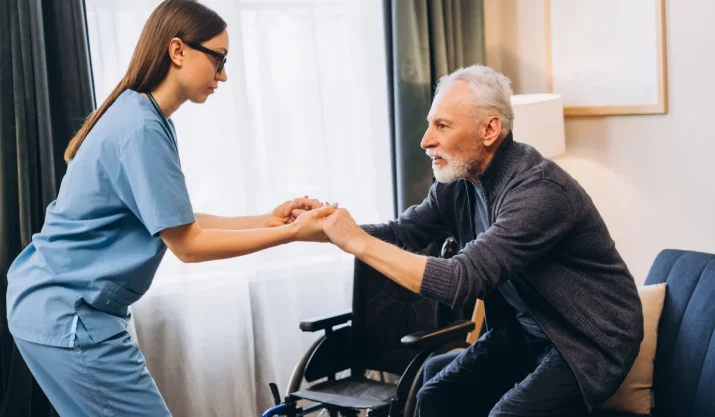
Table of Contents
Helping someone move from a bed to a wheelchair can look simple until the person becomes dizzy, loses strength, or cannot place weight through one leg. That is when a routine transfer can turn into a fall, shoulder injury, or back strain.
The safest types of patient lifting techniques depend on what the person can do at that moment. Balance, leg strength, pain, alertness, and the ability to follow directions all affect the choice. The room also matters. A low couch, tight bathroom, loose rug, or poorly placed wheelchair can make a familiar transfer harder.
Caregivers should first decide whether the person needs light assistance, one of the common patient transfer techniques, or a mechanical lift. The method should match the person’s current ability, not the caregiver’s confidence or physical strength.
Choose the Right Technique Before Moving
Do not assume the person can complete the same transfer every day. Strength and balance may change after poor sleep, illness, medication, pain, or a long period in bed.
Start by asking about dizziness, weakness, discomfort, and fear. Watch whether the person can sit upright without leaning. Ask them to move their feet and follow one short instruction. These observations help narrow the choice before anyone stands.
| What to Check | What It May Indicate |
|---|---|
| The person sits upright without leaning to one side | A seated transfer may be possible if the care plan permits it |
| Both feet stay flat on the floor | Standing may be more stable |
| The person bears weight through both legs | Sit-to-stand or stand-pivot assistance may be suitable |
| Only one leg supports weight | The direction and method may need professional guidance |
| The person cannot bear weight | A full-body mechanical lift may be needed |
| The person cannot follow short instructions | A standing transfer may become unpredictable |
| New pain, dizziness, or weakness is present | Stop and seek clinical advice |
| Mobility has changed since the last transfer | Reassess the method before moving |
Weight-bearing instructions after surgery, stroke, fracture, or another major health event should come from a nurse, physician, physical therapist, or occupational therapist. Trial and error is not a safe way to test a person’s limits.
Falls are common among older adults, which makes this assessment more than a formality. The Centers for Disease Control and Prevention (CDC)’s older adult falls data reports that more than 14 million Americans age 65 or older fall each year. That is about one in four older adults.
Compare the Main Types of Patient Lifting Techniques
The word “lifting” is often used for several different caregiving tasks. Some movements are true lifts, where equipment carries most of the person’s weight. Others are transfers in which the person completes part of the work.
The table below gives a quick comparison. The sections that follow explain where each method fits.
| Technique | Best Suited For | Common Equipment |
|---|---|---|
| Sit-to-stand assistance | A person who bears most of their own weight | Firm chair, armrests, prescribed gait belt |
| Stand-pivot transfer | A person who stands and takes short steps | Wheelchair, prescribed gait belt |
| Squat-pivot transfer | A person with partial weight-bearing ability after professional assessment | Prescribed support device |
| Sliding-board transfer | A person with stable sitting balance who cannot stand | Transfer board |
| Lateral transfer | A person moving between level surfaces | Slide sheet or low-friction device |
| Sit-to-stand mechanical lift | A person with partial weight-bearing ability and trunk control | Powered standing lift and compatible sling |
| Full-body mechanical lift | A person who cannot bear weight safely | Floor lift or ceiling lift with compatible sling |
Sit-to-Stand Assistance
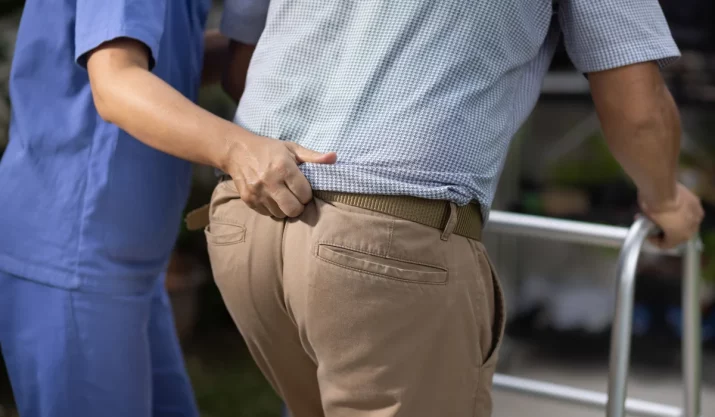
Sit-to-stand assistance works for someone who understands directions and can support most of their own weight. The person moves toward the edge of the chair, places both feet on the floor, leans forward, and pushes from the seat or armrests.
The caregiver supplies only the amount of help listed in the care plan. Pulling upward by the hands can strain the shoulders and gives poor control if the knees buckle.
Seat height affects the effort required. A firm chair with armrests is easier to rise from than a low couch or soft recliner. Nonslip footwear also gives the person a steadier base.
Stand-Pivot Transfer
A stand-pivot transfer is often used between a bed and wheelchair or between a wheelchair and toilet. It suits someone who can stand, remain upright, and take a few short turning steps.
Place the wheelchair close to the receiving surface. Lock the brakes and move the footrests out of the path. Once standing, the person takes small steps until the back of the legs touches the chair or bed.
The caregiver should turn by moving the feet instead of twisting at the waist. A rushed or wide pivot can pull both people off balance.
Squat-Pivot Transfer
A squat-pivot transfer may suit someone who cannot stand fully but can lean forward and support part of their weight. The hips move in a short arc between nearby surfaces while the knees remain bent.
This technique needs hands-on instruction. Bed height, hand placement, timing, and the person’s stronger side all affect the movement. A physical or occupational therapist should demonstrate it in the room where it will be used.
Sliding-Board Transfer
A sliding-board transfer creates a bridge between two seated surfaces. It may help a person who cannot stand but has enough sitting balance and upper-body control to move in small shifts.
The surfaces should be close together and near the same height. Clothing, fingers, and skin must stay clear of pressure points. The board must remain stable from the first movement to the last.
This method may not suit someone with poor trunk control, open wounds, severe pain, or movement restrictions around the hips.
Lateral Transfer and Bed Repositioning
A lateral transfer moves a person sideways between level surfaces. Bed repositioning changes the person’s position without moving them to another surface.
Slide sheets and low-friction aids reduce the force needed. They also limit rubbing against the skin. When the care plan calls for two helpers, both should be present before the movement begins.
Pulling by the wrists, shoulders, clothing, or underarms can cause pain and tissue injury. It also gives the caregiver little control over the person’s trunk and legs.
Mechanical Patient Lifts
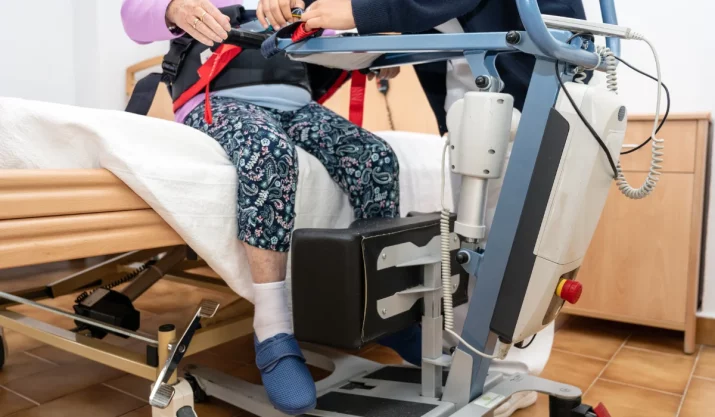
Mechanical lifting equipment carries more of the person’s weight. A sit-to-stand lift may suit someone who can bear partial weight and maintain enough upper-body control for the device.
A full-body mechanical lift supports the person in a sling. It is often considered when the person cannot bear weight, cannot remain upright, or needs extensive help.
Every sling and lift has stated limits. Check the fabric, loops, clips, attachment points, and weight rating before use. The sling must also be compatible with the lift model.
Prepare for a Safer Patient Transfer
Good preparation reduces the need for sudden corrections once the person starts moving. The room, instructions, and equipment should be ready before the transfer begins.
Set Up the Space
Clear rugs, cords, clutter, and moisture from the route. Move the wheelchair or chair close enough that the person does not need extra steps. Check the brakes and remove footrests from the path.
Place equipment where the caregiver can reach it without letting go of the person. Bring the gait belt, transfer board, slide sheet, sling, or second helper into the room before starting.
A tight room may require furniture to be moved first. Trying to squeeze a wheelchair or floor lift through a narrow path while supporting someone adds risk without saving meaningful time.
Explain the Movement
Use short instructions and tell the person where to place the hands and feet. A spoken count helps everyone move at the same time.
Give the person enough time to respond. Hearing loss, fear, pain, or slow processing may delay their reaction even when they understand the instruction.
Do not rush because the bathroom is nearby or the destination is only a few steps away. Many failed transfers happen during the final turn or descent into the chair.
Use Body Mechanics Within Their Limits
Safe lifting techniques for caregivers often include bending the knees, keeping the back aligned, and holding the load close. Those habits can help during light assistance, but they do not make a dependent manual lift safe.
The National Institute for Occupational Safety and Health (NIOSH) identifies lifting, moving, and repositioning patients as activities associated with caregiver injury. Its guidance supports equipment and work practices that reduce the force placed on workers.
Body size is not the deciding factor. A smaller person who cannot follow directions may be harder to move than a larger person who can stand on command. Fear, pain, confusion, and sudden weakness can change the transfer without warning.
Avoid Unsafe Lifting Habits and Know When to Stop
Some caregiver lifting techniques feel helpful in the moment but give poor control. They can also place stress on the person’s shoulders, skin, and joints.
| Avoid This | Use This Approach Instead |
|---|---|
| Pulling by the hands or arms | Ask the person to push from the chair or use prescribed equipment |
| Lifting under the armpits | Follow the transfer method in the care plan |
| Letting the person pull around the caregiver’s neck | Provide an approved handhold or device |
| Twisting while supporting weight | Turn by moving the feet |
| Dragging skin across bedding | Use a slide sheet or low-friction aid |
| Attempting a two-person transfer alone | Wait for the second helper or use approved equipment |
| Using a damaged or mismatched sling | Replace it with a compatible sling in good condition |
| Trying to hold a falling person upright | Follow trained fall-response procedures |
| Lifting from the floor before checking for injury | Check for pain, bleeding, head impact, or possible fracture |
Stop When the Person’s Condition Changes
Stop the transfer if the person becomes dizzy, weak, confused, short of breath, or unable to continue. New pain or a leg that suddenly will not support weight also calls for a pause.
Do not force the final steps because the destination is close. Return the person to a stable surface when that can be done safely. Then call for another trained helper or use the equipment named in the care plan.
A fall, near fall, or sudden decline should be reported to the person’s healthcare provider. The old transfer method may no longer fit their current condition.
A caregiver who has not received fall-response training should ask a healthcare professional for instruction. Trying to catch someone’s full weight can bring both people to the floor.
Use Mechanical Help and Professional Training When Needed
A mechanical lift may be needed when the person cannot support enough weight through the legs, cannot stay upright, or moves without warning. It may also be appropriate when repeated transfers cause pain for the caregiver.
The Occupational Safety and Health Administration (OSHA) recommends training in hazard assessment, equipment selection, and correct device use. Training should cover sling choice, controls, emergency procedures, and the space required around the equipment.
Do not use an unfamiliar lift based only on written directions or an online video. Ask the supplier, nurse, therapist, or home health agency for hands-on instruction.
A physical therapist can assess balance, strength, walking, and transfer ability. An occupational therapist can review bathroom access, furniture height, daily routines, and equipment placement. Nurses can explain medical restrictions and signs that need prompt attention.
Caregivers should practice difficult transfers in the room where the movement normally occurs. That gives the trainer a chance to account for the actual bed height, doorway width, flooring, and furniture placement.
Address Mobility Barriers Throughout the Home
Patient-transfer equipment handles movement between nearby surfaces. It does not solve every access problem inside a multilevel home. Tight bathrooms, low seating, narrow routes, and stairs can make daily care harder. Domestic lifts serve a different purpose from patient lifts. They help a person travel between floors rather than move from a bed to a chair.
California Mobility works with families who are planning safer movement through a multilevel home. To discuss stairs, floor-to-floor access, or residential lift options, contact California Mobility.
The safest types of patient lifting techniques are the ones that match the person’s current mobility and the caregiver’s training. When most of the person’s weight would fall on the caregiver, manual lifting is no longer a sensible plan. Use trained help or equipment designed to carry the load.