

The DIY Stair Lift Temptation and Why the Pros Still Win
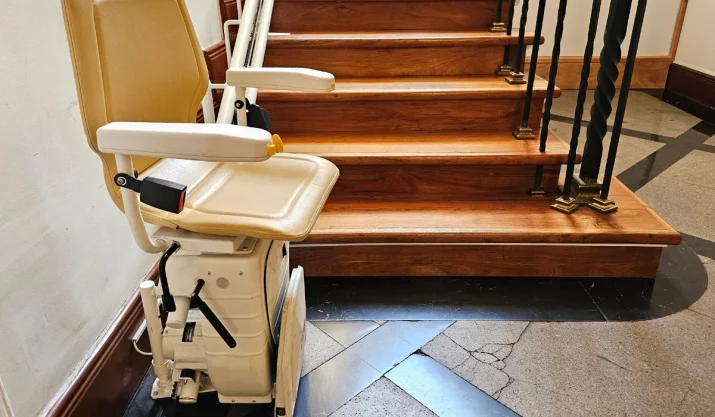
Table of Contents
- Can You Install a Stair Lift Yourself?
- Why Professional Installation Matters for Safety
- What Stair Lift Installation Has to Get Right
- What DIY Stair Lift Installation May Cost Beyond the Listed Price
- When DIY Installation Becomes a Poor Fit
- California Stair Lift Rules and Local Requirements
- What Professional Stair Lift Installation Includes
- When a Domestic Lift May Be a Better Choice
- Why the Pros Still Win
A DIY stair lift can work in a limited set of situations. A skilled homeowner may be able to install a straight model that was designed for self-installation, provided the staircase is simple and the measurements are correct. That does not make DIY the best choice for every home or every rider.
Professional stair lift installation covers more than assembly. It accounts for the rider’s ability to sit, turn, and stand, along with rail length, landing clearance, charging position, safety testing, warranty questions, and future service. Those details matter when someone depends on the lift for daily access between floors.
Can You Install a Stair Lift Yourself?
Some homeowners can install a stair lift themselves. Straight models with modular rails are the most likely candidates because they travel along one uninterrupted flight and may be sold with detailed instructions.
The project becomes less suitable for DIY work when the stairs turn, a doorway sits near the bottom step, the upper landing is narrow, or the ceiling limits headroom. The rider’s condition matters too. Poor balance, reduced leg strength, limited hand movement, or trouble turning can change which seat, controls, and stopping position are appropriate.
A self-install stair lift is most practical when the product, stairs, and rider’s needs are all straightforward. If any one of those factors is difficult to judge, a home assessment is the safer starting point.
DIY vs. Professional Stair Lift Installation
The price difference between a boxed lift and an installed lift can look like a labor charge. In practice, the two options include different work.
| DIY Stair Lift Purchase | Professional Stair Lift Installation |
|---|---|
| Buyer selects the model | Installer checks product fit before ordering |
| Buyer measures the staircase | Installer measures both landings and the rail path |
| Instructions guide assembly | Manufacturer procedures guide setup and adjustment |
| Buyer tests the lift | Installer checks travel, stopping points, charging, and controls |
| Support may be remote | Local service contact is established |
| Buyer handles corrections | Workmanship terms may cover installation corrections |
| Warranty questions go through the seller | Installer may help document a warranty issue |
DIY installation may reduce the first invoice. Professional installation reduces the number of decisions the homeowner must make alone, especially when product listings do not show how the chair will fit the user at each landing.
Why Professional Installation Matters for Safety
People shop for stair lifts because using the stairs has become painful, tiring, or unsafe. Many riders have trouble with balance, standing, vision, joint movement, or transferring from one seat to another.
The Centers for Disease Control and Prevention (CDC) reports that more than 14 million adults age 65 and older fall each year. That is about one in four older adults. The same source reports about 3 million emergency department visits and close to 1 million hospital stays tied to older-adult falls each year.
These numbers cover falls in many settings, not stair lift incidents. They still provide useful context for equipment used by people who may already have reduced balance or strength.
| Older-Adult Fall Measure | Reported Figure |
|---|---|
| Adults age 65 and older who report a fall each year | More than 14 million |
| Approximate share of older adults who report a fall | 1 in 4 |
| Emergency department visits tied to older-adult falls each year | About 3 million |
| Fall-related hospital stays among older adults each year | Close to 1 million |
A safe ride depends on more than movement along the rail. The rider must sit, place both feet on the footrest, operate the control, stop at the correct height, turn toward the landing, and stand with enough space to regain balance.
The Rider’s Needs Shape the Installation
Seat height affects how much effort is needed to stand. Swivel direction affects whether the chair turns toward a safe landing or toward the open staircase. Knee clearance may be limited by a wall, handrail, or low ceiling.
Control placement can also matter. A rider with limited movement in one hand may need the switch on a particular armrest, while someone who cannot rotate a manual seat may need a powered swivel option. These details are easier to assess in person than through a measurement form.
What Stair Lift Installation Has to Get Right
A stair lift includes far more than a chair and a rail. Depending on the model, the system may use batteries, charging contacts, obstruction sensors, limit switches, a swivel-seat lock, a key switch, a seat belt, and a folding rail.
The American Society of Mechanical Engineers (ASME) A18.1 safety standard covers stairway chairlift installation, operation, inspection, testing, maintenance, and repair. Its scope reflects the number of parts that affect the finished installation.
Rail Length and Placement
Measuring a straight staircase takes more than counting the steps. Total travel, stair angle, upper landing space, lower landing clearance, nearby doors, handrails, and ceiling height can affect the rail position.
A short rail may leave the chair below the upper landing. The rider would then need to stand from a lower position and step upward. A long rail may extend into a hallway or block a door near the bottom step.
Some homes need a folding rail because a fixed lower section would cross a walking path. That changes the product choice and adds another part that must align with the main rail.
Charging and Stopping Points
Many stair lifts run on batteries and recharge while parked. A chair that stops outside the charging position may continue working until the batteries lose power. Replacing the batteries will not correct an alignment or stopping problem.
The upper and lower stopping points also affect transfers. The chair needs to finish in a position that gives the rider enough room to rotate, place both feet on a stable surface, and stand without leaning toward the stairs.
Safety Devices and Final Testing
A lift that travels from bottom to top is not necessarily ready for use. Testing may include the seat position, obstruction sensors, controls, charging contacts, stopping points, and folding parts.
The exact checks vary by model. The manufacturer’s instructions should guide setup, adjustment, and testing rather than general advice written for another stair lift.
What DIY Stair Lift Installation May Cost Beyond the Listed Price
The online price may exclude freight, tools, wiring, rail extensions, folding hardware, replacement batteries, or paid troubleshooting. Return shipping can also become expensive after a rail has been cut or drilled.
A stair lift warranty may cover parts but not labor. Some policies may also limit claims involving improper assembly, unauthorized changes, or nonapproved components. The written terms should be checked before installation begins.
Future service belongs in the same cost comparison. A lower-priced unit has less value when no nearby technician works on the model or replacement parts are difficult to obtain.
| Cost Area | DIY Purchase | Professional Installation |
|---|---|---|
| Equipment | Usually shown in the listed price | Included in the project quote |
| Measurement | Handled by the buyer | Handled during the home visit |
| Tools and setup | May cost extra | Usually included |
| Corrections | Paid by the homeowner | Depends on workmanship terms |
| User instruction | Manual or phone support | In-person demonstration |
| Future service | Buyer searches for a technician | Local service contact is established |
| Warranty support | Buyer works with the seller | Installer may assist with documentation |
The lowest starting price does not always produce the lowest total cost. A new rail, service visit, unsuitable option, or return shipment can narrow the gap quickly.
When DIY Installation Becomes a Poor Fit
Certain projects carry more room for error than a basic straight staircase.
Curved Stair Lift Installation
A curved stair lift follows turns, intermediate landings, or changes in angle. Its rail is commonly designed for one staircase, so a survey error can affect the shape of the complete system.
Curved stair lift installation is usually handled as a custom job. A rail formed for one home is unlikely to fit another set of stairs without major changes.
Used Stair Lift Installation
A secondhand lift may have worn batteries, missing brackets, a shortened rail, discontinued parts, or no service history. Used stair lift installation can still work when the model, rail length, orientation, and stair angle match the new home.
Used curved rails present a larger problem because they were made for another staircase. A low purchase price may lose its appeal once a replacement rail or unavailable part is added.
Doorways and Narrow Landings
A door near the first step may require a folding rail. A tight upper landing may leave too little room for the rider to rotate the chair and stand.
These conditions do not always prevent installation, but they affect product selection. An in-home review can identify them before the equipment is ordered.
California Stair Lift Rules and Local Requirements
California has specific language for inclined stairway chairlifts. The California Department of Industrial Relations, Title 8, Section 3094.4 states that installations are subject to local building codes, fire regulations, and contractor licensing.
Procedures can differ between cities and counties. Homeowners should check the rules for the property before ordering equipment or starting work. A seller outside California may understand the product while knowing little about the process used by the local building department.
A California stair lift installer can review the site and direct the homeowner to the correct local authority when a code or licensing question comes up. Addressing that issue before purchase can prevent changes after the rail is installed.
What Professional Stair Lift Installation Includes
A professional visit begins with the person who will use the lift and the staircase it must follow. The installer checks both landings, nearby doors, walking paths, ceiling clearance, stair construction, power access, and transfer space.
After the equipment arrives, the installer follows the manufacturer’s requirements for brackets, rail joints, fasteners, wiring, stopping points, and adjustment. The lift is then tested through its full travel path.
The rider should receive an operating demonstration before the job is complete. Family members can see how to park the chair, rotate the seat, fold the footrest or rail, use the key, and respond when the lift does not start.
Stair lift maintenance is also easier when a local technician already knows the product and the home. That relationship matters when batteries wear out, a part needs adjustment, or the rider’s needs change.
When a Domestic Lift May Be a Better Choice
A seated stair lift is not suitable for every household. A wheelchair user must be able to transfer into the chair at one floor and out of it at the other, and a second wheelchair may be needed upstairs.
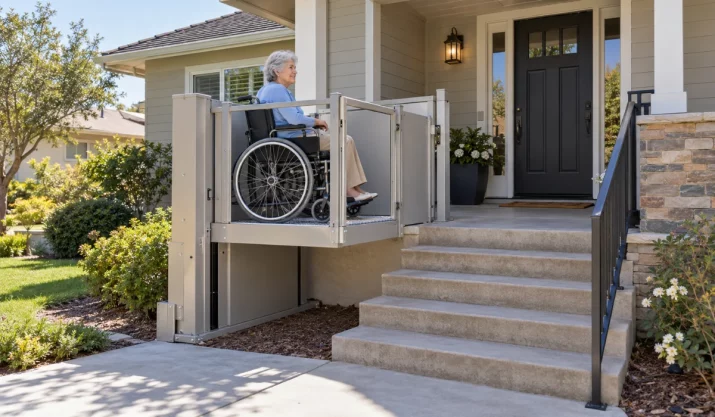
Platform lifts, residential lifts, and compact domestic lifts may be more suitable when seated transfers are difficult or when a wheelchair must travel between floors. These products have different space, electrical, and construction needs, so the decision should start with the rider’s daily routine.
Why the Pros Still Win
A DIY stair lift can be a workable choice for a skilled buyer with a straight staircase and a product designed for self-installation. The buyer still takes responsibility for measurement, fit, testing, warranty questions, local rules, and future repairs.
Professional stair lift installation places those decisions with someone who can inspect the stairs and meet the rider. The value appears in practical details, such as a chair that stops at the right height, enough room to turn onto the landing, charging contacts that line up, and a technician who can return for service.
California Mobility helps homeowners compare stair lifts, domestic lifts, and other home mobility options based on the rider and the property. Contact us to schedule a free in-home assessment and discuss the staircase, product choices, and professional installation.