

The Shower Chair Guide Most Families Wish They Had Read Sooner
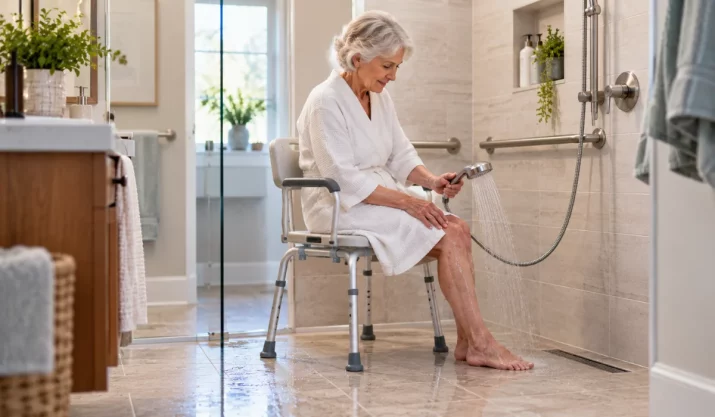
Table of Contents
- Why a Shower Chair Can Make Bathing Easier
- Choosing the Right Type of Shower Chair
- How to Measure for a Shower Chair
- Weight Capacity and Non-Slip Features to Check
- Building a Safer Bathroom Around the Shower Chair
- Making the Right Shower Chair Choice for Your Home
- Frequently Asked Questions About Shower Chairs
A shower chair can make bathing easier, less tiring, and more manageable when standing for the entire shower starts to feel difficult. The right model depends on how you move, how much support you need, and how much space your bathroom gives you.
This guide explains the main shower chair styles, how to measure your space, what to check for weight capacity and non-slip features, and when a transfer bench or rolling chair may make more sense. It also covers a part families often overlook: using a shower seat isn’t giving up independence. It can be a practical way to conserve energy and make everyday bathing feel easier.
Key Takeaways
- A shower chair can reduce how long you need to stand on a wet surface and make bathing less tiring.
- The right style depends on transfer ability, support needs, and the amount of usable bathroom space.
- Weight capacity, seat height, non-slip feet, grab bars, and shower access all matter when planning a safer bathroom.
Why a Shower Chair Can Make Bathing Easier
A shower chair for elderly adults is often treated as a fall-prevention product, but comfort and stamina matter just as much. Standing in one place can become difficult before walking does, especially with arthritis, joint pain, reduced endurance, balance changes, or weakness after an illness or surgery.
A seat changes how much effort common bathing tasks require. Washing your lower legs, reaching your feet, shaving, rinsing shampoo, or simply pausing between steps can feel easier when you aren’t trying to stay upright at the same time.
Why Families Often Wait Too Long
The emotional resistance is real. A parent may reject a shower chair because it feels like equipment for someone who has already lost independence. That can lead families to wait until bathing becomes exhausting or stressful before making a change.
A better way to think about it is energy use. Sitting lets you spend less effort standing and more effort actually bathing, drying off, getting dressed, and moving on with your day. The National Institute on Aging encourages people who want to age in place to consider how well the home will continue to support daily activities as needs change.
Choosing the Right Type of Shower Chair
The best shower chair depends less on age than on how you enter the bathing area and what kind of support you want once you sit down. Someone who can step into a walk-in shower without trouble has different needs from someone who struggles to get over the side of a bathtub.
| Shower Chair Style | What It Does | Often Works Well When | What to Check |
| Basic shower stool | Gives you a compact place to sit | You transfer independently and mainly need rest while bathing | Floor space, seat height, and seated balance |
| Shower chair with back | Adds back support and may include arms | You want more support while sitting | Full frame size and transfer room |
| Transfer bench | Extends across the side of a bathtub | Stepping over the tub wall is difficult | Space inside and outside the tub |
| Rolling shower chair | Moves with the user during some transfers | Walking to the shower or making repeated transfers is difficult | Brakes, doorway width, turning room, and caregiver space |
Basic Shower Stool
A shower stool has the smallest footprint of the common styles. It can work well in a compact stall if you mainly need somewhere to sit while washing your lower body or taking a short break.
The main limitation is support. Most stools have no back, and some have no armrests. If sitting upright without support is difficult, a larger chair may be a better fit.
Shower Chair With a Back
A shower chair with back support gives you a larger sitting area and something to lean against. Models with armrests can also make transfers feel more controlled because you have a clearer seating area.
Check the full frame dimensions rather than the seat width alone. The legs may extend several inches beyond the seat, which matters in narrow showers and tubs with curved or sloped sides.
Transfer Bench
A transfer bench, also called a tub transfer bench, is designed for people who have trouble stepping over the side of a bathtub. You sit on the portion of the bench outside the tub, then move across the seat instead of lifting one leg over the wall while standing.
This style needs room on both sides of the tub. Toilets, cabinets, inward-swinging doors, and narrow walkways can all affect whether the bench fits comfortably.
Rolling Shower Chair
A rolling shower chair can help when getting to and from the shower is part of the bathing problem. Depending on the model and bathroom layout, the user may remain seated for more of the transfer process.
This style needs more planning than a stationary chair. Check brakes, turning clearance, doorway width, floor transitions, shower entry, and the amount of space a caregiver needs to move around the chair.
How to Measure for a Shower Chair
A chair can feel comfortable to sit on and still be wrong for the bathroom. Before buying, measure the exact area where the frame will sit and compare those measurements with the manufacturer’s dimensions.
Measure the Usable Floor Space
Start with the flat part of the shower or tub floor. Don’t rely only on wall-to-wall measurements because drains, sloped edges, door tracks, built-in shelves, and curved bases can reduce the usable space.
Next, measure the narrowest opening the chair has to pass through. A shower enclosure may be wide enough inside while the actual door opening is several inches smaller.
Check Seat Height and Transfer Room
Seat height affects both comfort and the effort needed to stand back up. Your feet should rest securely when you’re seated, and the chair shouldn’t be so low that getting up becomes harder than it needs to be.
If someone assists with bathing, leave enough room beside the chair for that person to stand, reach, and help with transfers.
| What to Measure | Why It Matters |
| Flat floor width | Confirms that the chair’s feet can sit fully on the bathing surface |
| Flat floor depth | Helps keep the frame away from slopes and raised edges |
| Shower or tub opening | Confirms that the chair can enter the bathing area |
| Tub wall or threshold | Helps determine whether a transfer bench may be a better fit |
| Seat height | Affects foot position and the effort needed to stand |
| Space beside the seat | Allows room for transfers and caregiver assistance |
Weight Capacity and Non-Slip Features to Check
Shower chair weight capacity should come from the manufacturer of the exact model you’re considering. Don’t estimate it from the width of the seat or how sturdy the frame appears.
If you’re comparing a standard model with a bariatric shower chair, check both the stated weight limit and the outside frame dimensions. A chair can meet the capacity requirement and still be too large for the available shower floor.
Check the Feet and Frame Contact
A non-slip shower chair still depends on correct placement. Rubber tips, suction-style feet, or similar components should be intact, firmly attached, and positioned fully on the appropriate floor surface.
Avoid setups where one leg rests partly on a drain, curved tub edge, door track, or raised threshold. Adjustable legs should lock securely, and the frame should sit evenly once the chair is in place.
Check the Seat and Drainage
Drainage holes allow water to leave the sitting surface instead of collecting underneath you. The seat should also be free of cracks, loose components, or sharp damage.
A CDC study of bathroom injuries estimated that 234,094 people age 15 and older were treated in U.S. emergency departments for nonfatal bathroom injuries, and 81.1% involved falls. The figures are based on older data, so they shouldn’t be treated as a current annual estimate, but they show why stability and bathroom layout deserve attention.
The MedlinePlus bathroom safety guide also recommends measures such as shower or tub seating, grab bars, and non-slip surfaces for people who need more support.
Building a Safer Bathroom Around the Shower Chair
A chair only helps while you’re seated. Bathing safety for seniors also depends on how you enter the bathroom, step into the bathing area, reach the controls, stand up, and move onto a dry floor afterward.
Add Support Where Transfers Happen
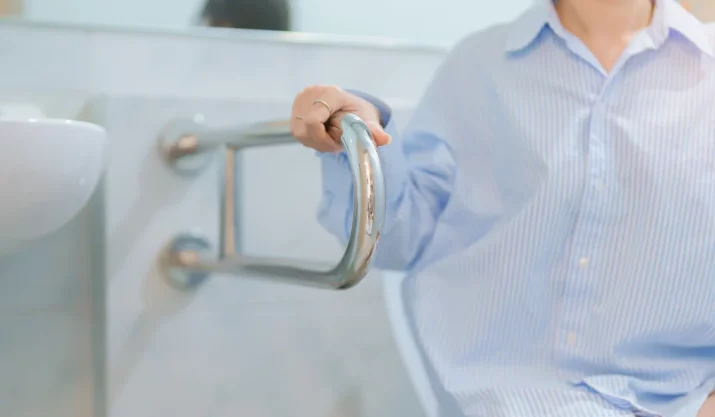
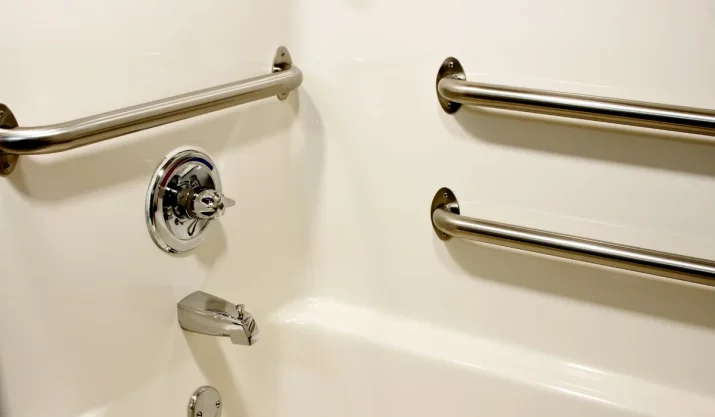
Grab bars can give you a secure handhold where you regularly sit, stand, or step into the shower. Their placement should match the movements you actually make rather than simply being installed wherever there’s open wall space.
A towel bar shouldn’t be used as a substitute. It was designed to hold towels, not to support body weight during a transfer.
A handheld showerhead can also make seated bathing easier. You can direct the water where you need it without twisting, reaching as far, or repeatedly standing up.
Look at the Shower Entrance
Sometimes the chair isn’t the main problem. If stepping over a high bathtub wall has become harder than standing inside the tub, replacing one seat with another may not solve much.
A tub transfer bench can reduce the need to step over that wall. If the bathroom is already being renovated, a walk-in shower can remove the high step and create more usable space for seating and grab bars.
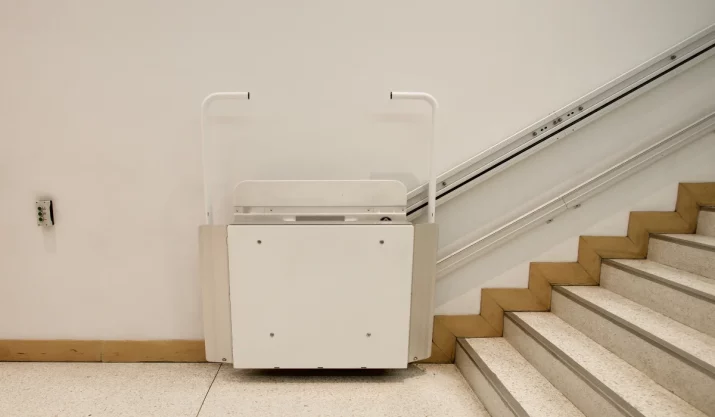
Changes in the bathroom can also point to access problems elsewhere in the home. If stairs, raised entrances, or changes in floor level are becoming difficult at the same time, it may make more sense to look at the home as a whole rather than solving each obstacle separately.
Making the Right Shower Chair Choice for Your Home
Start with the difficulty you’re actually trying to solve. A stool may be enough when you simply want to conserve energy, while a chair with a back gives you more support. A transfer bench addresses a high tub wall, and a rolling chair may be useful when moving to and from the shower has become difficult.
Measure before you buy, follow the manufacturer’s weight limit, and make sure the frame sits fully on a stable surface. Then look at everything around the seat. If bathing still involves an awkward step, a difficult transfer, or a long reach for support, grab bars or a different shower layout may matter more than changing chairs again.
California Mobility helps California families address larger accessibility challenges with ramps, stair lifts, and home lifts. That whole-home perspective can be useful when bathroom changes are only one part of a larger mobility issue involving entrances, stairs, or movement between floors. To discuss accessibility options for your home, contact California Mobility.