

Removing a Stair Lift the Right Way When Needs Change
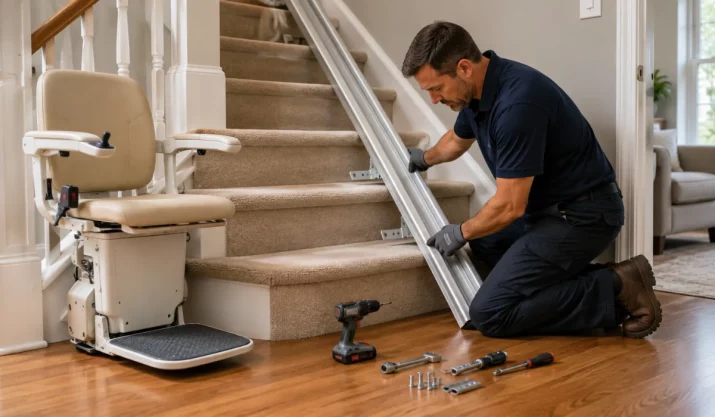
Table of Contents
A stair lift may solve an immediate problem after surgery, an injury, or a decline in mobility. Years later, the equipment may no longer suit the person or the house. The user may recover, move, begin using a wheelchair, or need help from a caregiver. A homeowner may also want the staircase cleared before selling or remodeling the property.
Removing a stair lift is usually possible, but the job involves more than taking off the seat and loosening the rail. The system may include batteries, charging contacts, powered hinges, call controls, and brackets fixed to the stair treads. Poor removal can leave damaged carpet, exposed wiring, missing hardware, or a lift that no longer has resale value.
The right plan depends on what happens after the equipment is gone. Some households simply need their staircase back. Others still need a safe way to move between floors.
When Stair Lift Removal Makes Sense
Stair lift removal is often straightforward when the equipment served a temporary need. Someone recovering from a hip procedure, leg injury, or lengthy illness may regain enough strength to use the stairs again. In another home, the person who relied on the lift may have moved, leaving equipment that no one else uses.
Permanent changes require more thought. A seated stair lift may stop working for someone who can no longer transfer from a wheelchair. It may also become impractical when a caregiver, walker, or other mobility device needs to travel between floors.
| Reason for Removal | Question to Ask First |
|---|---|
| Recovery after surgery or injury | Is the improvement expected to last? |
| Move to another home | Can the lift be adapted to the new staircase? |
| Property sale | Does the buyer want the lift to remain? |
| Remodeling | Will the stair dimensions change? |
| Wheelchair use | Is a platform lift or home lift more suitable now? |
| Frequent breakdowns | Does repair still make financial sense? |
| Death of the user | Does the dealer offer removal, buyback, or recycling? |
A household should not remove a stair lift simply because it looks dated or takes up space. The practical question is whether everyone can still reach the rooms they use without taking an avoidable risk.
Data from the Centers for Disease Control and Prevention (CDC) shows that more than 14 million adults age 65 and older fall each year, which is about one in four older adults. While this figure does not mean every staircase needs a lift, it does show why stair safety deserves a real review before useful equipment comes out.
What to Check Before Removing a Stair Lift
Start with the lift itself. Find the manufacturer, model, serial number, installation paperwork, service history, keys, and remote controls. These details help a technician identify the rail system, power arrangement, and likely reuse options.
The original installer is often the best first call. That company may know whether the unit was hardwired, plugged into a nearby outlet, fitted with a powered folding rail, or built around a custom staircase. It may also offer removal, relocation, trade-in, parts recovery, or recycling.
Straight and Curved Stair Lift Removal
Straight stair lifts usually run on standard rail sections. A dealer may be able to shorten or extend those sections for another straight staircase, depending on the model and condition.
Curved stair lift removal is more involved because the rail follows the exact turns, landings, and angles of one staircase. The chair and drive components may still have value, but the rail may not fit another home.
| Lift Type | Removal Issue | Reuse Outlook |
|---|---|---|
| Straight stair lift | Long rail sections need controlled handling | Often easier to adapt |
| Curved stair lift | Custom bends and joints must stay intact | Rail reuse may be limited |
| Outdoor stair lift | Weather exposure can affect anchors and electronics | Depends on corrosion and parts support |
| Folding-rail lift | Hinges and powered parts add complexity | Best assessed as a complete system |
Plan Access After the Lift Is Gone
The next question is not mechanical. It concerns how the person will use the home once the staircase is clear.
The 2024 AARP Home and Community Preferences Survey found that 75% of adults aged 50 and older want to remain in their current homes, while 73% want to remain in their communities. A removal project should support that goal. It should not make an upstairs bedroom, bathroom, or living area difficult to reach.
For some homes, the answer may be a second handrail, better lighting, or a first-floor bedroom. Other households may need a new stair lift, wheelchair platform lift, or compact domestic lift.
Why Professional Stair Lift Removal Is Usually Safer
A stair lift looks simple because most of its working parts are hidden. The carriage contains the motor and batteries. The rail may be heavy, awkward, and difficult to turn through a hallway. Some models also include powered swivels, linked charging points, or folding sections near the bottom step.
Switching off the wall supply may not remove all stored power. Batteries can still hold a charge, and a hardwired connection may require an electrician. Removing the carriage in the wrong position can damage the rail or create a handling risk.
Professional stair lift removal can also preserve resale or parts value. A dealer may have little interest in a lift with cut wires, bent rail joints, missing brackets, or damaged controls. Keeping the system complete gives the owner more choices after removal.
What a Technician Typically Does
The technician first confirms the model, rail type, and electrical setup. The chair is moved into a suitable service position, the power supply is isolated, and the batteries are handled according to the manufacturer’s instructions.
The carriage comes off before the rail is moved. Rail sections are separated where the design allows, followed by the mounting feet and brackets. Small parts such as chargers, keys, remotes, bolts, and call controls should stay with the unit.
A written quote for a stair lift removal service should state whether the job includes electrical disconnection, equipment removal, haul-away service, disposal, and minor stair repairs. Those services are not always bundled together.
What Affects Stair Lift Removal Cost?
There is no dependable flat price for every removal. Stair lift removal cost depends on the design of the equipment, the staircase, access to the property, and the services included in the quote.
A straight rail on an open staircase may require less work than a curved system that crosses a landing. Outdoor lifts may have corroded fasteners. Long rails can require a larger vehicle or more than one technician. Hardwired units may also need separate electrical work.
| Cost Factor | Why It Matters |
|---|---|
| Straight or curved rail | Curved systems have custom sections and more connection points |
| Rail length | Longer sections require more handling and transport space |
| Landings and turns | Added bends mean more brackets and rail joints |
| Electrical setup | Hardwired connections may need an electrician |
| Stair material | Wood, carpet, tile, and stone need different repairs |
| Property access | Tight halls, stairs, or distant parking can add labor |
| Haul-away request | Transport and disposal may be separate services |
| Buyback eligibility | A dealer may offset part of the removal charge |
Ask for a written quote rather than relying on a general estimate. The quote should identify labor, electrical work, haul-away, disposal, and stair restoration as separate items when they are not included in one price.
Repairing the Stairs After Stair Lift Removal
Most stair lifts are supported by brackets fixed to the stair treads. Once those brackets come out, small holes, carpet dents, or finish differences may remain. The amount of repair depends on the stair material and how long the equipment was installed.
Wood steps may need filler, sanding, stain, and a finish coat. Carpet may need stretching or patching. Painted trim can show marks where the rail passed close to a wall or baseboard.
Sunlight also changes surfaces over time. Areas covered by brackets may look lighter than the surrounding wood or carpet. That contrast is not always damage, though some homeowners choose refinishing for a cleaner result.
Post-Removal Stair Inspection
| Area | Common Issue | Typical Repair |
|---|---|---|
| Wood treads | Screw holes or finish marks | Fill, sand, stain, and seal |
| Carpet | Holes, dents, or loose edges | Stretch, secure, or patch |
| Wall or trim | Scuffs and small holes | Patch and repaint |
| Electrical point | Unused cable or hardwired connection | Have a qualified electrician inspect it |
| Handrail path | Blocked or loose fittings | Restore a clear grip area |
| Stair surface | Forgotten screws or clips | Remove all remaining hardware |
The staircase should be checked before normal use resumes. Every tread should feel firm, and carpet edges should lie flat. No cable, bracket, or screw should remain in the walking path.
What to Do With an Old Stair Lift
An unwanted stair lift may still have value. Age, condition, brand, parts availability, rail type, and service history all affect what can be done with it.
Sell or Trade In the Lift
A straight lift in working condition may interest a dealer because the rail can sometimes be adjusted for another staircase. The dealer will usually inspect the batteries, motor, controls, seat, rail, and safety features before making an offer.
A curved system is harder to reuse as a complete unit. The custom rail may have little value outside the original home, but the carriage, seat, motor, and controls may still be useful for refurbishment or parts.
Do not cut the rail or wiring before speaking with a buyer. Damage that appears minor can make the equipment unsuitable for resale.
Donate the Equipment
Some nonprofits, churches, reuse centers, and community groups accept mobility equipment. Policies vary. One organization may accept a recent straight lift, while another may reject stair lifts because it cannot inspect or install them.
Confirm acceptance before removal. Ask who will dismantle, transport, inspect, and reinstall the system. A donation should not leave another household with incomplete or unsafe equipment.
Store It for Later
Storage may work during a temporary move or renovation. Keep all parts labeled and together. Long rail sections should be supported so they do not bend, and batteries need suitable care.
Storage only makes sense when future installation is realistic. A curved rail may no longer fit after changes to the staircase.
Recycle Unusable Parts
A lift that cannot be sold or donated still contains recyclable metal, wiring, electronics, and batteries. Those materials may need separate handling.
The Environmental Protection Agency (EPA)’s used household battery guidance states that lithium-ion batteries should not go into household trash or curbside recycling bins because damaged batteries can cause fires. A mobility dealer, battery collection point, or household hazardous waste program can direct the owner to the correct local option.
Planning for Life After Stair Lift Removal
A removal project is finished only when the home still works for the people living there. In some cases, no replacement is needed. In others, the old stair lift comes out because the user now needs more space, wheelchair access, or room for a caregiver.
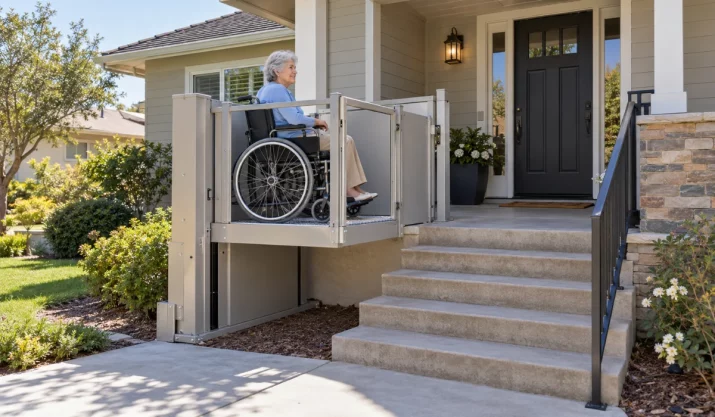
A seated stair lift works for someone who can transfer into the chair and exit at both landings. It may no longer fit the need when that transfer becomes difficult or when a mobility device must travel with the user. Domestic lifts and wheelchair platform lifts can serve those situations, though the right choice depends on available space, structure, travel distance, and daily use.
California Mobility evaluates the user, staircase, floor plan, and likely future needs before recommending a replacement. Schedule an in-home assessment with California Mobility when removing a stair lift is part of a larger accessibility change.
Careful removal protects the home, preserves any value left in the equipment, and keeps the next decision focused on safe access. That is the standard homeowners should expect.