

A Laundry Home Lift Ends the Riskiest Trip in the House
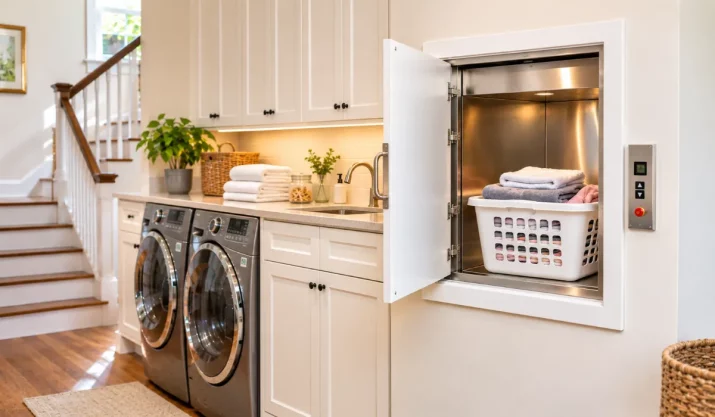
Table of Contents
- Why Carrying Laundry on Stairs Increases Fall Risks
- How Does a Laundry Home Lift Work?
- What to Know Before Installing a Laundry Home Lift
- Laundry Home Lift vs. Moving the Laundry Room or Adding a Stair Lift
- Who Benefits From a Laundry Home Lift?
- Make Laundry Day Safer in Your California Home
- Frequently Asked Questions About Laundry Home Lifts
A laundry home lift moves clothes between floors so you don’t have to carry heavy baskets up and down the stairs. If your bedrooms are upstairs and your washer is downstairs, it can eliminate one of the more awkward parts of laundry day: balancing a full basket while trying to see the steps and reach the handrail.
Also called a laundry dumbwaiter, this compact home lift offers a practical option for California homeowners who want to age in place. Understanding how it works, what installation involves, and how it compares with relocating your laundry room or adding a stair lift can help you choose the right improvement.
Key Takeaways
- Laundry trips create avoidable stair hazards. Heavy baskets can block your view of the steps, occupy both hands, and make handrails harder to use.
- A laundry home lift moves clothes, not people. A residential dumbwaiter transports laundry between floors, but installation depends on your home’s layout, available space, and structural requirements.
- The best solution depends on your mobility needs. A laundry lift helps with transporting clothes, while relocating the laundry room or adding a stair lift may better address other challenges.
Why Carrying Laundry on Stairs Increases Fall Risks
A full laundry basket can turn an ordinary trip downstairs into a balancing act. When clothes pile above the rim, you may have to lean sideways to see the next step. The basket also keeps your hands busy when you need a secure grip on the handrail.
For older adults, reduced strength, changes in vision, or balance difficulties can make carrying laundry upstairs and downstairs more demanding. According to the Centers for Disease Control and Prevention (CDC), more than 14 million Americans aged 65 and older fall each year, or roughly one in four older adults. Although this statistic covers falls from many causes, it shows why reducing household fall hazards matters.
Why Handrails Matter When Carrying Laundry
The National Institute on Aging recommends using handrails and keeping stairways clear to help prevent falls. Carrying a bulky laundry basket can interfere with these precautions, particularly when you need both hands to support the load.
Even if you normally climb stairs without difficulty, transporting heavy laundry baskets adds an unnecessary challenge. A laundry home lift removes that load from the staircase, allowing you to concentrate on your footing and use the handrail.
How Does a Laundry Home Lift Work?
A laundry home lift is a compact lifting system that transports household items between floors. Often called a residential dumbwaiter, it operates inside an enclosed vertical shaft with access doors at designated levels.
You place your laundry basket inside the compartment, close the access door, and use the controls to send it to another floor. Once the lift arrives, you retrieve your clothes from the corresponding opening. The system carries the weight during travel, eliminating the need to haul baskets up or down the stairs.
Laundry Dumbwaiter vs. Laundry Chute
A laundry chute uses gravity to send dirty clothes from an upper floor to a collection area below. While convenient, it only moves items downward. You’ll still need to carry clean laundry back upstairs.
A powered dumbwaiter can move clothes in both directions when designed for that purpose. This makes it useful for transporting dirty laundry to the washer and returning folded clothing, towels, or bedding to the bedroom level.
Unlike a passenger home lift, a laundry dumbwaiter is designed exclusively for household goods. Its compartment size, safety mechanisms, and weight capacity depend on the equipment selected. It must never be used to transport people.
What to Know Before Installing a Laundry Home Lift
Installing a laundry home lift in an existing home requires a suitable vertical route between floors. The equipment needs space for its shaft, structural support, electrical connections, and accessible loading points.
Before choosing a model, have an installer assess your home’s layout. Existing framing, plumbing, and electrical wiring may affect where the equipment can go and how much construction is necessary.
Choosing the Best Location
Ideally, the upstairs opening should be near bedrooms or linen storage, while the downstairs opening should sit close to the laundry room. This arrangement minimizes how far you need to carry each basket.
Some multi-story homes have closets positioned above one another, which may provide a possible installation location. However, an installer must confirm whether the available space meets the equipment’s requirements. You also need enough room to open the access door and remove laundry without blocking a hallway.
Weight Capacity and Safety Features
Residential dumbwaiters have manufacturer-specified weight limits, compartment dimensions, and travel requirements. Consider the items you’ll transport most often, particularly bulky bedding or wet towels that weigh more than everyday clothing.
Depending on the model, safety features may include door interlocks, travel controls, and mechanisms that prevent operation when access doors are open. Ask about maintenance requirements, power interruptions, and safe loading procedures before purchasing.
California homeowners should also confirm applicable building codes and local permit requirements. Dumbwaiter installation may involve modifications to framing, floors, or electrical systems, so professional evaluation is an important part of planning.
Laundry Home Lift vs. Moving the Laundry Room or Adding a Stair Lift
A laundry home lift isn’t the only way to make laundry day easier. Moving the laundry room or installing a stair lift can also reduce physical strain, but each improvement solves a different problem.
| Solution | Best For | Main Consideration |
| Laundry home lift or dumbwaiter | Moving laundry between floors | Requires shaft space and suitable access points |
| Laundry room relocation | Keeping washing and drying on one level | May require plumbing, drainage, electrical work, and ventilation |
| Stair lift | Helping a person travel between floors | Not intended for transporting unattended laundry |
| Passenger home lift | Moving people between floors | Requires passenger-rated equipment and sufficient space |
| Laundry chute | Sending dirty laundry downstairs | Can’t return clean clothes upstairs |
When Moving the Laundry Room Makes Sense
Relocating your washer and dryer to the bedroom level can eliminate many laundry-related stair trips. It may be especially practical if you have an unused room or a large closet that can accommodate the appliances.
However, laundry room relocation often involves new water supply lines, drainage, electrical connections, and dryer ventilation. For an existing California home, these changes may require substantial remodeling. A laundry dumbwaiter may be worth considering when you want to keep your current laundry room.
When a Stair Lift Is the Better Choice
A stair lift helps you move between floors while seated. If knee discomfort, fatigue, or balance problems make climbing stairs difficult, a stair lift addresses a broader mobility concern than transporting laundry.
A laundry dumbwaiter can’t help you climb stairs, and a stair lift shouldn’t be treated as a dedicated cargo system. If you can walk upstairs comfortably but struggle with heavy baskets, a laundry lift may address the immediate problem. If the stairs themselves have become difficult, equipment designed to transport people should take priority.
Who Benefits From a Laundry Home Lift?
A laundry home lift can be useful for homeowners with arthritis, reduced grip strength, joint discomfort, or balance concerns. You don’t need a diagnosed mobility condition to benefit from avoiding heavy loads on the stairs, particularly when washing bedding, towels, or several loads of clothing.
Caregivers can benefit as well. Transporting laundry for another household member may involve repeated trips throughout the week. A dedicated lift reduces the amount of carrying required while allowing the existing laundry room to remain in use.
Supporting Independence and Long-Term Home Value
Many older adults prefer to stay in familiar surroundings as their needs change. According to AARP’s Home and Community Preferences Survey, about three-quarters of people aged 50 and older would like to remain in their current homes or communities for as long as possible.
A laundry home lift can support aging in place by making an existing two-story home easier to manage. It addresses one recurring task that might otherwise become more difficult with age, helping homeowners maintain their everyday routines without relying as heavily on family members.
From a long-term property perspective, a built-in laundry lift adds a functional feature that future occupants may appreciate. However, it doesn’t guarantee a higher resale price. Its clearest value comes from improving the home’s usability while you live there.
Make Laundry Day Safer in Your California Home
Carrying laundry between floors doesn’t have to remain part of your weekly routine. A laundry home lift can remove the need to haul heavy baskets on stairs, while moving the laundry room or installing a stair lift may be more appropriate if your needs extend beyond transporting clothes. The right choice depends on your home’s layout, your mobility, and the work required.
California Mobility is a family-owned company that helps California homeowners address accessibility challenges. With experience in home lifts, stair lifts, and other mobility solutions, our team understands how physical limitations can affect everyday activities in a multi-story home.
If laundry trips or stair use are becoming difficult, contact California Mobility to discuss your home accessibility needs. A professional assessment can help you identify suitable mobility improvements that support safer movement and greater independence as you age in place.