

The Dumbwaiter Is Back and It Is Saving Knees Everywhere
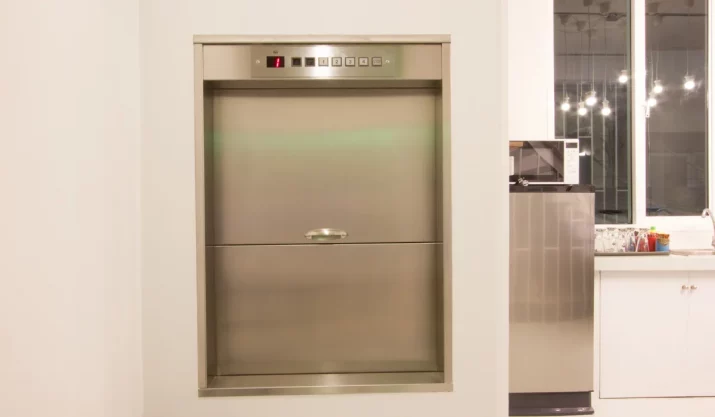
Table of Contents
Laundry is rarely a problem until the laundry room sits one floor below the bedrooms. Groceries feel different when the garage is under the kitchen. A case of drinks or a full storage box may be easy to handle across a room, then become a much bigger job once stairs are involved.
That everyday problem is bringing the dumbwaiter back into modern home design. A residential dumbwaiter is a compact material lift that moves household items between floors. You load it at one level, send it up or down, and retrieve the items at another.
For owners of multi-story California homes, the value is practical. Laundry, groceries, packages, and other heavy or awkward items no longer have to make every stair trip in your arms. That can reduce strain on your knees and back while also leaving your hands free when you use the stairs.
Key Takeaways
- A modern dumbwaiter can move laundry, groceries, packages, and other household loads between floors without turning every chore into a stair-carrying job.
- Residential dumbwaiters come in different sizes and rated capacities, so the right system depends on what you plan to move and where the lift needs to travel.
- Good dumbwaiter installation planning starts with the home’s layout, shaft location, structure, electrical needs, and California safety requirements.
Why Dumbwaiters Make Sense in Modern Homes
The old image of a dumbwaiter belongs to historic houses, hotels, and restaurants. The job it performs, however, fits modern residential life just as well. Homes still have kitchens, garages, bedrooms, laundry rooms, and storage areas spread across different levels.
The problem isn’t always weight alone. A laundry basket can block your view of the next step. Several grocery bags may occupy the hand you would rather keep on the railing, while a bulky package can change your posture as you turn through a landing.
For people who plan to stay in their homes as they get older, those small inconveniences can become more noticeable. The Centers for Disease Control and Prevention (CDC) reports that roughly one in four adults age 65 and older report falling each year. A dumbwaiter isn’t a fall-prevention device, but it can keep many awkward household loads off the staircase.
That makes it useful as part of a broader aging-in-place plan. Instead of changing how you move through the house, the dumbwaiter changes how your belongings move through it.
How a Residential Dumbwaiter Works
A residential dumbwaiter travels vertically inside an enclosed hoistway, sometimes called a dumbwaiter shaft. The car stops at fixed landings where you open a door, load or unload it, and use a control to send it to another floor.
Modern electric dumbwaiters use an engineered lifting system rather than the simple ropes and pulleys associated with older designs. Depending on the equipment, the installation may include a motor or drive assembly, guide rails, controls, landing doors, interlocks, and other safety components.
What Can a Home Dumbwaiter Carry?
A home dumbwaiter can be useful for groceries, folded laundry, bedding, cookware, bottled drinks, packages, pet food, cleaning supplies, and smaller storage boxes. The best use case depends on what regularly moves through your house.
A laundry dumbwaiter may need enough room for a basket but only modest weight capacity. A dumbwaiter for groceries may need a different car size if you routinely move beverage cases, bulk purchases, or multiple bags at once.
The California Code of Regulations, Title 8, Section 3009 sets requirements for dumbwaiters in the state Under this section, a dumbwaiter is limited to a maximum rated load of 500 pounds, a maximum car floor area of nine square feet, and a maximum inside car height of four feet. These are regulatory limits, not recommended specifications for every home.
| Planning Detail | What to Know |
| Maximum rated load under the ASME definition | 500 pounds |
| Maximum car floor area | 9 square feet |
| Maximum interior car height | 4 feet |
| Intended use | Materials only, not passengers |
| Residential capacity | Depends on the selected equipment and expected loads |
| Car dimensions | Should fit the items you actually plan to move |
Why Size and Capacity Need to Match the Job
Dumbwaiter dimensions matter just as much as weight capacity. A car may be rated to carry plenty of weight yet still be inconvenient if your usual laundry basket, grocery tote, or storage container doesn’t fit comfortably inside.
It helps to plan around a normal week rather than an occasional heavy object. If the lift will mainly carry groceries from the garage, measure the bags and containers you normally use. If laundry is the priority, think about basket dimensions and loading height as well as total weight.
Where a Dumbwaiter Can Fit in a California Home
The right dumbwaiter location follows an existing household route. The most useful question isn’t simply where there’s empty space, but where you repeatedly carry things between floors.
California homes offer plenty of situations where that matters. Hillside houses may put garages below the main living area. Narrow-lot homes often build upward, while split-level layouts can create frequent short stair trips between everyday rooms.
From the Garage to the Kitchen
A garage-to-kitchen dumbwaiter can take much of the carrying out of a grocery run. You can load bags, pantry goods, cases of water, or other purchases near the garage and retrieve them closer to the kitchen.
Placement makes a major difference. A landing hidden in an inconvenient corner may save the stair trip but add extra handling at both ends, so the best route should simplify the whole task.
Between the Laundry Room and Bedrooms
A laundry dumbwaiter works well when bedrooms and the laundry area sit on different levels. Baskets are often more awkward than heavy, especially when they are wide enough to block your view of the steps.
Moving the basket separately leaves you free to use the staircase without carrying it against your body. You still handle the laundry at each end, but the vertical trip happens inside the lift.
Inside Closets, Pantries, or Storage Areas
Stacked closets can sometimes provide a logical path for a dumbwaiter shaft because they occupy similar positions on different floors. Pantries, utility rooms, cabinets, and storage areas may also work if the structure allows it.
The visible space is only part of the equation. Floor joists, plumbing, electrical wiring, HVAC ducts, and structural components may run through the proposed route, which is why a site evaluation matters before a location is finalized.
What Dumbwaiter Installation Requires
Dumbwaiter installation is both an equipment project and a construction project. The lift needs a usable vertical path, suitable landing locations, structural support, electrical service, and room for the equipment required by the selected system.
Planning should begin with the household routine. Decide which floors need service, what you expect to move, where loading feels natural, and how large the car needs to be. Those answers influence the shaft location, door orientation, loading height, power requirements, and final equipment choice.
Planning for an Existing Home
Adding a dumbwaiter to an existing house usually requires more investigation than including one in new construction. The framing is already in place, and utilities may cross the route you would otherwise choose.
A contractor may need to inspect the space between floors before confirming that a closet, pantry, or cabinet area will work. Moving the proposed shaft even a short distance can sometimes avoid conflicts with plumbing, ductwork, or structural framing.
New construction gives the project team more freedom because the dumbwaiter shaft can be coordinated before walls and ceilings are closed. Even then, the best location should be based on how the homeowner expects to use the lift rather than simply where unused space remains.
Accounting for California Requirements
California conveyance work can involve state safety rules as well as local building requirements. The California Department of Industrial Relations Home Lift Unit administers home lift safety requirements and oversees regulated conveyances in the state.
Depending on the project, the installation may also involve building, electrical, structural, fire-resistance, permit, or inspection requirements. Those details should be reviewed for the specific property and jurisdiction before construction begins.
That’s why a residential dumbwaiter is best planned as part of the house rather than treated like a standalone appliance. The equipment, shaft, structure, utilities, and everyday use all need to work together.
Making a Dumbwaiter Work for Your California Home
The dumbwaiter is coming back for a practical reason. Multi-story homes create vertical chores, and carrying every basket, bag, case, and box by hand is not the only way to handle them. A properly planned system can move household items between floors while reducing the amount of carrying you do on the stairs.
If the bigger challenge is getting yourself safely and comfortably between levels, a different mobility solution may make more sense. Stair lifts and home lifts are designed to help people move through multi-story homes, while a dumbwaiter is intended only for household items.
California Mobility helps California homeowners find accessibility solutions that support aging in place. If stairs are becoming harder to manage, contact California Mobility to discuss stair lifts, home lifts, and other options that may better fit your home and mobility needs.