

Helping Someone Up From a Chair Bed or Floor Without Hurting Either of You
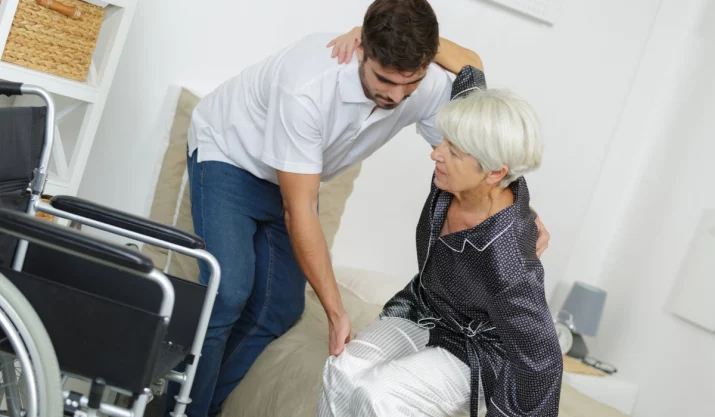
Table of Contents
Helping someone up safely starts with checking whether they can support their own weight, clearing the surrounding space, and agreeing on how you’ll move together. If your parent struggles to rise from a chair or your spouse needs help getting out of bed, pulling harder isn’t the answer. You need to protect their balance without putting unnecessary strain on your back.
The safest approach depends on where the person is, how much they can move independently, and whether they’re injured. A few practical techniques, the right mobility aids, and knowing when to call for help can make everyday caregiving more manageable.
Key Takeaways
- Let the person do what they can independently. Before helping someone stand, check their balance and ability to bear weight. Communicate clearly, prepare the space, and avoid pulling them upright by their arms.
- Adjust your approach to the situation. Getting up from a chair or bed differs from recovering after a fall. Never attempt to lift someone from the floor before checking for injuries.
- Know when physical assistance isn’t enough. Gait belts, lift chairs, and bed assists have different uses. If someone needs regular lifting or can’t safely support their weight, seek professional training and suitable equipment.
How to Prepare Before Helping Someone Up
Before reaching out to help, ask your loved one how they’re feeling and what they can do independently. Can they move their feet into position and support themselves while standing? Someone who can bear weight may need guidance or light assistance, while someone unable to stand requires a different transfer plan.
Talk through the movement before starting. Instead of saying, “Come on, get up,” explain what they should do first. You might say, “Place both feet on the floor and use the armrests when you’re ready.” Give them time to respond so neither of you moves unexpectedly.
Check Footwear and Clear the Space
Look for loose rugs, cords, shoes, or furniture blocking the path. Make sure the chair or bed is stable and that your loved one has enough room to position their feet comfortably.
Both of you should wear supportive, non-slip footwear. Socks on smooth floors or slippers that slide off easily can make it harder to maintain balance, particularly when someone feels unsteady after standing.
Use Proper Body Mechanics
Position yourself close enough to assist without reaching awkwardly across the person. Keep your feet apart for balance and turn with your feet rather than twisting your back. Avoid leaning backward to pull someone upright.
The Occupational Safety and Health Administration identifies manual patient handling as a risk for musculoskeletal injuries, including back injuries. Good body mechanics help limit awkward movements, but they can’t make lifting another person’s full weight safe without appropriate equipment and training.
How to Help Someone Stand Up From a Chair or Bed
Chairs and beds present different challenges, although both require the person to reach a stable standing position. Start by checking whether your loved one can move and bear weight safely. If they cannot, don’t attempt the transfer without a professionally recommended method.
Helping Someone Get Up From a Chair
A firm chair with sturdy armrests generally provides better support than a deep couch or low recliner. Check that the chair won’t slide or tip before asking your loved one to prepare to stand.
If they can safely bear weight, encourage them to move toward the front of the seat and place their feet flat on the floor. They can lean forward slightly and push through the armrests while straightening their legs. Stay nearby without pulling their wrists or shoulders, and let them find their balance before walking.
Pay attention to whether the problem happens with one particular chair. Someone who struggles with a soft couch but stands comfortably from a firmer seat may benefit from different furniture. Persistent difficulty standing calls for a mobility assessment.
Helping Someone Get Out of Bed
Getting out of bed requires a change from lying down to sitting before standing. If your loved one can move independently, encourage them to roll toward the edge, bring their legs over the side, and use their arms to raise their upper body.
Once seated, ask them to pause with both feet supported on the floor. If they feel dizzy or unsteady, don’t continue toward standing. New or persistent dizziness should be discussed with a healthcare professional.
Bed height also matters. A mattress that’s too high may leave their feet dangling, while a low bed can make rising difficult. A suitable bed assist handle may provide additional support, but avoid installing one without checking its compatibility and safety.
Helping Someone Up After a Fall: What Should You Do?
A fall requires a different response from an ordinary standing transfer. According to the Centers for Disease Control and Prevention, more than 14 million Americans aged 65 and older report falling each year. Knowing how to respond matters, especially when you didn’t see what caused the fall.
Before attempting to move your loved one, ask what happened, whether they hit their head, and where they feel pain. Check whether they’re alert and breathing normally. Don’t assume they’re uninjured simply because they’re talking.
When Is It Safe to Help Someone Off the Floor?
If the person is alert, has no apparent injuries, and feels capable of moving, ask whether they know a floor-recovery method taught by a physical therapist. They may be able to follow that familiar method while you offer verbal guidance.
Don’t attempt to haul them upright by their hands or under their arms. If standing requires you to lift most of their weight, stop. A full-body lift from the floor can put both people at risk.
When Should You Stop and Call for Help?
Call 911 if your loved one loses consciousness, has trouble breathing, shows signs of a stroke, or may have a serious head, neck, or spinal injury. Severe pain, a suspected fracture, or new difficulty bearing weight also requires prompt medical evaluation.
If they can’t get up but have no apparent emergency symptoms, arrange suitable trained assistance. Stay nearby, keep them comfortable as their condition allows, and follow instructions from the responding service. Don’t force them to stand because they’re embarrassed or eager to get off the floor.
Afterward, let their healthcare professional know about the fall, particularly if falls are becoming frequent or their mobility has changed.
Which Mobility Aids Make Standing and Transfers Easier?
If you’re helping an elderly person stand several times a day, relying on physical strength can become exhausting. Mobility aids can support specific movements, but each device has limitations. The safest choice depends on the person’s ability to bear weight, their surroundings, and the caregiver’s training.
Gait Belts and Transfer Support
A gait belt gives a trained caregiver a secure handhold during certain transfers. It can help with controlled assistance when the person can support themselves, but it isn’t designed to lift their entire body weight.
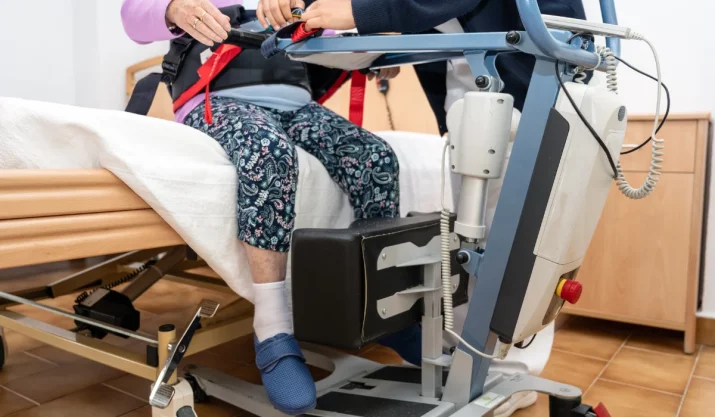
For someone who can’t safely stand, a powered patient lift may be more appropriate. These devices require an individualized transfer plan and trained operation.
Lift Chairs and Bed Assists
Lift chairs can help people who struggle to rise from ordinary seating by gradually raising the seat. Bed assist handles serve a different purpose, providing a handhold for selected movements into or out of bed.
Neither device is appropriate for everyone. The U.S. Food and Drug Administration warns that adult portable bed rails can create entrapment hazards, making proper selection and installation particularly important.
| Mobility Aid | What It Helps With | What to Know |
| Gait belt | Controlled assistance during certain standing transfers | Requires caregiver training and appropriate weight-bearing ability |
| Lift chair | Rising from a seated position | The user must still be able to stand and balance safely |
| Bed assist handle | Supporting selected movements in bed | Must be compatible with the bed and assessed for safety |
| Powered patient lift | Transferring someone unable to stand safely | Requires the correct equipment, transfer plan, and trained caregivers |
If you regularly provide hands-on lifting or transfer assistance, arrange training with a physical therapist, occupational therapist, or qualified patient-handling professional. They can demonstrate safe techniques based on your loved one’s actual movement abilities rather than general lifting advice.
Making Everyday Mobility Safer at Home
Helping someone up should be a coordinated movement, not a test of your physical strength. Check what your loved one can manage, prepare the space, and give them time to stand. When they can’t safely support themselves, trained assistance and appropriate equipment are better choices than an improvised lift.
For many California families, mobility challenges extend beyond chairs and beds. Front steps, staircases, and changes in floor level can make it harder for older adults to move between familiar areas of their homes. California Mobility offers stair lifts, ramps, and home lifts to help address these barriers.
If you’re planning home improvements for a loved one with changing mobility needs, contact California Mobility to discuss accessibility options suited to your home. A practical home setup, combined with proper caregiver training, can help make everyday movement safer and less physically demanding for everyone involved.