

How Much Are Lift Chairs and What Medicare Actually Pays For?
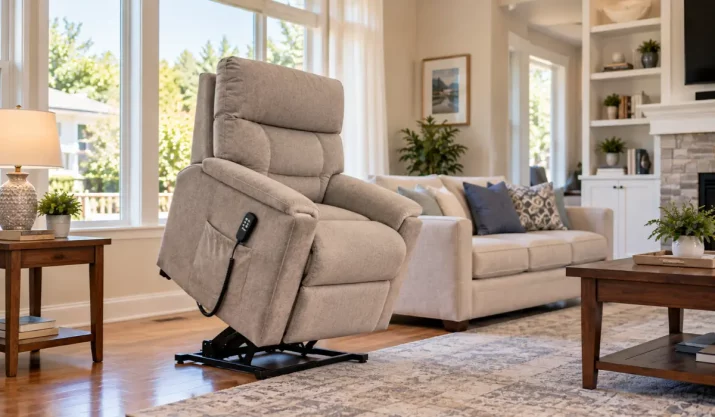
Table of Contents
- How Much Are Lift Chairs by Type?
- What Features Increase Lift Chair Cost?
- How Much Are Lift Chairs With Medicare?
- How Do You Qualify for Medicare Coverage for a Lift Chair?
- How to Choose a Lift Chair That Supports Independence
- Choosing the Right Lift Chair for Your California Home
- Frequently Asked Questions About Lift Chairs
Most lift chairs sold by major national retailers currently range from $250 to $2,000 or more. The amount you pay depends on the reclining system, number of motors, chair size, upholstery, weight capacity, and features such as heat, massage, power lumbar support, and an adjustable headrest. That range reflects current retail listings rather than a fixed industry average. Sale prices and available models change, and specialty chairs can fall outside the range.
Medicare may help pay for a qualifying seat lift mechanism, but it does not generally pay for the complete upholstered chair. For covered durable medical equipment, Original Medicare generally pays 80% of the Medicare-approved amount after the applicable Part B deductible. Your share is generally 20%, along with the cost of the chair and other noncovered features.
Key Takeaways
- Lift chair prices commonly range from about $250 to $2,500 or more. Two-position chairs are usually the least expensive, while infinite-position and zero-gravity models tend to cost more.
- Medicare doesn’t generally cover the full recliner. Part B may help pay for a qualifying seat lift mechanism when it’s medically necessary, and the coverage requirements are met.
- Fit and function matter more than the number of features. Seat dimensions, controls, positioning, and the way you transfer in and out of the chair should guide the purchase before extras such as heat or massage.
How Much Are Lift Chairs by Type?
The answer to how much are lift chairs depends heavily on the type of reclining system. Basic chairs use a simpler motor setup, while higher-priced models give you independent control over the back, legs, and sometimes the head and lower back.
| Lift Chair Type | How It Can Affect Cost | What It Does |
| Basic power lift recliner | Often among the lower-priced options | Provides powered reclining and assistance moving toward a standing position |
| Multi-motor lift chair | Often costs more than comparable single-motor models | Lets you control different sections of the chair separately |
| Infinite-position chair | Price varies widely by brand, size, and features | Allows more independent adjustment of the back and leg sections |
| Zero-gravity-capable chair | Can carry a higher price when combined with multiple motors and premium features | Positions the legs higher while supporting a more reclined posture |
Current prices vary substantially by retailer, chair size, upholstery, motor configuration, and optional features. Major national retailers currently list power lift recliners from roughly $250 to more than $2,000.
*Cost analysis is based on current listings from Home Depot and Walmart. Actual costs will vary depending on the specific unit you choose.
Two-Position and Three-Position Lift Chairs
A two-position lift chair is usually the lowest-cost option. Its main job is simple: help move you from a seated position toward standing while still offering a modest recline for everyday sitting.
Three-position models add a deeper recline without moving into the price range of many multi-motor chairs. They are often a better fit if the chair will be used throughout the day for reading, television, or rest rather than mainly for sitting and standing.
Infinite-Position and Zero-Gravity Lift Chairs
Infinite-position lift chairs usually have at least two motors so the back and leg sections can move separately. That extra control can help if you change position often or find that one fixed reclining angle becomes uncomfortable.
Zero-gravity lift chairs support a position where the legs can sit higher while the upper body reclines. The term describes how the chair positions your body. It doesn’t create a separate Medicare coverage category or make the chair automatically eligible for payment.
What Features Increase Lift Chair Cost?
Lift chair prices can rise quickly once comfort and positioning upgrades are added. Some options affect how easily you use the chair, while others mainly change how the chair feels.
The practical question is whether an upgrade solves a problem you deal with every day. A feature that helps you maintain a usable position for several hours can be worth paying for. A feature you rarely turn on is less likely to justify the extra cost.
| Feature | What It Adds | When It May Be Useful |
| Heat | Warms part of the seat or back | You regularly use warmth for comfort |
| Massage | Adds vibration or massage settings | You enjoy the feature and expect to use it often |
| Power headrest | Adjusts head and neck support separately | You recline often but still want your head supported in a forward-facing position |
| Power lumbar | Changes lower-back support | Fixed back support doesn’t fit you comfortably |
| Multiple motors | Allows separate control of different chair sections | You change position frequently or need more precise adjustment |
| Wider seat | Adds sitting room | A standard seat feels restrictive or affects transfers |
| Higher weight capacity | Uses a frame and motor rated for a greater load | You need a chair designed for a higher capacity |
| Battery backup | Provides limited operation during a power outage | You want to reduce the chance of being stuck in a reclined position |
Heat, Massage, and Power Headrests
Heat and massage are comfort features rather than the core lifting function. They may make the chair more enjoyable to use, but they don’t automatically make it medically necessary for Medicare purposes.
A power headrest can have a more direct effect on positioning. If you spend time reclined while reading, watching television, or talking with family, adjusting the head support separately can help you stay comfortable without bringing the entire chair upright.
Motor and Size Upgrades
Multiple motors make it possible to change the back and footrest independently. That flexibility often matters more to someone who spends several hours in the chair than to someone who mainly wants help standing.
Seat width and weight capacity deserve the same attention. A higher-priced chair can still be a poor choice if the seat is too narrow, too deep, or rated below what the user needs.
How Much Are Lift Chairs With Medicare?
When people ask how much are lift chairs with Medicare, the biggest source of confusion is the difference between the chair and the lifting equipment inside it. Medicare doesn’t generally treat the entire upholstered recliner as covered durable medical equipment.
According to Medicare’s durable medical equipment (DME) coverage guidance, Part B can cover certain medically necessary DME. Under Original Medicare, Medicare generally pays 80% of the Medicare-approved amount for covered equipment after the applicable Part B deductible, while you are generally responsible for the remaining 20%.
That calculation applies to the approved covered equipment, not the chair’s full retail price. If a lift chair costs $1,600, Medicare doesn’t simply pay $1,280 because that equals 80% of the sticker price.
| Part of the Purchase | How Medicare Generally Treats It |
| Upholstered recliner | Generally not covered as DME |
| Qualifying seat lift mechanism | May be covered when Medicare requirements are met |
| Heat | Not part of the basic covered lift mechanism |
| Massage | Not part of the basic covered lift mechanism |
| Premium upholstery | Generally a personal expense |
| Power headrest or lumbar controls | Don’t automatically qualify for Medicare payment |
| Covered Part B amount | Medicare generally pays 80% after the applicable deductible |
| Remaining noncovered costs | Usually paid by you unless another plan provides benefits |
Why Your Out-of-Pocket Cost Can Still Be High
Even when the lift mechanism qualifies, you may still pay for the recliner itself, upgrades, and any noncovered delivery or setup charges. Your 20% Part B share also applies to the Medicare-approved amount for the covered equipment after the deductible.
Medigap, Medicaid, or a Medicare Advantage plan can change what you ultimately pay. If you have coverage beyond Original Medicare, check that plan’s rules before ordering.
How Do You Qualify for Medicare Coverage for a Lift Chair?
Medicare coverage for a lift chair mechanism depends on medical need, not age alone. Trouble standing is part of the picture, but Medicare also looks at why you can’t rise from an ordinary chair and what you can do once you are standing.
The CMS coverage policy for seat lift mechanisms includes criteria related to severe arthritis of the hip or knee or a severe neuromuscular disease. The policy also requires that you be unable to rise from a regular armchair or another chair in your home and that you can walk once you are standing.
Start With Your Treating Practitioner
Describe exactly what happens when you try to stand from normal seating. You may need another person to pull you forward, your knees may not provide enough force to straighten, or a diagnosed condition may prevent you from completing the movement.
Your medical record must support the need for the lift mechanism. A prescription or equipment order is part of the process, but having one doesn’t guarantee that Medicare will approve payment.
Use a Medicare-Enrolled Supplier
After the medical documentation and order are in place, check the supplier before buying anything. Ask whether the supplier is enrolled in Medicare, whether it accepts Medicare assignment, and what amount you are expected to pay.
Buying a lift recliner first and trying to sort out Medicare afterward can create problems. The safer route is to confirm the supplier and coverage process before placing the order.
How to Choose a Lift Chair That Supports Independence
A good lift chair does more than move upward. It should fit your body well enough that you can place your feet securely, reach the controls, and move between sitting and standing without fighting the dimensions of the chair.
This matters because transfers are repeated throughout the day. The Centers for Disease Control and Prevention (CDC) reports that more than one in four adults age 65 and older reports falling each year. A lift chair doesn’t prevent falls by itself, but good fit can make the sitting and standing motion more controlled.
Check Chair Fit Before Adding Extras
A chair that is too deep can leave you struggling to get near the front edge before standing. A seat that is too high may keep your feet from resting securely on the floor.
| Fit Factor | What to Check |
| Seat height | Your feet can rest securely when seated |
| Seat depth | Your back remains supported without pushing you too far from the front edge |
| Seat width | You have enough room to sit comfortably without excessive side-to-side movement |
| Armrest position | You can reach and use the armrests comfortably |
| Weight capacity | The chair is rated appropriately for the intended user |
| Controls | Buttons are easy to see, reach, and understand |
| Reclining clearance | The chair has enough room to move without hitting a wall or nearby furniture |
Measure the intended space before ordering. A chair that fits well in a showroom can still be awkward at home if the footrest blocks a walkway or the back needs more clearance than the room provides.
Spend More Only Where It Helps
If standing assistance is your main need, a two-position or three-position chair may provide enough support without the cost of several independent motors. You don’t gain much from controls you never use.
If you spend much of the day seated, the calculation changes. Independent back and leg adjustment, a power headrest, or more precise positioning can be worth the added cost when those features help you change posture throughout the day.
Choosing the Right Lift Chair for Your California Home
Knowing how much lift chairs cost helps you set a realistic budget, but price should stay tied to function. Compare the reclining system, fit, controls, warranty, service options, and the features you will actually use. If Medicare coverage may apply, handle the medical documentation and supplier steps before ordering.
A lift chair can address the transition between sitting and standing, but other parts of the home may still limit independence. Stairs, changes in floor level, and difficult entry points often call for separate accessibility solutions.
California Mobility is a family-owned company that helps Californians make their homes easier to use as mobility needs change. If you’re looking at broader ways to improve movement and accessibility at home, contact California Mobility to discuss practical options based on your home, routine, and mobility needs.