

The Wall Hugger Adjustable Bed Keeps Your Nightstand in Reach
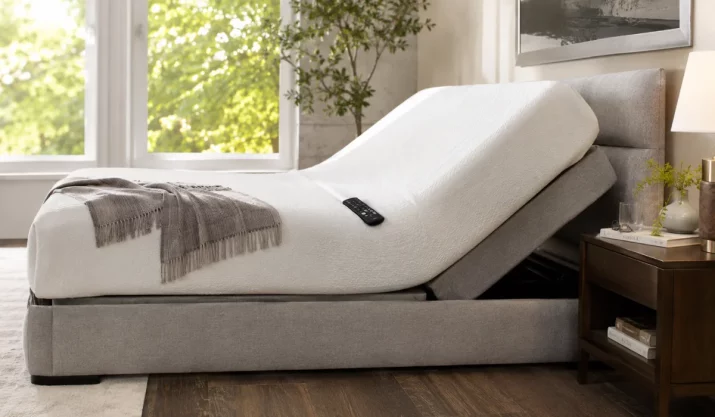
Table of Contents
Raise the head of a standard adjustable bed and you may notice something odd. Your shoulders move forward, but your nightstand stays beside the headboard. The phone, lamp, water, or glasses that were easy to reach can end up behind you.
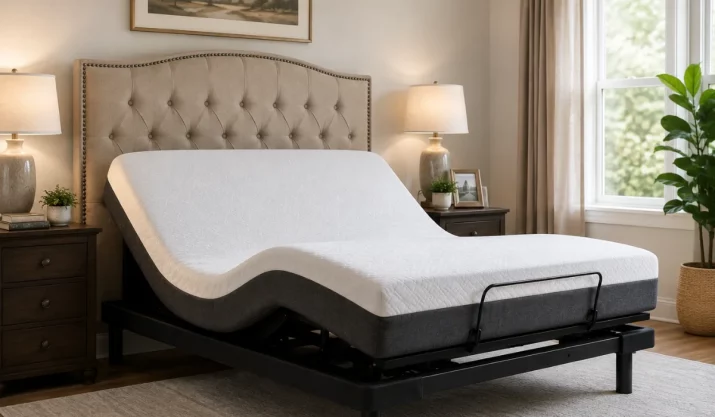
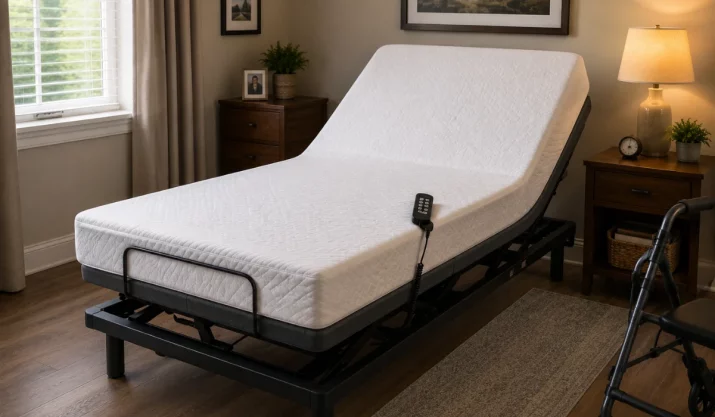
A wall hugger adjustable bed changes that movement. As the head section rises, the mattress platform glides toward the wall. You sit up while staying closer to the bedside table.
That difference matters when the raised position is part of your nightly routine. It can make reading, watching television, resting, or reaching for medication feel less awkward. For older adults and people with limited reach, it may also make the bedroom easier to use without moving furniture every evening.
What Is a Wall Hugger Adjustable Bed?
A wall hugger adjustable bed is a powered bed base with head and foot controls plus a backward-gliding platform. The head section raises the mattress while the base shifts toward the headboard.
A regular adjustable bed base usually pivots from a fixed point. As the upper section lifts, the sleeper moves toward the foot of the bed. A wall hugging adjustable bed offsets part of that movement by sliding the platform back.
Manufacturers use several names for this feature. You may see wall glide, wall saver, headboard hugger, or Wallhugger technology. These terms point to a similar function, but the amount of travel and the way the base moves differ between products.
The Leggett & Platt Prodigy PT 2.0 product page describes its Wallhugger system as a way to keep the user closer to the nightstand while the bed adjusts. That model also includes pillow adjustment, massage, memory settings, USB ports, and lighting. Other bases may offer fewer features or use a different glide system.
How the Gliding Motion Changes Your Position
The difference is easiest to understand by watching where your shoulders move. On a standard base, they travel up and forward. On a wall hugger adjustable bed base, they travel up while the platform moves back.
| Bed Position | Standard Adjustable Base | Wall Hugger Adjustable Base |
|---|---|---|
| Flat | Sleeper rests near the headboard | Sleeper rests near the headboard |
| Low incline | Shoulders begin moving forward | Platform begins moving backward |
| Reading position | Nightstand may sit behind the shoulder | Nightstand stays closer to the torso |
| High incline | Reaching may require turning or leaning | Bedside items remain nearer to the hand |
The amount of backward movement varies. Some product pages describe a wall-hugging feature without publishing the glide distance. Ask for the actual travel measurement or test the base in a showroom before buying.
Wall Hugger vs. Standard Adjustable Bed
Both designs can raise the head and feet. Many models also offer preset positions, massage, lighting, and wireless controls. The deciding feature in a wall hugger vs. standard adjustable bed comparison is the backward glide.
| Feature | Wall Hugger Base | Standard Adjustable Base |
|---|---|---|
| Head and foot adjustment | Common | Common |
| Backward movement | Built into the design | Usually absent |
| Nightstand position | Stays closer to the user | May fall behind the user |
| Mechanical system | More involved | Simpler |
| Price | Often higher | Often lower |
| Best use | Frequent sitting or reclining | Occasional position changes |
| Furniture placement | Helpful when tables cannot move | May require a new table position |
A standard base can work well when the sleeper stays flat most of the night and raises the head for short periods. It also makes sense when the nightstand can be moved forward without blocking a walkway.
The wall hugger feature earns its cost when the raised position is part of the daily routine. Someone who reads for an hour, watches television in bed, or sleeps with the head raised will notice the difference more than someone who uses the controls once a week.
Why Nightstand Access Matters
A nightstand usually holds the things you reach for when you are tired or waking from sleep. That may include a phone, glasses, water, a lamp switch, hearing aids, medication, a book, or the bed remote.
Moving several inches away from those items can change how you use the bed. You may need to twist, roll toward the edge, or reach behind your shoulder. That is inconvenient for anyone and can be harder for a person with shoulder stiffness, reduced grip, or limited balance.
A wall hugger base shortens that reaching distance. It does not fix a nightstand that is too low, too far from the mattress, or crowded with objects. The table still needs to fit the sleeper and the mattress height.
The tabletop should sit near the top of the mattress. The user should be able to reach important items without bending far down or leaning toward the edge.
Who Gets the Most Value From the Wall-Hugging Feature?
Older Adults and People With Limited Reach
An adjustable bed for seniors should be judged by more than presets and massage modes. Reach, bed height, remote design, and transfer space often matter more.
A shorter reach can make bedside routines easier for someone with shoulder stiffness, reduced grip, or limited trunk movement. The benefit comes from better positioning rather than from a medical effect.
Bed height also needs attention. When seated at the edge, the sleeper should be able to place both feet near the floor. A tall mattress and raised base can make transfers harder, while a very low setup can place more demand on the knees.
People Who Sit Up in Bed
Readers, television viewers, and people who use a tablet in bed tend to keep the head section raised longer. During that time, access to a charger, lamp, drink, or remote becomes part of the comfort test.
The backward glide also helps when the room has fixed furniture. A built-in nightstand cannot follow a standard adjustable base forward. A wall hugger design works around that limit.
Couples With Split Adjustable Bases
A split king normally uses two Twin XL mattresses and two separate bases. Each person can select a different position without changing the other side.
For couples, check whether each base glides on its own and whether the two sides can move together when needed. Also look at the space between the mattresses, remote pairing, and how the sheets fit once one side rises.
Comfort Positions and Sleep Needs
An adjustable base supports more than one posture. Head elevation can create a better angle for reading. Raising the knees can take some pressure off the lower body. Lifting both sections creates a reclined position that many people find more comfortable than sitting against loose pillows.
Some bases include a zero-gravity preset. The label refers to a reclined position with the legs raised, but the exact angles differ between brands. It is a comfort setting rather than a medical standard.
Massage, pillow tilt, and lumbar controls may add value, but they should come after the basic fit. Smooth movement, simple controls, and a useful glide distance matter more than a long feature list.
Head Elevation and Acid Reflux
Some sleepers raise the upper body because reflux feels worse when they lie flat. The National Institute of Diabetes and Digestive and Kidney Diseases reports that about 20% of people in the United States have GERD.
A systematic review published in BMC Primary Care found that the available controlled trials generally favored head-of-bed elevation for symptom improvement. The studies were small and used different methods, so the finding does not support a guaranteed result.
The wall-hugging motion is not the part connected with reflux. Head elevation is the relevant feature. The glide simply keeps the sleeper closer to the nightstand while using that position.
Frequent reflux, trouble swallowing, chest pain, vomiting, or unexplained weight loss should be discussed with a medical professional.
Features to Compare Before Buying
A product can carry the wall hugger label and still be a poor fit for your bedroom. The specifications matter more than the name.
| Feature | Why It Matters | Question to Ask |
|---|---|---|
| Glide distance | Affects how close you remain to the nightstand | How far does the platform move back? |
| Head and foot range | Determines available positions | What are the maximum adjustment angles? |
| Mattress compatibility | Prevents damage and warranty problems | Is my mattress approved for this base? |
| Weight rating | Covers sleepers, mattress, and bedding | Is the limit per side or for the full base? |
| Zero-clearance option | Affects platform-frame installation | Can the base sit on my existing frame? |
| Emergency lowering | Matters during a power outage | How does the bed return to flat? |
| Remote design | Affects daily use | Are the buttons clear and backlit? |
| Warranty | Motors and electronics may have separate terms | Which parts have full coverage? |
Mattress and Frame Compatibility
Many foam, latex, and hybrid mattresses are flexible enough for an adjustable base. Some innerspring designs are too rigid. Check the mattress manufacturer’s instructions before placing it on a powered frame.
A wall hugger adjustable bed frame also needs room to move. Storage drawers, crossbars, decorative rails, and center supports can interfere with the motor or linkage. Measure the inside of the existing frame rather than using the mattress size alone.
Zero clearance and wall hugging are separate features. Zero clearance means the base can rest on certain platforms without its standard legs. Wall hugging describes how the platform moves when the head rises.
Capacity, Controls, and Power Loss
The published capacity normally includes the mattress, sleepers, bedding, and anything else placed on the base. It may assume the weight is spread over the sleep surface. Read the instructions for the exact size you are buying.
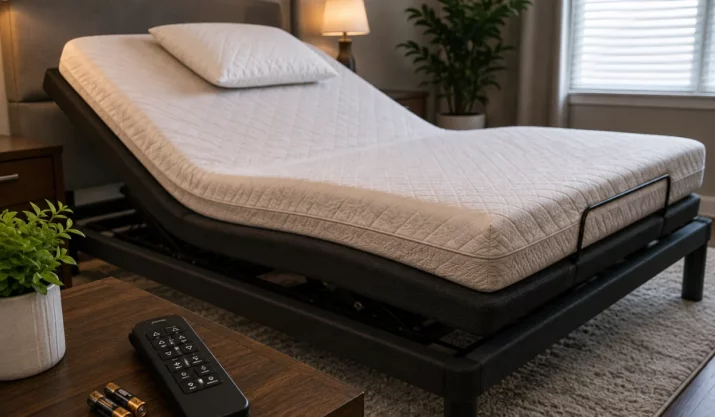
Controls should be easy to understand in low light. Large buttons, preset positions, and a flat button can matter more than an app. A person with limited hand strength may prefer a simple remote over a touch-sensitive control.
Ask what happens during a power outage. Some bases use batteries to return the bed to a flat position. Others require a manual release or a separate backup accessory.
How to Fit a Wall Hugger Bed in a Small Bedroom
A wall hugger model is often described as a space-saving adjustable bed, but it does not reduce the physical size of the mattress. Its advantage is that the user stays closer to the wall, which may reduce the need to pull a nightstand forward.
Start with the inside width and length of the existing bed frame. Measure the space below it as well. Drawers, slats, support beams, floor vents, or stored items may block the moving parts.
Measure from the floor to the top of the mattress and compare that number with the nightstand height. Then sit on the edge and check whether your feet reach the floor without sliding forward.
Look at the outlet location and cord path. The bed cord should not cross a walking route or pass through moving hardware. Leave enough space between the mattress and nightstand so the base does not strike the furniture.
Delivery access is easy to overlook. Powered bases are heavy and difficult to turn in narrow halls. Measure doors, stairs, landings, and tight corners before ordering.
For homeowners making wider accessibility changes, the bedroom should be reviewed as part of the full route through the home. Clear walking space, bathroom access, stair use, and domestic lifts address different needs, but they work best when planned together.
Is a Wall Hugger Adjustable Bed Worth the Cost?
The wall-hugging feature is worth considering when the head of the bed stays raised for long periods. It keeps bedside items closer and works well in rooms where furniture cannot move.
It offers less value when the bed remains flat, the nightstand is easy to reposition, or the raised setting is used only for a few minutes. In that case, a simpler adjustable base may provide the same useful head and foot movement for less money.
Before buying, recreate your usual position in the showroom. Raise the head, place a phone or glass on the table, and reach for it without turning your body. Test the remote in low light and listen to the motor through a full cycle.
That short test tells you more than a feature list. A wall hugger adjustable bed earns its place when the glide solves a problem you notice every day.
California Mobility helps homeowners plan practical access changes for safer movement at home. Contact us to discuss mobility products and options for your space.