

Gate and Enclosure Safety for Platform Lifts in California
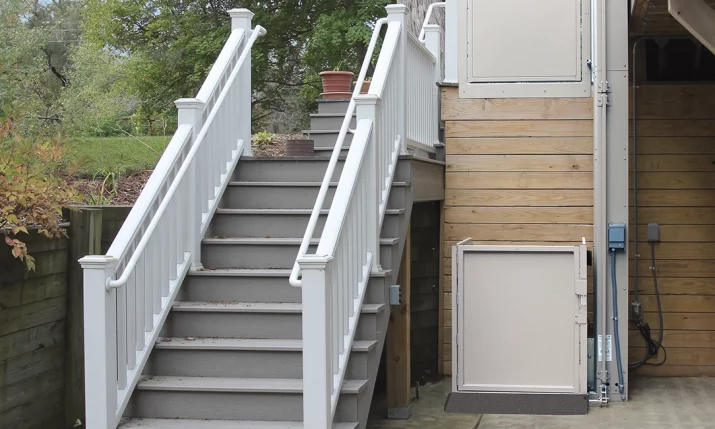
Table of Contents
A vertical platform lift (VPL) should feel safe before anyone rolls onto it. For a wheelchair or scooter user, that safety often depends on the gate, enclosure, landing space, and how the lift fits the home’s daily access route.
In many California homes, a lift may serve a raised entry, a garage step-up, a porch, or a side-yard path. Before installing or upgrading a VPL, check the landing gate, top landing, platform size, and safety features around the lift.
Key Takeaways
- A landing gate with interlocks helps prevent lift movement when access points are open or unsecured.
- Full enclosures may be needed when travel height, nearby foot traffic, or larger mobility devices create more exposure.
- The concrete pad, top landing, drainage, power setup, and clear space around the lift all affect safety.
- Professional installation helps match safety standards, lift gates, weight capacity, and mobility needs to the home.
California Gate and Enclosure Requirements
California homes often have tight entries, raised porches, sloped side yards, and shared outdoor paths. The gate setup should fit the space and keep the lift secure during normal use.
Landing Gate Interlocks
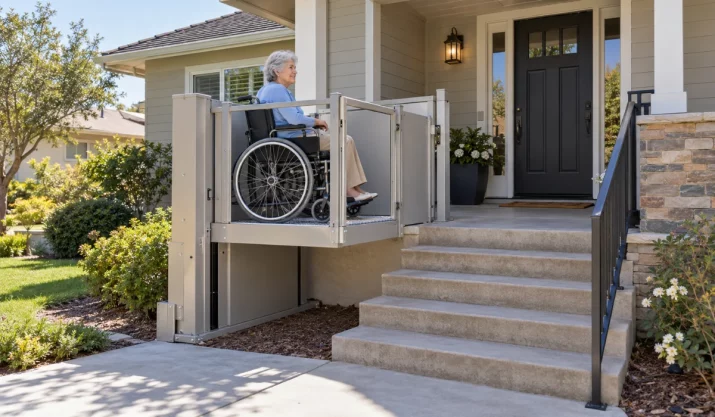
A landing gate should have interlocks that keep the vertical platform lift from moving when the gate is open or not fully latched. This helps keep wheelchairs, scooters, and other mobility devices from entering the platform before it is ready.
Protected Top Landing Access
The top landing should have a gate or door that lines up with the floor level. Gaps, awkward turns, and poor gate swing can create problems for mobility aids, especially when the user needs a straight, steady exit.
Emergency Stop Buttons
Emergency stop buttons should be easy to see and reach from the platform. A user or caregiver should be able to stop the lift quickly if something shifts, a mobility device catches, or the ride feels wrong.
Safety Sensors and Guarded Moving Parts
Safety sensors help detect objects near the platform, and guards help keep hands, clothing, and equipment away from moving parts. These safety features matter when the lift sits near a garage entry, walkway, or storage area.
Code Review and Professional Installation
Professional installation helps confirm the lift, gate operator, weight limits, and access layout match the home. The setup should also account for local building codes, safety standards, and ASME A18.1 when applicable.
When Full Enclosures May Be Needed
Some homes only need lift gates at the landings. Others need a full enclosure because the platform is more exposed.
Higher Travel Between Levels
A full enclosure may be needed when a vertical platform lift travels from grade level to a raised porch, deck, or entry. More travel can leave more open space around the platform, which makes guarded sides a stronger lift safety choice.
Outdoor Exposure Near Regular Foot Traffic
Outdoor wheelchair lifts often sit near driveways, side yards, gates, or trash areas. An enclosure can separate the platform from people walking past, pets, hoses, bins, or other items that can move into the lift path.
Shared Access for Caregivers and Family
If caregivers, children, visitors, or a loved one regularly move around the lift, an enclosure can help control access during operation. This keeps people away from moving parts without relying only on reminders or safety tips.
Access Needs for Larger Mobility Devices
Some scooters need more room than manual wheelchairs. If the platform size, gate swing, or landing layout feels tight, an enclosure can define the travel area and support safer entry based on the user’s mobility needs.
Site Conditions That Affect Safety
The lift is only one part of a safe setup. The pad, landing, power source, and space around the equipment all affect daily use.
Concrete Pad Condition
A concrete pad should be level, stable, and sized for the lift. If the pad is cracked, sloped, or too small, the platform may not align correctly with the landing gate or floor level during vertical platform lift installation.
Landing Space and Door Swing
The landing should give the user enough room to enter and exit without backing into a door, railing, or threshold. Door swing matters because a blocked gate can turn a simple ride into a difficult transfer.
Power Outage Planning
A power outage can affect daily home access when the lift serves the main entry. Ask how the lift handles loss of power, where controls are placed, and what regular maintenance should include.
Weather and Drainage
Outdoor equipment should sit where water drains away from the lift, controls, and gate hardware. In many California homes, irrigation spray, runoff, and sun exposure deserve a close look during safety planning.
Space Around the Lift
The area around the lift should stay clear of planters, patio furniture, storage bins, and cords. Clear space protects the gate operator, safety sensors, and other lift solutions from avoidable contact.
Schedule a Platform Lift Home Evaluation
A platform lift home evaluation gives you clear answers before you choose equipment. The inspection should look at the landing gate, enclosure needs, concrete pad, power location, top landing, platform size, weight limits, and the user’s daily path through the home.
California Mobility can help you decide whether wheelchair lifts, ramps, stair lifts, home lifts, inclined platform lifts, or another cost-effective option fits the property. For gate and enclosure safety for platform lifts in California, the next step is a site review, clear findings, and a free quote for the right home access solution.
Your safety considerations stay the top priority from the first visit through installation planning.