

How to Be a Great Wheelchair Attendant When Family Comes Home for the Holidays

Table of Contents
- Understand Your Role as a Wheelchair Attendant
- Learn Wheelchair Safety Basics Before the Holiday Visit
- Assist With Wheelchair Transfers and Seating Comfort
- Prepare a Wheelchair-Accessible Home for Holiday Guests
- Keep Holiday Activities Comfortable and Inclusive
- Make Future Holiday Visits Easier With Ramps and Lifts
- Wheelchair Attendants: FAQs
Being a great wheelchair attendant during the holidays means helping your loved one move safely, respecting their independence, and making sure your home is ready for their visit. You might have Christmas dinner planned and the decorations up, only to realize that your front steps or crowded dining room could make getting around difficult.
Whether you’re hosting an aging parent or another relative who uses a wheelchair, a little preparation can make wheelchair assistance feel natural instead of stressful. Understanding how to push a wheelchair, handle brakes, approach ramps, and arrange accessible spaces helps everyone focus on enjoying their time together.
Key Takeaways
- Ask before helping. A good wheelchair attendant learns the person’s preferences, respects their independence, and follows their established mobility routine.
- Make wheelchair safety a priority. Learn basic handling techniques, check brakes and pathways, and avoid transfers or curb maneuvers you haven’t been trained to perform.
- Prepare the home before guests arrive. Accessible entrances, clear walkways, comfortable seating, and suitable ramps or lifts can make holiday visits easier for the whole family.
Understand Your Role as a Wheelchair Attendant
A wheelchair attendant helps someone navigate their surroundings when assistance is needed. That might involve pushing a manual wheelchair through a crowded room, opening a heavy door, or helping position the chair near a dining table. The exact responsibilities depend on the person’s mobility and preferences.
Before your relative arrives, ask how they usually manage daily activities. Find out whether they use a manual or powered wheelchair, what they handle independently, and whether someone has been trained to help with transfers. You’ll know what support to offer and what arrangements to make before the holiday gathering begins.
Respect Their Independence and Personal Space
Imagine a relative is approaching a narrow doorway in his wheelchair. You may want to grab the handles and help immediately, but he might already know how to maneuver through the space.
Ask whether he’d like assistance before touching the chair. The same courtesy applies when moving personal belongings or adjusting equipment. Speak directly to your relative rather than asking another family member to answer for them, and accept their response when they decline help.
Learn Wheelchair Safety Basics Before the Holiday Visit
Providing safe wheelchair assistance begins with understanding the equipment. Manual wheelchairs, transport chairs, and powered wheelchairs have different controls, so ask your loved one to explain how their chair works before attempting to move it.
Check the intended route for obstacles, especially in rooms where holiday furniture and decorations have changed the usual layout. A few minutes spent checking the space can prevent awkward stops and unnecessary maneuvering when guests arrive.
How to Push a Wheelchair Safely
When pushing a manual wheelchair, grip the designated handles securely and walk at a comfortable, steady pace. Tell your loved one before starting, turning, or stopping so they know what to expect.
Slow down near corners and check that the wheels and footrests have enough clearance. If a doorway looks too narrow, stop and assess the space rather than forcing the chair through. Never lift or pull a wheelchair by removable armrests or footrests.
When to Use Wheelchair Brakes
Knowing how wheelchair brakes work is an important part of wheelchair safety. On many manual wheelchairs, wheel locks are designed to keep the chair stationary, not slow it while moving.
Before a transfer, position the chair according to your relative’s usual procedure and engage its parking locks when required. Make sure the chair is stable before the person begins moving. Powered wheelchairs have different braking systems, so follow the manufacturer’s instructions for that particular model.
Navigating Curbs, Slopes, and Wheelchair Ramps
A raised doorway threshold or uneven sidewalk can be difficult for someone using a wheelchair. Inspect the route between your driveway and front entrance, particularly when winter rain has made outdoor surfaces slippery.
Don’t attempt to lift a wheelchair over a curb, tip it onto its rear wheels, or maneuver it down steps without appropriate training. Look for a safer accessible route or arrange suitable equipment when the entrance presents a barrier.
For context, the U.S. Access Board’s ramp guidance generally specifies a maximum running slope of 1:12 for ADA-covered ramp runs. That means a ramp rises one inch for every 12 inches of horizontal distance. The same standards generally require at least 36 inches of clear width between handrails. These are useful accessibility references, although private California residences may have different requirements.
Assist With Wheelchair Transfers and Seating Comfort
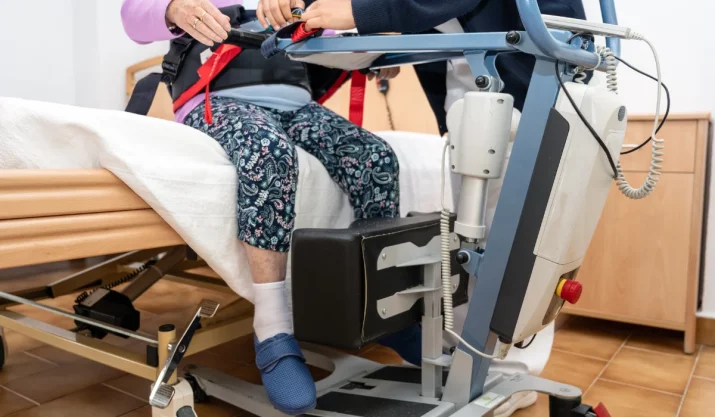
Wheelchair transfers involve moving between the wheelchair and another surface, such as a couch, bed, or dining chair. Some wheelchair users transfer independently, while others rely on a specific technique, transfer board, or mechanical lift.
Ask how your relative normally transfers and whether physical assistance is necessary. If you’re unfamiliar with their method, don’t attempt to lift them or improvise a transfer. Arrange help from someone trained in their established procedure.
Choose Comfortable Seating for Holiday Activities
Your loved one may prefer to remain in their wheelchair during dinner rather than transfer to a dining chair. Respect that preference, especially if their wheelchair has specialized cushions or positioning supports.
Check that the table provides enough space for their knees and footrests. Keep serving dishes and decorations from crowding their place setting, and ask before adjusting cushions or equipment.
If the gathering lasts several hours, find out whether they’d like access to a quieter room. Having a comfortable resting space available gives them another option without requiring them to leave the celebration.
Prepare a Wheelchair-Accessible Home for Holiday Guests
A home that feels spacious during an ordinary week can become difficult to navigate when additional chairs, decorations, and visitors fill the rooms. Preparing a wheelchair-accessible home means checking the entire route your relative will use, starting with their arrival.
California homes vary considerably. A single-story house may have a raised front entrance, while an older multistory property could have narrow hallways or stairs between gathering spaces. Address the areas your loved one actually needs to use rather than trying to change the entire house before one visit.
Check Entrances, Doorways, and Bathrooms
Walk from the parking area to the front door and identify any steps, loose gravel, uneven pavement, or raised thresholds. Measure tight doorways against the wheelchair’s dimensions, including attached equipment.
Inside, move electrical cords, loose rugs, and unnecessary furniture away from the main pathways. Check the bathroom carefully because entering the room doesn’t necessarily mean there’s enough space to maneuver or use the facilities comfortably.
If the front entrance isn’t accessible, see whether another entrance offers a suitable route. Avoid makeshift ramps or unsecured boards, which may shift or create unsafe slopes.
Set Up the Dining and Gathering Areas
Holiday gatherings can become crowded quickly, especially when extra tables and chairs are brought out for dinner. Arrange the furniture so your loved one can reach the dining area, living room, and bathroom without repeatedly asking people to move.
Leave a comfortable position at the dining table where they can join conversations. If everyone plans to exchange gifts in an upstairs room that your relative can’t access, move the activity to a suitable space downstairs. The goal is to make wheelchair accessibility part of the gathering’s setup, just like arranging enough seats or preparing the meal.
Keep Holiday Activities Comfortable and Inclusive
A thoughtful wheelchair attendant pays attention to the day’s schedule as well as physical movement. Holiday meals can run late, relatives may move between rooms, and family traditions sometimes involve long periods of sitting.
Ask your loved one whether they have preferences about meal times, rest breaks, or when they’d like to leave. Don’t assume they need a break because they use a wheelchair. Give them the flexibility to make those decisions themselves.
Help Everyone Participate in Family Traditions
During gift exchanges, arrange presents within reach if requested and allow your relative to open them independently when they prefer. For family photographs, ask where they’d like to be positioned rather than automatically moving their chair to the side.
Keep games and conversations in spaces everyone can reach. Children, pets, and visiting relatives may unintentionally block pathways, so remind guests to leave the main route open. These small choices make it easier for your loved one to enjoy familiar traditions without feeling that every activity requires special arrangements.
Make Future Holiday Visits Easier With Ramps and Lifts
Even with careful planning, some homes have accessibility barriers that furniture rearrangement can’t solve. If your loved one visits regularly, entrance steps, elevated porches, or inaccessible upper floors may continue to make wheelchair assistance more complicated than necessary.
A properly designed wheelchair ramp can provide an accessible entrance where the property has enough room for a suitable slope and landing. For homes where a long ramp isn’t practical, a vertical platform lift may be worth considering. Residential lifts can also help connect floors in multistory homes when the layout and installation conditions allow.
California Mobility offers home accessibility solutions for homeowners who want to make their properties easier to navigate. Professional evaluation helps determine which wheelchair ramps or lifts suit the available space, the user’s mobility equipment, and the home’s requirements. A well-planned installation can reduce the need for difficult maneuvers during future visits.
Being a dependable wheelchair attendant starts with safe handling, clear communication, and respect for your loved one’s independence. If your home’s layout continues to make family visits difficult, contact California Mobility to discuss ramp and lift options that can help everyone spend more time together and less time navigating obstacles.