

Does Medicare Cover Stair Lifts? Here Is the Honest Answer

Table of Contents
- Does Medicare Cover Stair Lifts Under Original Medicare?
- Can Medicare Advantage or Medi-Cal Help With Stair Lift Costs?
- What Other Financial Assistance for Stair Lifts Is Available?
- How Much Will You Need to Pay for a Stair Lift?
- What Should You Do if Medicare Will Not Cover Your Stair Lift?
- Making the Right Stair Lift Choice for Your California Home
- Frequently Asked Questions
Original Medicare doesn’t usually pay for a stair lift because it isn’t classified as covered durable medical equipment. That doesn’t mean you’re out of options. This guide explains why Medicare stair lift coverage is limited, when Medicare Advantage or Medi-Cal may help, what veterans benefits and stair lift grants may be available, and how financing can help with a new installation.
Key Takeaways
- Original Medicare generally doesn’t pay for stair lifts because they aren’t treated as covered durable medical equipment.
- Some Medicare Advantage plans and certain Medi-Cal programs may offer home safety or accessibility benefits, but coverage varies.
- Veterans benefits, local assistance programs, grants, and stair lift financing can give families other ways to manage the cost.
Does Medicare Cover Stair Lifts Under Original Medicare?
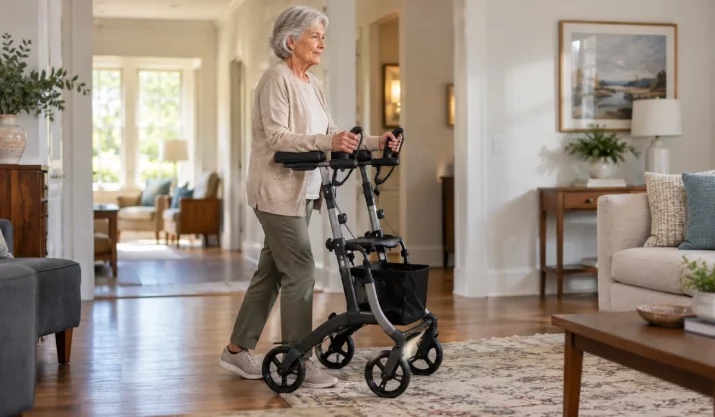
Original Medicare generally doesn’t cover the purchase or installation of a stair lift. Part B does cover certain durable medical equipment (DME) for use at home when Medicare requirements are met, but stair lifts fall outside the usual covered DME category.
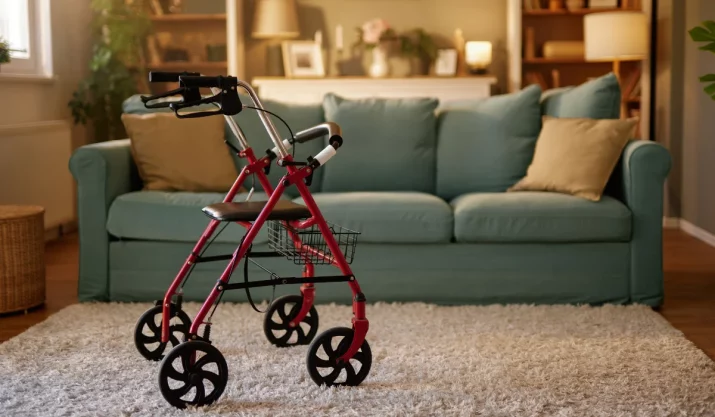
According to Medicare.gov, qualifying DME can include equipment such as walkers, wheelchairs, hospital beds, and patient lifts when coverage requirements are satisfied. A stair lift is treated differently because it is installed in the home as an accessibility feature.
| Equipment | How Original Medicare Generally Treats It |
| Walker | May qualify as DME when Medicare requirements are met |
| Manual or power wheelchair | May qualify when medical and coverage requirements are met |
| Hospital bed | May qualify for home use in certain situations |
| Patient lift | May qualify in certain circumstances |
| Stair lift | Generally not covered as DME |
| Structural home alteration | Generally outside the standard DME benefit |
Why Stair Lifts Are Treated Differently
A stair lift runs along the staircase and becomes part of how you move between floors. Medicare generally separates that type of home accessibility improvement from medical equipment supplied for use in the home.
A doctor’s recommendation doesn’t automatically change the classification. Your physician may document that climbing stairs is difficult or unsafe for you, but that medical need alone doesn’t make a stair lift payable under Part B.
There’s still a real reason families look for solutions. The Centers for Disease Control and Prevention (CDC) reports that more than 14 million adults age 65 and older, roughly one in four, report falling each year. A stair lift doesn’t prevent every fall, but it can remove repeated stair climbing when the staircase itself has become difficult to manage.
Can Medicare Advantage or Medi-Cal Help With Stair Lift Costs?
The answer changes once you look beyond Original Medicare. Some Medicare Advantage plans offer supplemental benefits, while certain Medi-Cal programs serve Californians who need support to remain safely at home.
Medicare Advantage Stair Lift Coverage
Medicare Advantage plans are offered by private insurers approved by Medicare. They provide required Medicare benefits and may include extra services related to home safety, in-home support, or accessibility.
Stair lift coverage isn’t standard across Medicare Advantage plans. Benefits vary by insurer, plan, service area, and year. A plan may have a home safety allowance without including stair lifts, or it may require prior authorization before a home modification can be approved.
| Ask Your Medicare Advantage Plan | What You Need to Find Out |
| Do I have a home safety or accessibility benefit? | Whether the plan offers this type of supplemental benefit |
| Can it be used for a stair lift? | Whether the product itself is eligible |
| Is prior authorization required? | Whether approval must come before installation |
| Is an assessment or prescription required? | What documentation the plan expects |
| Must I use an approved provider? | Whether vendor restrictions apply |
| Is there a spending limit? | How much of the project the benefit could cover |
When you call, ask specifically about a stair lift, a home safety benefit, and an accessibility modification. Asking only about medical equipment may send the conversation back to standard DME rules.
Your Evidence of Coverage is also worth reviewing. Confirm the benefit before signing an installation agreement.
Medi-Cal Home Modification Assistance
Medi-Cal can offer another path for some California residents, particularly through programs designed to help eligible people receive care and support in community settings.
The California Department of Health Care Services explains Home and Community-Based Services (HCBS) waivers that serve people who meet specific program, medical, and functional requirements. Depending on the program, certain environmental accessibility adaptations or related services may be available.
Having Medi-Cal by itself doesn’t guarantee stair lift assistance. If you have a case manager or care coordinator, ask whether you qualify for an HCBS program and whether accessibility modifications are included under your specific benefits.
Approval can involve documentation and authorization before work begins. Confirm those requirements first rather than assuming the program will reimburse an installation afterward.
What Other Financial Assistance for Stair Lifts Is Available?
If Original Medicare won’t pay and your health plan doesn’t offer enough assistance, several other funding sources may be worth checking. Which one fits depends on your military status, income, location, housing situation, and the type of accessibility work you need.
Veterans Benefits for Home Accessibility
Veterans may qualify for federal programs that help with medically necessary home changes or accessible housing. Programs to ask about include Home Improvements and Structural Alterations, commonly called HISA, as well as Specially Adapted Housing and Special Home Adaptation grants for eligible veterans and service members.
Each program serves a different purpose. Disability status, medical need, ownership or occupancy of the home, and the proposed modification can affect eligibility.
If you receive VA care, ask your health care team or benefits representative which home modification program fits your situation. Find out whether the stair lift or other accessibility work needs approval before you purchase it.
Stair Lift Grants and Local Programs
There’s no universal stair lift grant available to every senior. Local assistance tends to come from city programs, county housing departments, aging organizations, rehabilitation programs, and nonprofit resources.
California homeowners may find accessibility grants, low-interest rehabilitation loans, or deferred-payment programs in some communities. Eligibility can depend on income, age, disability status, property type, or where the home is located.
Your local Area Agency on Aging can help identify programs serving your ZIP code. City and county housing departments are also worth checking, especially if they administer home repair or accessibility programs.
Treat broad claims about “free stair lifts for seniors” with caution. Legitimate programs normally have clear eligibility rules and an application process.
Stair Lift Financing
Financing can be useful when benefits or grants don’t cover the project, or when they cover only part of it. Instead of paying the entire stair lift cost at installation, you may be able to spread the expense across monthly payments.
Look at the full repayment amount rather than choosing a plan based on the monthly number alone. Compare the interest rate, fees, term, down payment, and any early-payment rules.
Check insurance benefits, veterans programs, and local assistance first. If one of those sources reduces your out-of-pocket cost, you may need to finance a smaller amount.
How Much Will You Need to Pay for a Stair Lift?
A realistic stair lift cost starts with the staircase itself. In California, the average ranges from $2,500 to $15,000, depending on type and features.
A straight staircase generally needs a simpler rail than a staircase with curves, turns, or intermediate landings. Outdoor stair lifts require equipment intended for weather exposure, while a custom rail can increase the complexity of a curved installation.
| Project Detail | Why It Matters |
| Straight or curved staircase | Determines the type and complexity of the rail |
| Turns and landings | Can require a custom layout |
| Staircase length | Affects the rail and equipment needed |
| Indoor or outdoor location | Determines the type of lift required |
| Top and bottom landing space | Affects safe entry and exit |
| User’s mobility needs | Helps determine seat and control setup |
| Existing home conditions | Electrical access and stair dimensions affect installation |
Start With an Actual Home Assessment
An in-home assessment gives you a more useful number than an online price range. It shows whether a straight or curved system fits, where the lift can park, how the user will get on and off, and whether anything about the staircase changes the installation.
Once you have a written quote, compare that amount with any Medicare Advantage benefit, Medi-Cal authorization, veterans assistance, grant, or financing offer. You are then working with the actual project cost rather than an estimate based on somebody else’s home.
Check Funding in the Right Order
Start with coverage you already have. If you’re enrolled in Medicare Advantage, review supplemental benefits first. Medi-Cal members can ask about applicable HCBS programs, while veterans can check benefits tied to home accessibility.
Next, look at local home modification programs and grants. After you know what assistance is available and what the installation will cost, compare financing options for any remaining balance.
That order saves time and keeps you from financing money that another program may have helped cover.
What Should You Do if Medicare Will Not Cover Your Stair Lift?
If Original Medicare is your only coverage, you can move quickly to other options instead of spending time trying to fit a stair lift into the DME benefit. If you have Medicare Advantage, start by checking supplemental home safety or accessibility benefits.
Medi-Cal members should ask about HCBS programs and environmental accessibility adaptations. Veterans can check VA home modification benefits, while other California homeowners can contact local aging or housing agencies about grants and rehabilitation programs.
Once you know which funding sources are realistic, get a professional assessment of the staircase. A written quote gives you the number you need to compare assistance, out-of-pocket costs, and stair lift financing without guessing.
Making the Right Stair Lift Choice for Your California Home
So, does Medicare cover stair lifts? Original Medicare generally doesn’t because stair lifts fall outside its standard durable medical equipment benefit. Medicare Advantage supplemental benefits, certain Medi-Cal programs, veterans assistance, local grants, and financing can still give some families a workable path forward.
Before deciding how to pay, find out what your staircase actually requires. A curved staircase, outdoor installation, limited landing space, or specific mobility need can change both the equipment and the project cost.
California Mobility is a family-owned accessibility company serving California homeowners with stair lifts and other mobility solutions. A project-specific assessment can help you understand which setup fits the home and what the installation will cost before you make a funding decision. Contact California Mobility to discuss your staircase and get a recommendation based on the space and the person who will use the lift.