

The 5 Types of Walkers and How to Know Which One Fits Your Life

Table of Contents
The five main types of walkers are standard walkers, two-wheel walkers, four-wheel rollators, upright walkers, and knee walkers. The right choice depends on how much support you need, how far you usually walk, and where you plan to use the device. This guide compares how each walker works, who it may suit, and the trade-offs in stability, speed, and portability. You’ll also see how balance, stamina, indoor and outdoor use, and home layout can help you narrow down the different types of walkers.
Key Takeaways
- Standard and two-wheel walkers provide more resistance to movement, while four-wheel rollators move more freely and require better braking and steering control.
- Balance, stamina, walking surfaces, and home layout matter more than choosing the walker with the most features.
- A walker works best when the home supports it. Grab bars, clear pathways, and ramps can solve obstacles the mobility aid can’t address by itself.
How the Five Types of Walkers Compare
Walker types differ mainly in how the frame moves and how much resistance it provides. A standard walker stays planted until you advance it. A four-wheel rollator moves continuously. A two-wheel walker falls between those designs, while upright and knee walkers meet more specific needs.
Use the table below as a practical starting point. Individual models vary in frame weight, wheel size, brake design, folding mechanisms, and overall dimensions.
| Walker Type | How It Moves | Stability | Typical Speed | Portability | Often Suits |
| Standard walker | You lift or advance the four-legged frame | Strong emphasis on stability | Slow | Often easy to fold | Short indoor trips and people who need substantial support |
| Two-wheel walker | Front wheels roll while rear tips stay on the floor | High | Slow to moderate | Usually good | People who want support without lifting the whole frame |
| Four-wheel rollator | Four wheels roll continuously and hand brakes control movement | Less stationary | Moderate to faster | Varies by model | Longer walks and people who may need seated rest breaks |
| Upright walker | A wheeled frame supports the forearms higher up | Varies by design | Moderate | Often bulkier | People who prefer forearm support |
| Knee walker | One knee rests on a platform while the other leg pushes | Specialized | Moderate | Varies | Certain foot, ankle, or lower-leg injuries |
The best fit depends on what you need the walker to do. Someone looking for a walker for balance problems may care most about controlled movement. Someone who remains steady but tires easily may care more about smooth rolling and access to a seat.
1. Standard Walker
A standard walker has four legs that remain planted until you move the frame. You place it ahead of you, make sure all four legs are stable, and then step forward. That stop-and-move pattern provides a firm support point before each step.
This type may suit someone who needs substantial support for short distances around the home. The slower pace is part of the trade-off. You need enough upper-body strength and coordination to advance the frame repeatedly, which can become tiring on long routes.
Many standard walkers fold flat, making them relatively easy to place in a car or store beside furniture. They tend to work best on firm indoor surfaces. Thick carpet, rough pavement, and long outdoor walks can make repeated lifting harder.
2. Two-Wheel Walker
A two-wheel walker has wheels on the front legs and rubber tips or glides at the back. The front rolls ahead while the rear legs stay in contact with the floor, so you don’t have to lift the full frame each time you move.
It can be a useful middle option for someone who finds a standard walker tiring but wants more resistance than a four-wheel rollator provides. Forward movement is easier, but the rear legs still help keep the frame from rolling freely.
Two-wheel walkers often work well for indoor routines with straight hallways and open rooms. Raised thresholds, deep rugs, and tight turns can interrupt the front wheels. Many models also fold, which helps if you need a portable walker for appointments or car trips.
3. Four-Wheel Rollator
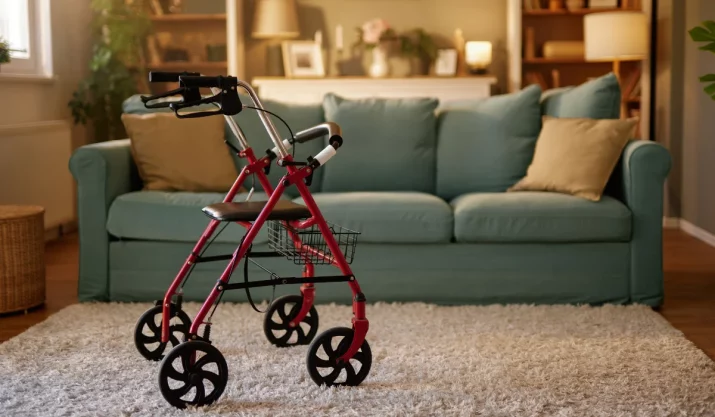
A four-wheel rollator stays in motion as you walk. Hand brakes control speed, and many models include a seat, backrest, and storage area. Unlike a standard walker, you don’t have to lift the frame to keep moving.
This design may suit someone who walks with reasonable control but tires during longer outings. A walker with a seat gives you a place to rest at a shopping center, medical facility, senior community, or neighborhood park without searching for a chair.
The wheels make movement easier, but they also require more steering and braking control. Larger wheels can handle some outdoor surfaces better than small ones, though they may increase the overall size of the frame. That matters if you also need to maneuver through a narrow bathroom or hallway.
4. Upright Walker
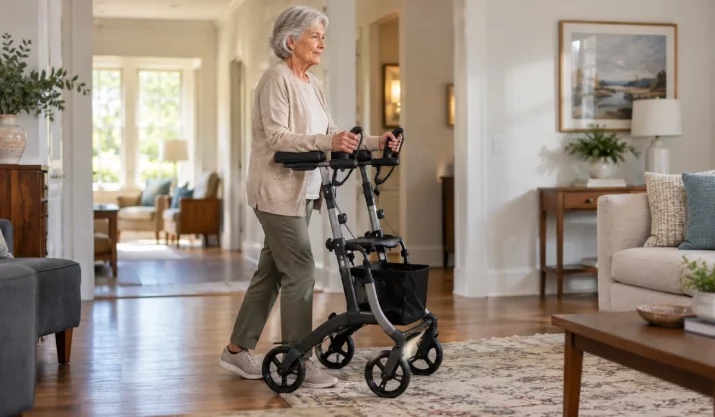
An upright walker raises the arm supports so your forearms rest higher on the frame. Most versions use wheels and hand brakes, but frame dimensions and support systems vary between models.
This style may suit someone who prefers forearm support or finds traditional low handgrips uncomfortable. Comfort depends on your height, gait, strength, and how the supports are adjusted.
Size can become the deciding issue. Upright walkers often take up more floor space than a basic folding walker. Measure narrow doorways, bedside spaces, and bathroom turning areas before assuming a larger frame will work throughout the house.
5. Knee Walker
A knee walker, also called a knee scooter, has a padded platform that supports one knee while the other leg pushes the device forward. It serves a different purpose from the other walking aids in this guide.
This type is often used during recovery from certain foot, ankle, or lower-leg injuries when putting weight on the affected side is restricted. It isn’t a general balance walker for older adults. You still need enough strength and coordination to push, steer, turn, and brake.
Smooth, open surfaces are usually easier to manage than stairs, steep slopes, rough pavement, or tight corners. Because weight-bearing instructions depend on the injury, your healthcare provider should determine whether a knee walker fits your recovery plan.
Choosing the Best Type of Walker for Daily Life
Knowing how to choose a walker starts with the problem you are trying to solve. Think about what stops you first when you walk through a normal day, then compare the device to the places where you actually need support.
Balance and Stamina
If you depend heavily on a walker with nearly every step, a frame with more resistance to movement may feel easier to control. If you remain steady but tire after several minutes, a rollator walker with a seat may fit your routine better.
The distinction matters. Fatigue during a long outing is different from losing your balance when you stand, turn, or begin walking. A physical therapist or occupational therapist can assess your gait if your balance has changed, especially after surgery, hospitalization, or a fall.
Falls are common enough to take seriously. The Centers for Disease Control and Prevention (CDC) reports that more than one in four adults age 65 and older falls each year.
Indoor and Outdoor Use
A walker for indoor use has to get around furniture, rugs, doorways, floor transitions, and tight corners. A walker for outdoor use may face pavement cracks, slopes, curb transitions, and much longer distances.
A rollator can feel comfortable on a sidewalk but oversized beside a toilet or bed. A standard walker may provide plenty of control in a hallway but require too much effort on a long driveway. If one device needs to work in both settings, compare overall width, wheel size, turning space, and how much effort it takes to move.
Fit, Brakes, and Portability
The right walker category still has to fit your body. You should be able to reach the grips without stretching or hunching. On wheeled models, you also need to operate the brake levers comfortably.
Portability deserves a practical test. A lightweight walker may be easier to lift into a vehicle, but folded size matters too. Check whether the walker fits your trunk, storage space, and the places where you regularly travel.
Cost can also affect the choice. Medicare explains that walkers are considered durable medical equipment and may qualify for coverage when applicable medical-necessity, prescription, and supplier requirements are met.
Home Layout
Measure the narrowest routes you use regularly. Bathroom doors, kitchen passages, spaces beside the bed, and the path from the front door to the driveway can reveal whether a frame is too wide or difficult to turn.
Look at the floor too. Raised thresholds, loose rugs, cords, and sudden surface changes can interfere with walker legs or wheels. When comparing types of walkers for seniors, the layout of the home can matter just as much as the mobility device itself.
Pairing the Right Walker With a More Accessible Home
Even the right mobility walker can only help where there’s a clear, usable path. If every trip to the bathroom means squeezing between furniture or stepping over a raised obstacle, switching walkers doesn’t solve the underlying problem.
The National Institute on Aging recommends practical home measures such as keeping walkways clear, improving lighting, using handrails, and adding grab bars where appropriate.
Where Grab Bars Help
A walker can get you to the bathroom, but it may not fit exactly where you need support while sitting down, standing up, or getting into a shower. A properly installed grab bar provides a fixed handhold for those moments.
Think about other transfer points in the home as well. Walkers are designed to move with you. Grab bars stay in one place. Each addresses a different part of daily mobility.
When a Ramp Makes the Route Work
A walker may handle the route from the bedroom to the front door without trouble, then meet two or three steps outside. At that point, the obstacle is the entrance rather than the walker.
A properly designed ramp can create a smoother route between the home, driveway, garage, or sidewalk. It can also make the entrance easier to use if your mobility needs change later or another household member uses wheeled mobility equipment.
Finding the Right Walker for Independent Living
Standard walkers, two-wheel walkers, four-wheel rollators, upright walkers, and knee walkers solve different problems. The useful distinction isn’t simply the number of wheels. It is whether you need stronger stationary support, easier forward movement, a place to rest, forearm support, or temporary mobility during an injury.
Your home needs to support that choice. Clear walking routes, well-placed grab bars, and accessible entrances can remove barriers a walker can’t solve on its own. Combining the right mobility aid with practical home changes can make everyday routines easier to manage as your needs change.
If steps, difficult entrances, or limited support around key areas are getting in the way, California Mobility can help you evaluate accessibility options such as ramps and other home mobility improvements. The goal is to create a home that works with the way you move and supports greater independence.