

Fall Prevention Products That Actually Earn Their Keep at Home
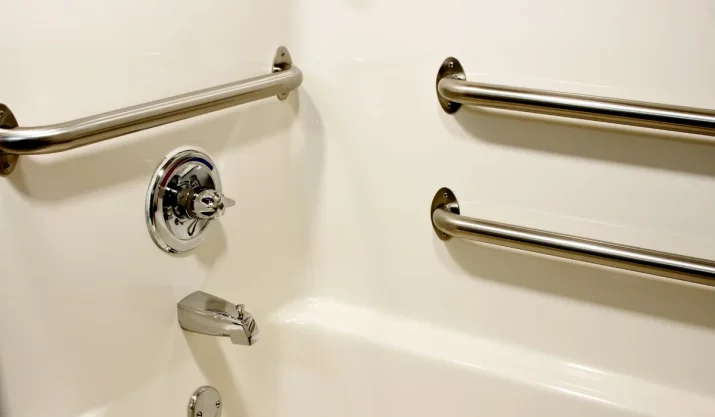
Table of Contents
- Which Fall Prevention Products Are Worth Buying?
- Start With Bathroom Fall Prevention Products
- Match Fall Prevention Products for Stairs to the Real Problem
- Improve Fall Prevention at Home With Lighting and Layout Changes
- Work Through Home Fall Hazards One Room at a Time
- Choose Fall Prevention Products That Fit Your California Home
- Fall Prevention Products: FAQs
The best fall prevention products are the ones that solve a problem you already notice at home. Grab bars help when you need support during a bathroom transfer. Motion-sensor lighting helps you see a nighttime route before you start walking. A stair lift can make sense when climbing between floors has become the real challenge.
You don’t need to fill every room with safety equipment. This guide breaks down which products tend to offer the most practical value, what risk each one addresses, and where to use them. Start with bathrooms and stairs, then work through lighting, walking paths, entrances, and other parts of the home one area at a time.
Key Takeaways
- Start with bathrooms and stairs, where wet surfaces, transfers, changes in level, and repeated climbing can make everyday movement more demanding.
- Choose fall prevention devices for a specific reason, such as better traction, more support, improved visibility, or less physical effort on the stairs.
- Keep the setup simple. Products should make your home easier to use, not create extra clutter or obstacles.
Which Fall Prevention Products Are Worth Buying?
Useful fall prevention products for seniors should address something specific. Pay attention to where you slow down, reach for a wall or piece of furniture, avoid a certain step, or change the way you move. Those moments tell you where a product or home modification may actually help.
Falls are common enough that these details deserve attention. The Centers for Disease Control and Prevention (CDC) report that millions of adults age 65 and older, about one in four, fall each year. That doesn’t mean every household needs the same equipment. It means the best choices are the ones that match the person, the room, and the activity.
| Product | What It Helps With | Best Location | When It Makes Sense |
| Grab bars | Support during transfers | Shower, tub, toilet area | You reach for nearby surfaces while sitting, standing, or stepping |
| Shower chair | Fatigue or reduced steadiness while bathing | Shower | Standing through a full shower is uncomfortable |
| Motion-sensor lighting | Poor visibility | Bedrooms, hallways, bathrooms, stairs | You regularly move through the home after dark |
| Stair railings | Support while walking stairs | Indoor and outdoor steps | You can use the stairs but want a steadier handhold |
| Non-slip treads | Limited traction | Staircases and steps | Smooth stair surfaces feel slick |
| Stair lift | Difficulty climbing | Straight or curved stairs | Walking up and down the staircase has become the main obstacle |
A shorter list of well-chosen products often works better than a house full of devices. If something blocks a walkway, sits unused, or solves a problem you don’t have, it is adding clutter rather than value.
Start With Bathroom Fall Prevention Products
Bathrooms are a sensible place to begin with fall prevention at home because several movement challenges can happen in a small space. You may need to step over a threshold, turn in a tight area, sit and stand, or move across a damp surface during the same routine.
The National Institute on Aging recommends practical changes such as grab bars, nonskid surfaces, better lighting, and clear walking paths. These changes work best when they match how you actually use the bathroom.
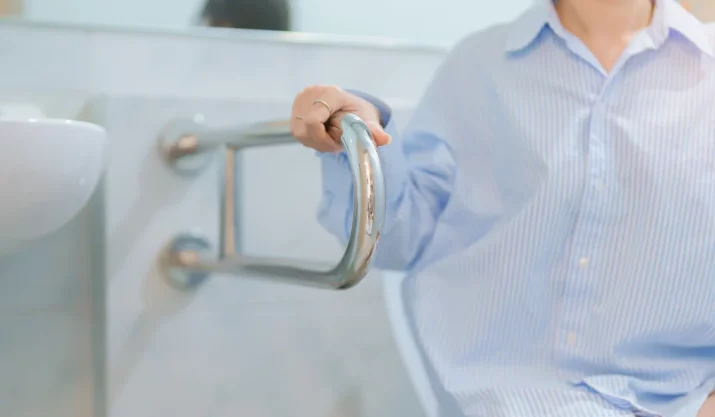
Place Grab Bars Where You Naturally Reach
Notice where your hand goes when you step into the shower or rise from the toilet. If you instinctively reach for a wall, counter, or towel rack, that area may benefit from a properly installed grab bar.
Grab bars provide a stable handhold during transfers, but placement matters. The height and position should fit the person using them, and the bar needs to be secured to a suitable structural surface.
A towel rack shouldn’t fill the same role. It is built to hold towels, not body weight, so replacing that instinctive handhold with something designed for support can make the space easier to use.
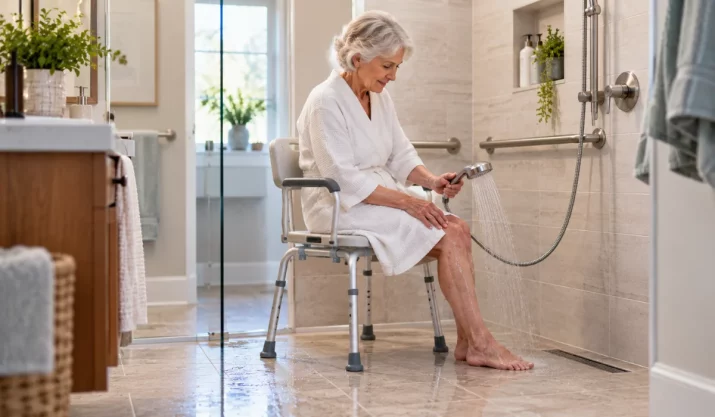
Use a Shower Chair When Standing Takes Too Much Effort
A shower chair can help when a long shower leaves you tired, uncomfortable, or less steady on your feet. Sitting also reduces the need to balance while washing your feet and lower legs.
Choose a chair that fits the shower without crowding the entrance or making it harder to turn. A handheld showerhead can also make seated bathing more practical because you can direct the water without leaning or twisting as far.
The chair should stay stable on the floor and leave enough room to enter and exit comfortably. If it shifts or makes the space cramped, it isn’t the right fit for that bathroom.
Improve Traction Without Creating Another Obstacle
Wet surfaces call for better grip. Secure nonslip strips or properly installed nonskid surfaces can help where water regularly reaches the floor.
Loose non-slip mats need more attention. If a mat slides, bunches, or curls at an edge, it can become something your foot catches on. Any mat you keep should lie flat and stay firmly in place.
Match Fall Prevention Products for Stairs to the Real Problem
Stair safety isn’t one single issue. You may need a stronger handhold, more traction, better lighting, or another way to move between floors. The best fall prevention products for stairs depend on which part of the staircase is becoming harder to manage.
Watch what happens during a normal trip upstairs. If you pull hard on the railing, pause halfway to rest, or have trouble seeing where one step ends, those details point toward a more useful solution than buying several products at once.
Use Stair Railings and Non-Slip Treads for Support and Grip
Secure stair railings help when you can still walk the staircase but want dependable support. A handrail is more useful when it continues through the full portion of the stairs where you need it instead of ending several steps early.
Check exterior stairs as well. Front entries, garages, patios, and side doors may only have a few steps, but those short routes can still be part of your daily routine in a California home.
Non-slip treads address footing rather than strength. They can add grip to smooth wood, tile, or finished steps, provided they remain firmly attached and don’t lift at the edges.
Make Every Step Easy to See
Good stair lighting helps you see where one tread ends and the next begins. Stairwells, landings, and approaches should be visible before you start moving through them.
Motion-sensor lighting works well where you would otherwise need to enter a dark area before reaching a switch. Night lights can also help along nearby hallways or routes leading toward the staircase.
Keep the setup straightforward. You should be able to see the full path clearly without glare, complicated controls, or another device to remember.
Consider a Stair Lift When Climbing Is the Issue
Railings improve support, and treads improve traction. You still have to walk every step.
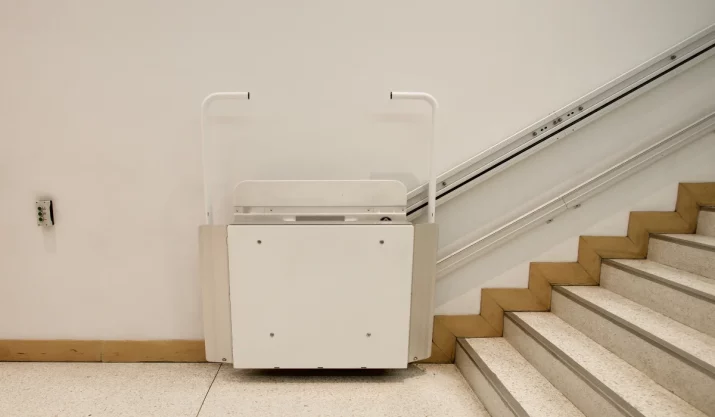
A stair lift addresses the physical act of climbing. You sit in the seat and travel along a rail installed beside the staircase, which reduces the need to repeatedly walk between floors.
This can be useful when mobility limitations, reduced leg strength, joint discomfort, or limited endurance make stair climbing difficult. In a two-story California home, easier access between levels can help you keep using upstairs bedrooms, offices, or laundry areas as part of your normal routine.
Straight and curved staircases require different lift configurations. A professional assessment can help determine the rail type, landing space, seat position, and other details before equipment is selected.
Improve Fall Prevention at Home With Lighting and Layout Changes
Some useful safety improvements don’t require a large product or major home modification. Better visibility and a clearer walking route can make familiar spaces easier to use without adding more equipment.
Start with places you move through every day. A charging cable beside the bed, a chair that extends into a hallway, or a dark path to the bathroom may be easy to ignore in daylight but more noticeable at night.
Use Motion-Sensor Lighting on Nighttime Routes
Motion-sensor lighting can illuminate a route before you need to look for a switch. Bedrooms, hallways, bathroom entrances, stair landings, garages, and exterior approaches are practical locations.
Position the light so it reaches the floor and nearby obstacles without creating harsh glare. The goal is to make the route visible before you take the first few steps.
This type of product earns its place because it works automatically. There’s nothing to carry, remember, or set up each time you move through the area.
Remove Obstacles Before Adding More Products
Walk through bedrooms, hallways, kitchens, and living spaces and notice what interrupts normal movement. Cords across a walkway, low furniture, or a small table in a narrow passage may deserve attention before another safety product does.
Keep frequently used items within comfortable reach. In the kitchen, store everyday dishes, food, and cookware where you can reach them without climbing onto a stool or stretching farther than feels comfortable.
Entrances deserve the same practical check. Look at thresholds, step surfaces, railings, and lighting together so the entire route works well from one side of the doorway to the other.
Work Through Home Fall Hazards One Room at a Time
A room-by-room approach keeps home fall hazards manageable. Start with bathrooms and stairs, then move into bedrooms, hallways, living areas, kitchens, garages, and entrances.
Focus on the Activity in Each Room
Bathroom safety centers on transfers, standing, and wet surfaces. Stair safety involves support, traction, visibility, and climbing effort. Bedrooms and hallways often need clearer nighttime routes, while kitchens may benefit more from better storage placement.
Looking at activities instead of simply looking for products keeps the process practical. A shower chair is useful only when sitting makes bathing easier. Another railing makes sense only when additional support solves part of the stair problem.
Let the Home Change as Your Needs Change
Aging in place doesn’t require redesigning the whole house at once. A secure handrail may be enough now, while a later change in strength or endurance could make another home modification more useful.
That flexibility can help you stay active without making unnecessary changes too early. The goal is to keep the rooms you use most easy to reach and comfortable to use.
If you have had repeated falls or notice a clear change in balance, strength, or mobility, an occupational therapist or another qualified professional can help evaluate how you move through the home. That type of assessment can reveal practical changes that are easy to miss during a quick walkthrough.
Choose Fall Prevention Products That Fit Your California Home
The best fall prevention products earn their place through regular use. Grab bars support transfers, a shower chair reduces standing time, motion-sensor lighting improves visibility, and non-slip treads or stair railings can make stair use more manageable when walking the stairs still works well for you.
When the staircase itself starts limiting how you use your home, a stair lift may address the problem more directly. It can help keep another floor accessible without forcing you to reorganize bedrooms, laundry, or other daily routines around the stairs.
California Mobility specializes in accessibility solutions for people who want to stay active and independent at home. As a family-owned California company, the team can evaluate your staircase, discuss how you use it, and help determine whether a stair lift or another mobility solution fits the space. If your stairs are changing how you use your home, contact California Mobility to discuss your options.