

The Knee Walker Makes a Broken Foot Feel a Lot Less Limiting
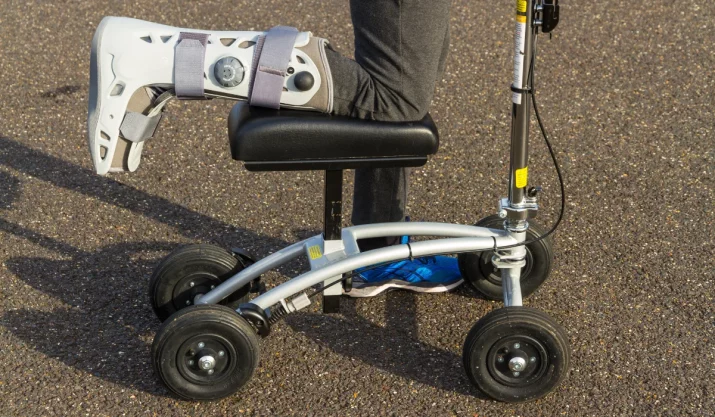
Table of Contents
A broken foot or ankle can make ordinary distances feel much longer. The walk from your bedroom to the kitchen may suddenly involve crutches, careful balance, and more upper-body effort than you expected. Carrying a drink or moving something from one room to another gets complicated fast.
A knee walker gives you another option when your doctor has told you to keep weight off one foot or ankle. Your injured lower leg rests on a padded platform while your healthy leg provides the push. Instead of advancing one crutch at a time, you roll across suitable surfaces and use the handlebars to steer and brake.
For some people, that movement feels steadier and less tiring than using crutches for every trip across the house. A knee walker for a broken foot can also make stationary tasks easier because you’ren’t holding crutches once you stop and secure the scooter. The fit, surface, and layout of your home all affect how useful it feels in daily life.
Key Takeaways
- A knee walker supports the injured lower leg on a padded platform, making it a practical alternative to crutches during some non-weight-bearing recovery periods.
- Correct platform and handlebar height improve control, while the right wheel type matters for indoor floors, thresholds, driveways, and outdoor surfaces.
- Safe use depends on slowing down for turns, approaching thresholds carefully, clearing pathways, and having a separate plan for stairs.
How a Knee Walker Works During Foot or Ankle Recovery
A knee walker, also called a knee scooter, has a padded platform for the injured leg, wheels, handlebars, and hand-operated brakes. You place your knee and shin on the platform, keep the injured foot off the floor, and push yourself forward with the other leg.
That changes the movement pattern during a non-weight-bearing recovery period. Crutches ask your arms and shoulders to help carry and advance your body. With a knee scooter, the frame supports the injured side while the wheels carry the forward motion after you push from the healthy leg.
You still need both hands while the scooter is moving because they control steering and braking. Once you stop and secure the device, though, you’re no longer managing a pair of crutches. That can make everyday jobs at a bathroom sink, kitchen counter, desk, or laundry area easier to handle.
The American Academy of Orthopaedic Surgeons explains that mobility aids should be used according to the weight-bearing limits set by your healthcare provider. Whether a non-weight-bearing mobility aid is right for you depends on the injury, your balance, your strength, and the recovery plan your care team has given you.
Knee Walker vs. Crutches for Everyday Movement
A knee walker vs. crutches comparison comes down to how each device moves and where you need to use it. One rolls across suitable surfaces. The other uses a step-and-support pattern that relies more heavily on the arms and shoulders.
If you have a long hallway, an open kitchen, or a fair distance between the front door and driveway, rolling may feel less demanding than repeatedly moving between two crutches. Tight rooms tell a different story. Crutches can fit into spaces where a scooter doesn’t have enough room to turn.
| Everyday Consideration | Knee Walker | Crutches |
| Injured leg | Rests on a padded platform | Stays off the floor while you move |
| Forward movement | Healthy leg pushes while the scooter rolls | Arms and healthy leg help advance the body |
| Hands while moving | Needed for steering and braking | Needed to grip and control the crutches |
| Tight rooms | Requires turning space | Often easier to position |
| Outdoor surfaces | Depends on tires and surface conditions | No wheels to catch in pavement joints |
| Stairs | Should not be ridden on stairs | May be used after proper clinical instruction |
The difference is especially noticeable when you stop. With crutches, you still need to position or lean them somewhere before using your hands. With a knee scooter, you can engage the brake and work from a stationary position, provided you don’t lean or reach far beyond your balance.
A knee walker isn’t automatically better in every situation. It works best as a crutches alternative when the surface, room size, and injury all suit a rolling device. Crutches may still make more sense for narrow areas or places where wheels can’t safely travel.
Getting the Fit and Model Right
Choosing a knee scooter involves more than checking whether it supports your injured leg. Height adjustment affects posture and control, while wheel design determines how the scooter behaves on the surfaces you use most.
Knee Scooter Height Adjustment
A knee scooter that sits too high or too low can make you compensate with your hips, back, or standing leg. Good knee scooter height adjustment should let you stay upright without reaching, crouching, or standing awkwardly on your healthy side.
Start with the padded platform. Your injured knee and shin should rest comfortably while the standing leg stays in a natural position. Your hips should remain reasonably level, and you shouldn’t need to rise onto your toes or bend deeply at the supporting knee.
Set the handlebars so your elbows have a comfortable bend and the brake levers are easy to reach. Adjustment systems vary, so use the manufacturer’s instructions for the specific model. If the setup still feels uneven or strained, a physical therapist can check your posture and movement.
Indoor Knee Walkers
An indoor knee scooter usually works best on predictable floors and in spaces where maneuverability matters more than large tires. Kitchens, bathrooms, and bedroom doorways often leave less room to steer than an outdoor walkway.
Look closely at floor transitions before relying on the scooter throughout the house. Hardwood may meet carpet, and a rug may sit near a doorway. A raised threshold between the house and patio can also change how the front wheels behave.
All-Terrain Knee Scooters
An all-terrain knee scooter usually uses larger or wider tires designed for pavement joints, driveways, patios, and other uneven surfaces. That can be useful if your broken foot recovery still requires regular trips outside.
Larger wheels don’t make every surface safe. Loose gravel, wet pavement, steep slopes, soft soil, and deep cracks can still interfere with steering or braking. Choose the model around your actual routine rather than assuming the more rugged-looking option will work everywhere.
Using a Knee Walker Safely at Home
A clear, level floor is usually the easiest place to use a knee scooter. Corners, raised thresholds, rugs, furniture, and clutter deserve more attention because they can change the direction or speed of the device before you have much time to react.
Take Turns and Thresholds Slowly
Good knee scooter safety starts with speed control. Slow down before you reach a corner instead of trying to brake in the middle of the turn. A wider turn gives you more time to steer and helps keep your body centered over the scooter.
Treat thresholds the same way. Approach a raised edge slowly and as squarely as the room allows. Coming into a threshold at an angle can redirect a smaller front wheel when it meets the edge.
Keep your eyes on the route ahead rather than staring at the handlebars. Shoes, charging cables, pet toys, rug corners, and packages near a doorway are much easier to handle when you see them early.
Clear the Pathways You Use Most
You don’t need to rearrange the entire house during foot injury recovery. Start with the routes you use several times a day, such as the path from your bedroom to the bathroom or from your favorite chair to the kitchen.
Move narrow tables, baskets, cords, and loose rugs out of those paths when you can. Place frequently used items where you can reach them without leaning far to one side, and make sure hallways and floor transitions are well lit.
The Centers for Disease Control and Prevention (CDC) reports that millions of adults age 65 and older, about one in four, report falling each year. A period of reduced mobility gives you another reason to remove avoidable obstacles rather than trying to steer around them.
The National Institute on Aging also recommends removing tripping hazards and improving lighting around the home. Those changes are useful during broken foot recovery, ankle injury recovery, and other periods when your usual walking pattern has changed.
Make a Separate Plan for Stairs
A knee walker belongs on rolling surfaces. It shouldn’t be ridden up or down stairs, and trying to carry it while balancing on the uninjured leg can create another hazard.
Ask your doctor or physical therapist how they want you to manage stairs with your specific injury. Your plan may involve a properly taught crutch technique, help from another person, or spending more of the recovery period on one level of the home.
If you can, move essentials to the floor where you spend most of the day. Medication, chargers, clothes, toiletries, and even a temporary sleeping setup can eliminate several unnecessary trips during foot surgery recovery or ankle surgery recovery.
Making Recovery Feel Less Limiting at Home
A broken foot or ankle changes more than the way you walk. It affects how you prepare meals, get to the bathroom, move through doorways, leave the house, and manage stairs. A well-fitted knee walker can make many of those tasks more manageable by supporting the injured lower leg while giving you a rolling alternative to crutches on suitable surfaces.
The device works best when the rest of the house supports it. Clear pathways, the right tire style, proper height adjustment, careful turns, and a realistic stair plan can remove many of the small problems that make recovery frustrating.
Sometimes an injury also brings attention to accessibility problems that were already making the home harder to navigate. California Mobility helps California homeowners address longer-term barriers with stair lifts, ramps, and home lifts. If stairs or changes in elevation are making daily movement harder for you or someone in your household, contact California Mobility to discuss a solution that fits the home and the way you use it.