

What a Motorized Scooter Really Offers When Walking Gets Harder
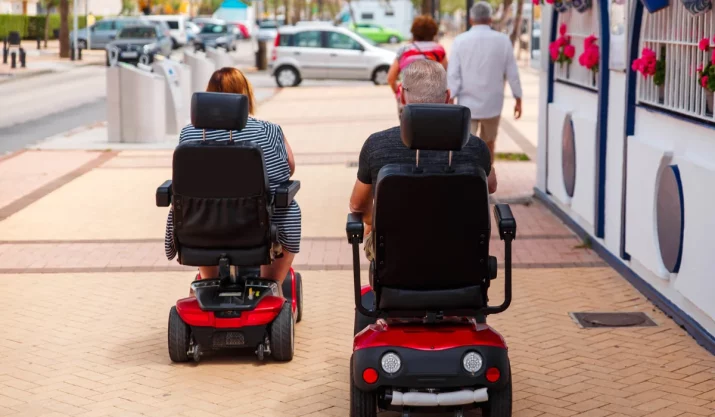
Table of Contents
You may still walk comfortably around the house yet think twice about a large grocery store, a long medical appointment, or an afternoon out with family. The problem is often the accumulated distance. What feels manageable for ten minutes can become tiring when a trip involves a parking lot, several aisles, a long hallway, and the walk back.
A motorized scooter gives you another way to handle those longer stretches. It can help you save your energy for the activity itself rather than spending most of it simply getting from one place to another. That can make shopping, neighborhood outings, and travel feel more realistic again.
This guide explains what a scooter realistically offers, how three-wheel and four-wheel designs differ, what affects battery range and portability, and how indoor and outdoor use compare. It also covers the practical limits that matter just as much, including storage, charging, ramps, and getting the scooter in and out of your home.
Key Takeaways
- A motorized scooter can help you cover longer distances while still letting you walk shorter stretches when that feels comfortable.
- Three-wheel and four-wheel scooters handle space differently, so turning radius, width, ground clearance, and intended use matter more than wheel count alone.
- Storage, charging, ramps, and home entry should be considered before you buy, since a scooter is only useful if you can move it in and out of the house easily.
What a Motorized Scooter Really Gives You
A motorized scooter mainly gives you more usable range when longer walks start wearing you out. It can make everyday trips easier to finish without replacing the walking you still want to do.
More Range for Everyday Trips
The Centers for Disease Control and Prevention reports that 28.7% of U.S. adults have some type of disability, while 12.2% have serious difficulty walking or climbing stairs. That challenge often shows up during longer outings, when distance builds across a parking lot, several store aisles, a medical campus, or a neighborhood route.
A mobility scooter can make those trips more manageable by helping you conserve energy for the activity itself. Instead of deciding whether you have enough stamina for the full distance, you have another way to cover the longer stretches.
More Flexibility Without Giving Up Walking
For many people, a scooter works best as a supplement to walking rather than a replacement for it. You may still walk around the house, into a restaurant, or across a short parking area, then use the scooter when the distance becomes tiring.
That extra range can also make plans feel less restrictive. You may be more willing to stop somewhere after an appointment, join a family outing, or go farther around the neighborhood when you know you have another option for the return trip.
Choosing Between Three-Wheel and Four-Wheel Scooters
Three-wheel and four-wheel mobility scooters are built around different priorities. The better choice depends on where you expect to drive, how much turning space you have, and whether your normal routes are mostly indoors, outdoors, or a mix of both.
Three-Wheel Mobility Scooters
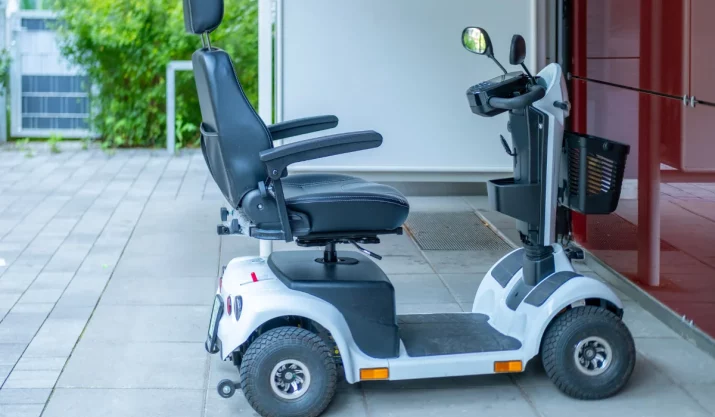
A three-wheel mobility scooter has one front wheel and two rear wheels. This layout often gives it a tighter turning radius, which can help in apartments, stores, home lifts, and other places where you need to maneuver around furniture or walls.
Some models also leave more open space around the feet and knees. That may make getting seated easier for certain users. Still, total width and turning radius matter more than the wheel count printed on the product description.
Four-Wheel Mobility Scooters
A four-wheel mobility scooter uses two front wheels and two rear wheels. Many models put more emphasis on outdoor stability, which can be useful on sidewalks, paved paths, parking areas, and longer exterior routes.
The tradeoff is often a wider turning path. That may not matter much outdoors, but it can become noticeable inside a smaller home or around tight furniture.
| Feature | Three-Wheel Scooter | Four-Wheel Scooter |
| Front wheel layout | One front wheel | Two front wheels |
| Turning radius | Often tighter | Often wider |
| Indoor use | Often easier in tighter spaces | Depends heavily on overall size |
| Outdoor use | Depends on the specific model | Many models emphasize outdoor stability |
| Foot area | Often more open | Varies by design |
| Key specifications | Turning radius and width | Width, stability, and intended surface |
Before choosing either design, compare the actual scooter specifications. Width, turning radius, weight capacity, seat dimensions, and ground clearance give you a clearer picture of how the scooter will behave in your daily environment.
Battery Range, Portability, and Where You Plan to Ride
The advertised range of an electric mobility scooter is useful for comparison, but it should be treated as an estimate. Real-world travel distance changes with the rider, the route, and the condition of the scooter.
What Affects Mobility Scooter Range?
A rechargeable battery doesn’t deliver exactly the same distance on every trip. Hills require more power than level pavement. Groceries add weight. Frequent stopping and starting uses more energy than steady travel.
Battery age, temperature, tire condition, and rough surfaces can also affect mobility scooter range. That’s why it makes more sense to think about your normal route than to focus only on the largest mileage number in a brochure.
| Factor | What It Means in Practice |
| Rider and cargo weight | More total weight can increase energy use |
| Hills and inclines | Climbing requires more motor power |
| Frequent stops | Repeated acceleration can reduce range |
| Cold conditions | Battery performance can decrease |
| Battery age | Available capacity may decline over time |
| Rough pavement | More resistance can increase power demand |
| Tire condition | Poor inflation or wear can increase rolling resistance |
If you plan to ride to a neighborhood store, shop inside, and return home, the scooter needs enough practical battery range for the whole trip with some reserve left. A charging location at home should also be easy enough to use regularly.
What Makes a Portable Mobility Scooter Practical?
A portable mobility scooter may fold, separate into components, or fit into a vehicle more easily than a larger model. The word portable, however, doesn’t tell you how easy the scooter will be for you to handle.
Look at the weight of the heaviest individual piece. Measure the cargo area of the vehicle you actually use. Think about who will lift the scooter, how often it will be loaded, and whether you can manage the process without depending on someone who may not always be available.
Travel by air brings another layer of planning. The Federal Aviation Administration publishes guidance for wheelchairs and mobility aids with different battery types. Before a flight, check the battery information for your scooter and the airline’s current handling requirements.
Indoor Mobility Scooter Use
An indoor mobility scooter needs to fit more than the doorway itself. You also need enough room to approach the opening, make turns, reverse when necessary, and clear nearby walls or furniture.
Hallways, kitchen islands, dining tables, home lifts, and store aisles can all affect how comfortable a scooter feels indoors. A model may technically fit through a door and still be awkward to use once you enter the room beyond it.
Thresholds matter too. A small change in floor height can affect how smoothly a wheeled mobility device moves from one space to another. Check the manufacturer’s guidance for the transitions the scooter is designed to handle.
Outdoor Mobility Scooter Use
An outdoor mobility scooter faces different demands. Ground clearance, tires, braking, slope, and surface condition become more important once you leave a smooth indoor floor.
A paved sidewalk is very different from loose gravel, broken concrete, steep driveways, or wet surfaces. Don’t assume that a four-wheel design can handle every outdoor environment simply because it has an extra wheel.
The individual manufacturer’s limits should guide decisions about slopes, surfaces, and weather exposure. Those specifications are more useful than broad labels such as indoor or outdoor.
Planning for Storage, Ramps, and Home Access
The trip starts before you reach the sidewalk. A motorized scooter needs a place to store it, a practical place to charge it, and a route that lets you move between the house and the outside without turning every departure into a project.
A garage may seem like an obvious storage location, but check the complete route. A single step, narrow doorway, raised threshold, or tight corner can make a convenient storage area much harder to use. The same problem can appear at a front porch or side entrance.
When a Wheelchair Ramp May Work
A wheelchair ramp can create a gradual route over a change in height when the property has enough room for the required run and landings. Even a modest rise can require more horizontal space than homeowners initially expect.
The U.S. Access Board uses a maximum running slope of 1:12 for ramps in many public accessibility settings. At that ratio, each inch of vertical rise corresponds to 12 inches of horizontal run.
That federal standard doesn’t automatically apply to every private California residence. Residential projects must follow the requirements that apply to the specific property and installation. The ratio is still useful for showing why several entrance steps can require a surprisingly long ramp.
When a Vertical Platform Lift May Fit Better
A vertical platform lift can be a better fit when an entrance has a larger height change, but the property doesn’t have enough room for a long ramp. Instead of following a sloped path, the platform moves the rider and mobility device vertically between levels.
This type of home lift can work well at raised porches, garage entrances, and compact side yards. Landing space, travel height, electrical requirements, and the approach to the platform all affect whether the installation makes sense.
| Home Access Problem | Option to Evaluate |
| Exterior steps | Ramp or vertical platform lift |
| Limited room for ramp run | Vertical platform lift |
| Raised porch | Ramp or lift depending on site layout |
| Narrow doorway | Check clear width and scooter dimensions |
| Raised threshold | Threshold transition or entry modification |
| No practical charging area | Protected storage near suitable power |
| Tight garage route | Review doors, turns, and floor-level changes |
Thinking about the home route early can prevent an expensive mismatch. A scooter that performs well at the store or around the neighborhood will still be frustrating if moving it through your own entryway is the hardest part of the trip.
Making a Motorized Scooter Work From the Front Door Out
A motorized scooter can make longer outings realistic again when distance is the part that wears you down. It can help you shop without counting every aisle, go farther around the neighborhood, and take part in trips where long walking distances would otherwise shape the entire day.
The scooter itself is only part of the solution. You also need a design that fits your normal spaces, enough battery range for your usual trips, practical storage, and a usable path between the home and the driveway or sidewalk.
California Mobility helps California homeowners address that last part with ramps and vertical platform lifts planned around the actual entryway. A site-specific evaluation can account for elevation change, landing space, available ramp run, and the route you expect to use with your scooter. If a motorized scooter is helping you go farther, contact California Mobility. The team can help make sure getting through your own entrance doesn’t become the next obstacle.