

Adjustable Bed Benefits Backed by More Than Marketing

Table of Contents
Adjustable beds are sold with a long list of health promises. Product descriptions may say they improve circulation, stop snoring, relieve back pain, support recovery, and improve sleep. Some adjustable bed benefits have credible support. Other claims turn a comfort feature into something that sounds like medical treatment.
The strongest findings relate to body position. Raising the upper body may reduce nighttime reflux. An incline may also help some people who snore or have positional sleep apnea. Raising the knees can change how pressure feels around the lower back, while lifting the feet may ease mild swelling after long periods of sitting or standing.
The benefits of an adjustable bed depend on the user, the chosen angle, the mattress, and the reason for changing position. A powered base cannot diagnose a medical condition or replace prescribed care. Its main value comes from helping a person rest, sit, or move in a position that suits a real need.
What an Adjustable Bed Actually Does
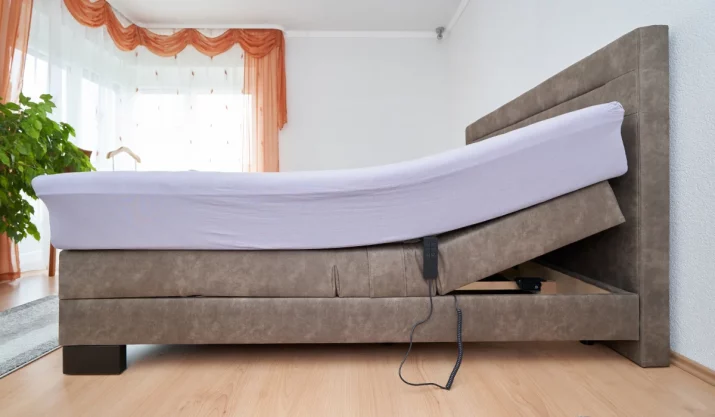
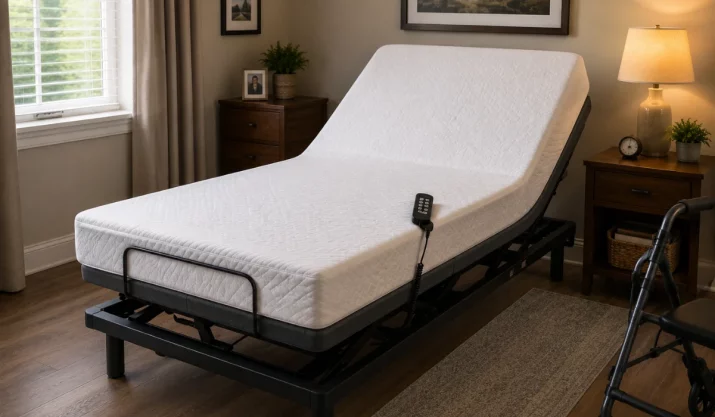
An adjustable bed has a powered base that raises or lowers different sections of the mattress. Most models control the upper body and legs separately. Some include split controls, saved positions, vibration, under-bed lighting, or USB ports.
The motor does not create the health effect. Positioning is what may influence reflux, breathing, pressure, swelling, or the effort required to sit up. Most studies examine upper-body elevation or bed inclination rather than a specific brand or named setting.
| Position or Feature | What Changes | Possible Use |
|---|---|---|
| Raised upper body | The chest and stomach rest at an incline | Nighttime reflux, snoring, or positional breathing problems |
| Raised knees | The angle between the legs, pelvis, and lower back changes | Comfort for some back sleepers |
| Raised feet | The feet rest above their flat position | Mild ankle swelling or leg heaviness |
| Upright position | The user moves closer to sitting | Reading, dressing, taking medication, or preparing to stand |
| Split controls | Each partner selects a separate angle | Couples with different sleeping needs |
| Vibration | The base creates a massage-like sensation | Relaxation rather than medical care |
A useful base should move in small steps and hold its position without bending the neck or hips at an uncomfortable angle. More presets do not guarantee better support.
Adjustable Bed Benefits for Reflux and Breathing
Upper-body elevation has the clearest support among common adjustable bed health benefits. It changes the position of the stomach, chest, and upper airway. Reflux, snoring, and sleep apnea are separate problems, so each requires different expectations.
Adjustable Beds for Acid Reflux
Acid reflux may feel worse at night because lying flat makes it easier for stomach contents to move toward the esophagus. This can cause burning, coughing, throat irritation, or a sour taste. Raising the torso allows gravity to play a greater role while the person rests.
The incline should support the body from the waist upward. Stacking pillows under the head may bend the neck or fold the body without creating the same position.
The Mayo Clinic GERD treatment guide recommends raising the head end of the bed by 6 to 9 inches for regular nighttime symptoms. It also advises waiting at least three hours after eating before lying down and notes that extra pillows are not effective.
| Reflux Guidance | Checked Recommendation | Practical Meaning |
|---|---|---|
| Height at the head end | 6 to 9 inches | The torso needs a steady incline |
| Time after eating | At least 3 hours | Meal timing still matters |
| Extra pillows | Not considered effective | The bed should support more than the head |
| Ongoing symptoms | May need medical care | A bed may reduce symptoms without treating the cause |
Trouble swallowing, chest pain, vomiting, bleeding, or unexplained weight loss should not be treated as a bedding issue.
Adjustable Beds for Snoring
Snoring occurs when moving air causes relaxed tissue in the upper airway to vibrate. A flat position can allow the tongue and nearby tissue to move backward. Raising the torso may reduce that effect for some sleepers.
Congestion, alcohol use, body weight, airway structure, and sleep position can all contribute. A low incline may help one person and have little effect on another. The neck should remain comfortable rather than bending sharply toward the chest.
Adjustable Beds for Sleep Apnea
Loud snoring can be a sign of obstructive sleep apnea when it comes with gasping, choking, pauses in breathing, morning headaches, or strong daytime sleepiness. An adjustable bed may support a better sleeping position, but it does not cure the condition.
A Journal of Clinical Medicine study examined people with obstructive sleep apnea while their head and trunk were raised 30 degrees. The position reduced upper-airway obstruction among participants with positional sleep apnea. The findings support further study. They do not show that a raised bed can replace CPAP, an oral appliance, or another prescribed treatment.
Adjustable Bed Benefits for Pain and Swelling
Claims about pain relief and circulation need careful wording. A change in position may improve comfort, but it does not treat every source of back pain or swollen legs.
Adjustable Beds for Back Pain
Back pain may come from tight muscles, arthritis, joint irritation, disc problems, nerve pressure, injury, or poor mattress support. Those problems do not respond to one universal sleeping position.
Raising the knees while lying on the back changes the angle between the thighs, pelvis, and lower spine. Some sleepers feel less tension when their knees remain bent. Raising the torso at the same time may spread body weight differently and make turning or sitting up easier.
A trial should focus on practical results. The sleeper may wake less often because of pain or may find it easier to leave the bed. A position that causes numbness, stiffness, or new pressure is not suitable, even when it appears as a popular preset.
What the Zero-Gravity Position Means
The zero-gravity setting raises the torso and legs, with the knees above the hips. The name describes the shape of the position. It does not remove gravity or place every spine in a medically correct posture.
Back sleepers may find the setting comfortable. Side sleepers may prefer less foot elevation. Stomach sleepers may feel extra strain when either end of the bed rises.
Adjustable Beds for Circulation and Swollen Legs
Feet and ankles may swell after many hours of sitting or standing. Raising the lower legs may help fluid move away from the feet and reduce heaviness.
This is often marketed as improved circulation, but the phrase is too broad. Swelling may come from medication, injury, vein problems, infection, heart trouble, kidney disease, or a blood clot. Bed position cannot address every cause.
Sudden swelling in one leg, warmth, redness, pain, chest discomfort, or shortness of breath needs prompt medical attention. People with heart conditions, artery disease, recent surgery, or a history of blood clots should ask a clinician about leg elevation.
Adjustable Beds for Seniors and Mobility Needs
Some adjustable bed benefits matter more during the day than during sleep. Raising the back section can help with dressing, reading, taking medication, or moving toward a seated position. These tasks can matter to older adults and people with limited strength.
Easier Position Changes
Moving from lying flat to sitting requires balance, core strength, and control. A powered backrest can bring the user closer to a seated position before the feet move toward the floor.
For people comparing the benefits of adjustable beds for seniors, controls deserve close attention. Large buttons, clear labels, and saved positions may be more useful than phone apps for someone with reduced vision or hand strength.
Bed Height and Transfer Safety
A mattress that sits too high may leave the feet above the floor. A bed that sits too low may demand more leg strength when standing. The user should be able to sit near the edge with both feet supported and without sliding forward.
The area around the bed should also remain clear. Loose cords, unstable furniture, and rugs can create new hazards even when the bed improves sitting posture.
Pressure Care Still Requires Repositioning
A powered base can help a person move, but it does not prevent every pressure injury. People who spend long periods in bed still need regular repositioning and skin checks.
The MedlinePlus patient guide advises changing a bedbound person’s position every two hours to support blood flow and protect the skin. Raising the upper body may also cause sliding, which creates friction. A lower angle, suitable bedding, and caregiver help may reduce this problem.
Adjustable Bed Pros and Cons
The right base is the one that addresses the user’s main need, works with the mattress, and has controls the person can operate without help.
| Feature | Practical Value | What to Check |
|---|---|---|
| Head and foot controls | Provides more position choices | Smooth movement and small adjustment steps |
| Position memory | Saves a preferred setting | Number of positions stored |
| Split base | Gives partners separate control | Center gap and sheet fit |
| Wireless remote | Keeps controls within reach | Button size and lighting |
| Emergency lowering | May return the bed to flat during a power loss | Battery requirements |
| Wall-hugging movement | Keeps the user near a nightstand | Distance at full incline |
| Vibration | May feel relaxing | Noise and automatic shutoff |
| Under-bed light | Helps with nighttime visibility | Brightness and remote access |
Adjustable bases cost more than standard frames and can be difficult to move. Motors and remotes may need repair. A stiff mattress may resist bending, while split models may create an uncomfortable center seam.
Buyers should review the warranty, return charges, delivery fees, service coverage, and mattress requirements. These details often matter more than the number of massage modes.
Are Adjustable Beds Worth It?
An adjustable bed is more likely to be worth buying when the user has a clear reason to change position. Nighttime reflux, trouble sitting up, back discomfort that improves with bent knees, and mild leg heaviness are practical examples.
Before buying, test several positions and check whether the mattress stays stable. Review the remote, warranty, trial period, emergency lowering system, and total bed height. A comfortable setting should support the body without causing neck strain, pressure behind the knees, or sliding.
The evidence behind adjustable bed benefits is strongest for upper-body elevation and nighttime reflux. Research into positional sleep apnea is promising but limited. Benefits involving back comfort, swelling, and mobility depend more on the individual and the setup.
An adjustable bed can improve movement within the bedroom, but it cannot solve access problems between floors. When stairs become part of the problem, California Mobility can help homeowners compare stairlifts, wheelchair lifts, and domestic lifts. Contact us and request a home assessment to discuss a solution suited to your home.