

Stair lift speed and safety for San Jose staircases
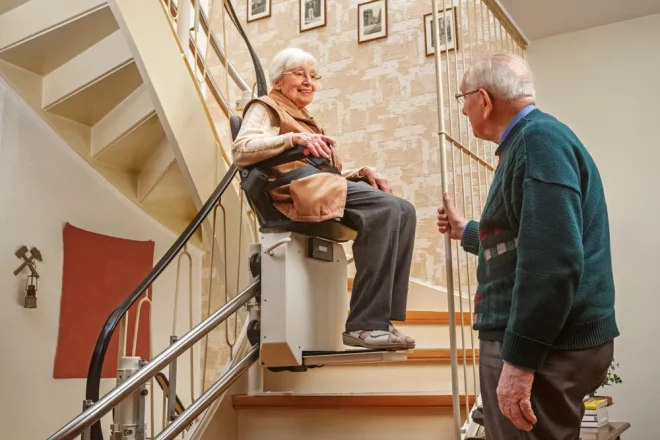
Table of Contents
- How fast do stairlifts actually move?
- Why slow speed is a safety feature, not a flaw
- Stair lift safety features worth knowing about
- San Jose staircases: what makes them different
- When a stairlift might not be the best fit
- Ready to find the right fit for your San Jose home?
- Frequently Asked Questions
If you or a family member is thinking about a stairlift, two questions come up almost every time: “How fast does it go?” and “Is it safe?” Understanding stair lift speed and safety together — not as separate topics — will help you make a confident choice for your San Jose home.
Key Takeaways
- Most stairlifts travel at a slow, controlled speed (around 20–25 feet per minute) designed for comfort, not hurry.
- Built-in safety sensors, seat belts, and footrest sensors stop the lift automatically if something is in the way.
- San Jose homes — from older Willow Glen bungalows to multi-story Almaden Valley houses — have a wide range of stair styles, and the right lift matches the staircase.
- A professional in-home assessment is the best way to confirm which model fits your stairs and your daily routine.
How fast do stairlifts actually move?
Stairlifts are not designed to be quick. They move at a gentle, steady pace — typically somewhere between 18 and 25 feet per minute depending on the model and manufacturer. That is roughly the speed of a slow, comfortable walk.
That pace is intentional. It gives the rider time to feel stable, hold the armrest, and enjoy a smooth ride from bottom to top. There is no jolt at the start and no sudden stop at the end — just a gradual ramp-up and slow-down at each landing.
For most families, the first ride feels surprisingly calm. The speed that seemed “too slow” on paper usually feels just right once someone is actually sitting in the chair.
Why slow speed is a safety feature, not a flaw
It is easy to assume that faster means better. With stairlifts, the opposite is true. A slower travel speed gives the safety systems time to react if something unexpected happens on the stairs.
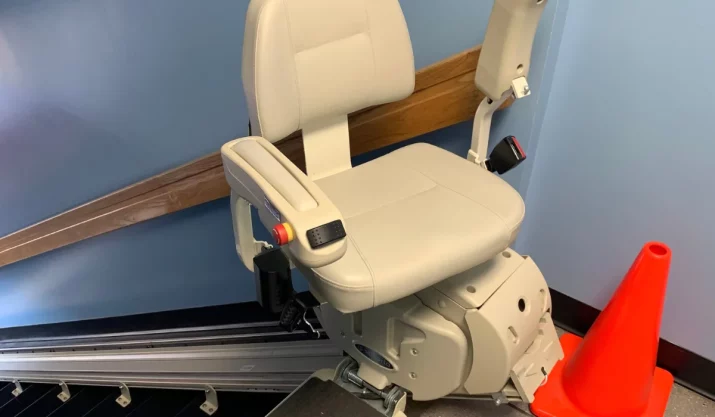
Every stairlift sold through California Mobility includes sensors along the bottom of the rail and on the footrest platform. If the lift rolls over a shoe, a pet, or a grandchild’s toy, it stops automatically before any damage is done. That reaction requires a manageable speed — not a fast one.
The seat belt is another layer of protection. It keeps the rider secure if the lift pauses mid-staircase. Most users buckle it as a habit within the first few days, the same way you buckle a car seatbelt without thinking about it.
Stair lift safety features worth knowing about
Modern stairlifts come with a set of standard safety features that most shoppers do not know to ask about. Here is what to look for:
Obstruction sensors
Sensors on the rail and footrest detect objects in the path of the lift and stop the unit immediately. This is especially helpful in San Jose homes where stairs often double as storage space or where small pets roam freely.
Swivel seat
At the top landing, the seat rotates toward the landing so you can stand up facing away from the stairs. This one feature alone prevents a large number of falls, because standing and turning at the top of a staircase is one of the riskiest moments for older adults.
Seat belt and armrests
A retractable seat belt keeps the rider in place during the ride. Wide, padded armrests give something solid to hold onto during boarding and exiting.
Battery backup
Most quality stairlifts run on rechargeable batteries that stay charged through the home’s electrical system. If the power goes out — which can happen during the occasional Bay Area storm — the lift still works. This matters in San Jose, where PG&E planned outages can sometimes last several hours.
Remote controls
Most models come with a remote so family members or caregivers can send the lift up or down to meet the rider. This keeps the staircase clear and prevents the rider from having to walk past a parked lift on the stairs.
San Jose staircases: what makes them different
San Jose’s housing stock is varied. Older neighborhoods like Rose Garden and Naglee Park have homes built in the early 1900s with steep, narrow staircases and tight turns at the top. Newer developments in Evergreen or Blossom Hill often have wider, longer runs but sometimes include curved sections or landings mid-flight.
Outdoor stairs are also common here, particularly on hillside properties in the Almaden Valley or homes with raised entryways. Outdoor stairlifts use weather-resistant materials and sealed components to hold up in California’s mix of dry summers and wet winters. You can browse outdoor stairlift options here.
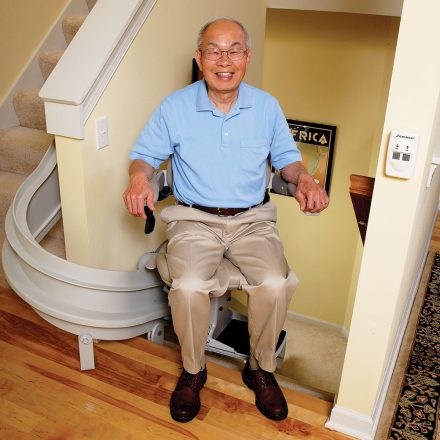
For straight staircases — the most common type in newer San Jose tract homes — installation is typically straightforward. Curved or angled staircases require a custom-built rail, which takes longer to manufacture but fits the staircase precisely. Getting the fit right is what makes the ride smooth and the safety sensors work as designed.
When a stairlift might not be the best fit
In some situations, a stairlift may not be the right answer. If the staircase is extremely narrow, if the rider has significant difficulty bending at the knees, or if the home has multiple floors to access, other options may work better.
A vertical platform lift can move a wheelchair or scooter between floors without requiring a transfer. A Home Lift offers enclosed, fully vertical travel and works well in multi-story homes. A California Mobility consultant can walk through the differences with you in person and help you figure out what fits the home and the person using it.
Ready to find the right fit for your San Jose home?
California Mobility is a family-owned company serving San Jose and the surrounding Bay Area. We carry a range of stairlifts for straight and curved staircases, and we come to your home to measure, advise, and install — all with no pressure.
Call us at (916) 560-0607 or request a free quote online to schedule a no-obligation home visit. We will bring samples, answer every question, and make sure you understand your options before any decision is made.
Frequently Asked Questions
How fast does a stairlift go, and can I adjust the speed? Most stairlifts travel at a fixed speed set by the manufacturer — usually between 18 and 25 feet per minute. Some models offer a small speed range, but the adjustment is limited by design. The pace is intentionally slow to keep the ride steady and give the safety sensors enough time to respond to anything on the stairs.
What happens if someone is on the stairs when the stairlift is moving? The obstruction sensors on the footrest and along the bottom of the rail will detect the person or object and bring the lift to a gentle, immediate stop. The lift will not restart until the path is clear. This feature is one of the most important safety systems on any modern stairlift.
Can a stairlift be installed on the steep, older stairs common in San Jose’s historic neighborhoods? Yes. Steep staircases are common in older San Jose homes, and stairlifts are engineered to handle a range of incline angles. A technician will measure the angle during the home assessment to confirm the right model and rail length. In most cases, steep stairs are not a barrier to installation.
Is a stairlift safe to use during a power outage? Most stairlifts sold today run on a battery system that recharges continuously when the unit is parked at either end of the rail. During a power outage, the battery typically provides enough charge for multiple trips up and down the stairs. This is a standard feature to ask about when comparing models.