

Stair lift comfort tips for COPD in California homes
Table of Contents
- Why stairs are so hard on COPD lungs
- How to ride a stair lift more comfortably with COPD
- California climate factors that affect COPD at home
- Choosing the right stair lift features for COPD
- Talk to your doctor and your installer together
- Get a free home assessment from California Mobility
- Frequently Asked Questions
Living with COPD means that even a short climb up the stairs can leave you winded, anxious, or exhausted. A stair lift for COPD isn’t just a convenience — it’s a way to protect your lungs, your energy, and your independence at home. These tips will help you get the most comfort and safety from your stair lift every single day.
Key Takeaways
- A stair lift removes the physical exertion of climbing stairs, which is one of the biggest triggers for COPD breathlessness at home.
- Simple adjustments — like seating position, ride speed, and timing — can make a big difference in how you feel during and after each trip.
- California’s dry heat, wildfire smoke, and coastal humidity can all affect COPD symptoms, so indoor air quality matters alongside stair lift use.
- A professional home assessment helps match the right stair lift features to your specific breathing needs and home layout.
Why stairs are so hard on COPD lungs
Climbing stairs forces your heart and lungs to work much harder than walking on flat ground. For someone with COPD, that sudden demand can trigger coughing fits, wheezing, or a frightening sense of breathlessness that takes a long time to recover from.
Many people with COPD start avoiding the upstairs altogether. Bedrooms, bathrooms, and laundry rooms become off-limits. That kind of self-imposed limit affects your quality of life and can speed up physical decline.
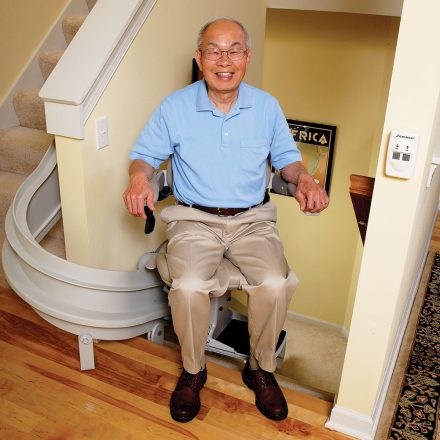
A stair lift solves this by doing the climbing for you. You sit down, press a button, and ride — no exertion required.
How to ride a stair lift more comfortably with COPD
Sit upright and tall
Slouching compresses your lungs and makes breathing harder. When you sit down on the stair lift seat, try to sit with your back straight and your shoulders relaxed. This opens up your chest and gives your lungs more room to work.
If the seat height feels too low or the footrest puts your knees at an awkward angle, ask your installer to adjust it. Small changes to seating position can add up to noticeably easier breathing.
Use pursed-lip breathing during the ride
Many COPD patients are taught pursed-lip breathing by their doctor or respiratory therapist. This technique — breathing in through your nose and out slowly through pursed lips — slows your breathing rate and helps you feel calmer.
Try using this technique during your stair lift ride, especially if the motion or the anticipation makes you tense. A few slow breaths before you even start the lift can help.
Choose a slower ride speed if your model allows it
Some stair lifts let you adjust the speed of travel. A slower ride gives your body more time to relax and can feel less jarring. Ask your installer whether your model has a speed setting and what the options are.
A smooth, gentle ride also reduces the chance that any sudden motion will set off a coughing episode.
Rest before and after each trip
Don’t rush onto the lift right after physical activity. Give yourself a minute to settle your breathing first. When you reach the top or bottom, sit in the chair for a moment before standing up.
Standing too quickly can cause lightheadedness — something that’s already more common in people with COPD or those taking certain medications for it.
California climate factors that affect COPD at home
Wildfire smoke and air quality
California’s wildfire seasons have gotten longer and more intense. Smoke from fires in the Sierra Nevada foothills, the Central Valley, or Southern California can push air quality into dangerous territory for COPD patients — even indoors.
Keep windows closed on high-smoke days. Run an air purifier with a HEPA filter in the rooms you use most. Check AirNow.gov or the California Air Resources Board site for daily air quality readings in your area.
Dry heat in inland California
If you live in Sacramento, Fresno, Bakersfield, or the Inland Empire, summer heat can dry out your airways and make breathing harder. A cool-mist humidifier in the bedroom can help. Staying hydrated also keeps mucus thinner and easier to clear.
Coastal fog and humidity
On the coast, the opposite problem can occur. Damp air from morning fog in areas like San Francisco, Monterey, or San Diego can trigger COPD symptoms in some people. A dehumidifier or simply running the heat for a short period in the morning can help dry out a damp room.
Choosing the right stair lift features for COPD
Not every stair lift is the same. When breathing is a concern, a few specific features are worth prioritizing.
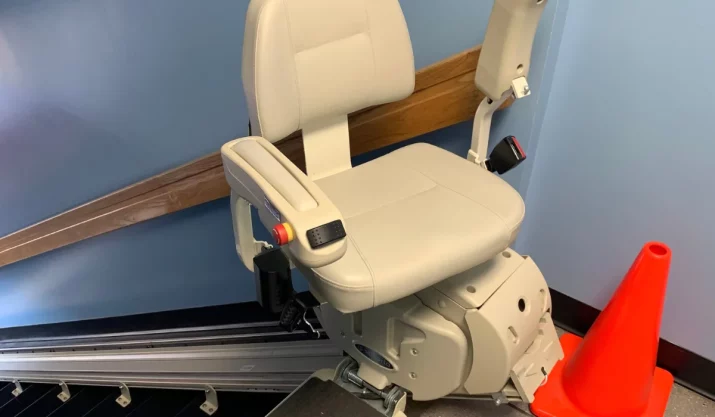
A wide, padded seat gives you room to sit comfortably and supports good posture. Armrests at the right height help you push yourself up without straining. A swivel seat lets the chair turn to face the landing so you can stand up without twisting — which can be harder to do when you’re short of breath.
If your staircase is straight, take a look at California Mobility’s indoor stairlifts for options that can be fitted to your home. If you have a curved or split-level staircase, those can be accommodated too.
Some California homes — especially older craftsman bungalows and split-level ranch houses — also have exterior steps leading to a porch or side door. An outdoor stair lift can make those steps just as manageable as the ones inside.
If your mobility needs go beyond a stair lift, a vertical platform lift or a Home Lift might be a better long-term fit.
Talk to your doctor and your installer together
Your pulmonologist or primary care doctor knows your COPD stage, your medications, and your physical limits. Your mobility equipment installer knows what features are available and how to set up the lift for maximum comfort.
Ideally, you bring information from both conversations to your purchase decision. Let the installer know about any limitations — like difficulty gripping a joystick, trouble standing from a low seat, or anxiety about confined spaces — so they can recommend the right model and settings.
Get a free home assessment from California Mobility
California Mobility is a family-owned company based in Sacramento. We work with seniors, family members, and caregivers all over California to find the right solution for each home.
If you or someone you love has COPD and is struggling with the stairs, we’d love to help. We’ll come to your home, measure your staircase, and walk you through options that fit your needs and your budget.
Request a free quote online or call us at (916) 560-0607. There’s no pressure and no obligation — just honest advice from people who care.
Frequently Asked Questions
Can a stair lift really help with COPD breathlessness? Yes. The main reason stairs are hard for COPD patients is the physical effort of climbing. A stair lift eliminates that effort entirely — you ride rather than climb. This alone can prevent the breathlessness, coughing, and fatigue that often follow stair climbing, and it allows you to safely use every level of your home.
What stair lift features matter most for someone with COPD? A swivel seat, padded armrests at a comfortable height, and a footrest that supports your legs are the most important comfort features. A slower ride speed and a smooth motor also help. If grip strength is limited due to low oxygen or fatigue, look for a lift with an easy-to-use joystick or rocker switch rather than a small button.
Is a stair lift covered by Medicare or insurance for COPD patients? Medicare generally does not cover stair lifts because they are classified as home modifications rather than durable medical equipment. Some Medicaid waiver programs in California and certain long-term care insurance policies do offer coverage or reimbursement. It’s worth calling your insurance provider directly to ask, and your doctor may be able to write a letter of medical necessity that supports a claim.
What if stairs aren’t the only barrier in my home? If you have multiple levels to access, very steep stairs, or limited standing ability, a stair lift may be just one part of the solution. California Mobility also offers Home Lifts, vertical platform lifts, and ramps that can work alongside a stair lift or replace it depending on your situation. A home assessment will help sort out what makes the most sense for your specific layout and needs.