

Stair lift remote issues and fixes for Sacramento homes
Table of Contents
A stair lift remote not working can be frustrating, especially if you rely on your lift every single day. The good news is that most remote problems have simple causes — and many of them you can fix yourself in just a few minutes. This guide walks you through the most common issues and what to do about them.
Key Takeaways
- Dead or weak batteries are the most common reason a stair lift remote stops working
- Safety sensors and obstructions on the track are frequent culprits that are easy to overlook
- Sacramento’s dry summers and cool, damp winters can affect both remotes and lift components over time
- If basic troubleshooting doesn’t fix the problem, a certified technician should inspect the lift before you keep using it
Why your stair lift remote might stop working
Stair lift remotes seem simple, but they rely on a chain of things all working together — power, signal, sensors, and the lift’s own control system. When any one of those breaks down, the remote appears to be the problem even if it isn’t.
Before you assume the remote itself is broken, it helps to work through a quick checklist. Most of the time, the fix takes less than five minutes.
Start with the batteries
This sounds obvious, but it’s the most common fix. Batteries in stair lift remotes drain faster than most people expect, especially if the remote gets left in a warm spot — like on a sunny windowsill during a Sacramento summer when temperatures regularly hit the triple digits.
Replace the batteries with fresh ones and try again. Even if the remote light still blinks, a weak battery may not have enough power to send a reliable signal to the lift.
Check the charging contacts on the lift itself
Most stair lifts charge their internal battery by resting on the rail at the top or bottom landing. If the lift isn’t parked correctly, it won’t charge. An uncharged lift won’t respond to the remote, no matter what you do with it.
Make sure the lift is fully docked at its charging point. Look for a small indicator light on the unit — most models show a solid or blinking light when charging is active.
Common stair lift remote not working causes beyond the basics
If fresh batteries and a full charge don’t fix things, here are the next things to check.
Safety sensors and obstructions
Every stair lift has sensors that stop the lift if something is blocking the track. These sensors are a safety feature, but they can also cause the remote to seem unresponsive when the lift simply won’t move.
Walk the full length of the track and look for anything in the way — a pet, a shoe, a loose piece of carpet, or even a shopping bag hanging on the newel post. In older Sacramento homes with narrow staircases or tight turns, it’s easy for items to shift onto the track without anyone noticing.
The key switch
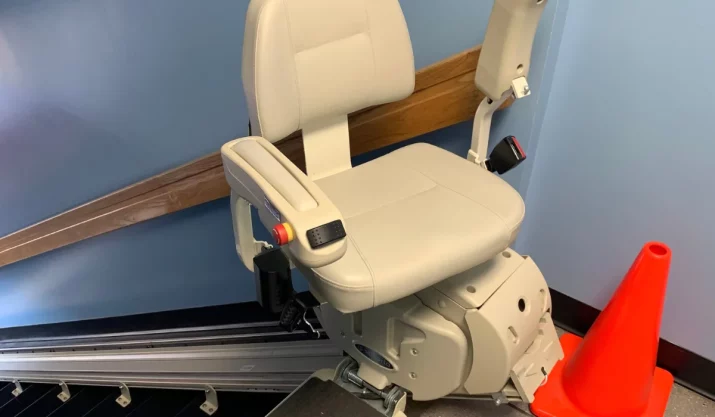
Most stair lifts have a physical key switch on the unit itself. If that key is turned to the off position, the remote won’t work at all. Check that the key is turned to the on or run position.
If the key went missing, don’t try to force the switch. Contact your dealer to get a replacement key.
Signal interference
Stair lift remotes send a radio or infrared signal to the lift. Other devices in the home — wireless routers, cordless phones, baby monitors — can sometimes interfere with that signal, especially in homes where multiple smart devices are packed close together.
Try turning off nearby electronics temporarily to see if the remote starts working again. If it does, repositioning your router or other devices may help long-term.
Dirty or corroded contacts
Sacramento doesn’t get much rain, but winter fog and damp evenings are common in the valley. Over time, moisture can cause the contact points on a remote or on the lift’s receiver to corrode or collect grime.
Gently clean the battery contacts inside the remote with a dry cloth or a cotton swab. If you can see visible corrosion, a small amount of rubbing alcohol on a swab can help. Let it dry fully before reinserting the batteries.
When the remote itself needs to be replaced
Remotes do wear out. Buttons can stop registering, the internal circuit board can fail, and the casing can crack from being dropped. If you’ve tried everything above and the remote still doesn’t work, it may simply need to be replaced.
Contact your stair lift manufacturer or local dealer to order the correct model. Using the wrong remote can damage your lift or void a warranty, so don’t try to substitute a universal remote.
If your lift is older and parts are getting hard to find, it may be worth talking to a local mobility specialist about whether repair or replacement makes more sense for your situation. California Mobility’s indoor stairlift options include newer models with updated remote systems that tend to be more reliable.
Issues specific to Sacramento homes
Older Sacramento neighborhoods — from East Sac to Midtown to the foothills — often have homes built in the 1940s through 1970s. These houses sometimes have narrower stairs, steeper inclines, or wiring that wasn’t designed with powered lifts in mind.
Electrical fluctuations in older homes can affect how a lift charges and responds to its remote. If you notice your lift acting up after a storm or a hot afternoon when the grid is stressed, the power supply may be the real culprit.
For homes with outdoor stairs — common on split-level properties and older bungalows — heat exposure and dust can wear down a remote faster than in an indoor setting. Outdoor stairlifts are built tougher, but their remotes still need attention.
When to call a professional
If you’ve gone through all of these steps and the lift still won’t respond, stop using it until a technician can take a look. Running a lift with an undiagnosed problem can cause further damage or create a safety risk.
A certified technician can test the control board, check the wiring, diagnose charging issues, and verify that all safety switches are working correctly. These are not things that are safe to troubleshoot on your own.
Ready for help or looking for a new stairlift?
The team at California Mobility has been helping Sacramento-area families choose, install, and maintain mobility equipment for years. If your stair lift remote isn’t working and you’re not sure what to do next, give us a call or ask for a quote online.
📞 Call us at (916) 560-0607 🔗 Request a free quote at californiamobility.com
We’re happy to talk through your options — no pressure, no sales pitch, just honest answers.
Frequently Asked Questions
Why does my stair lift remote work sometimes but not others? Intermittent problems are usually a sign of a weak battery, a loose connection, or mild signal interference. Start by replacing the batteries and make sure the lift is fully charged on its docking point. If the problem keeps coming back, it’s worth having a technician inspect the control board and receiver, since inconsistent behavior can point to an early wiring or electrical issue.
Can I use my stair lift without the remote if the remote breaks? Most stair lifts have a control panel directly on the seat or armrest that lets you operate the lift manually. This is a good backup while you wait for a replacement remote. However, you should not use a lift long-term without a working remote, since the remote is also used to send the lift to another floor so someone else can use it.
How long do stair lift remotes usually last? With normal use and fresh batteries, a stair lift remote can last many years. The most common reason remotes fail early is being dropped repeatedly or exposed to moisture. Keeping the remote on a hook or small shelf near the staircase — rather than in a pocket or on a counter where it can fall — can help it last longer.
Is it worth repairing an old stair lift, or should I just replace it? That depends on the age of the lift and the cost of the repair. If the lift is more than 10 years old and parts are becoming hard to source, replacement may be the better value. A local dealer can give you an honest assessment. California Mobility offers a range of indoor and outdoor stairlifts at different price points, and we’re always glad to help you figure out what makes sense for your home and budget.