

How stair lift sensors prevent bumps in California homes
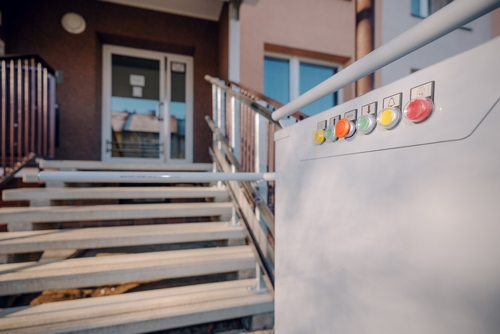
Table of Contents
A stair lift is only as safe as the technology built into it. Stair lift obstruction sensors are one of the most important safety features on any modern unit — they detect objects in the path of the lift and stop it before a collision happens. Understanding how they work can help you feel more confident about choosing a stair lift for your home.
Key Takeaways
- Obstruction sensors automatically stop the stair lift if something blocks its path, protecting both the rider and anyone nearby.
- Most stair lifts have sensors on both the footrest and the carriage to catch obstacles at different heights.
- California homes — from bungalows to hillside properties — often have staircases shared with pets, grandkids, and daily foot traffic, making sensors especially useful.
- Sensors are just one layer of a broader safety system that includes seatbelts, swivel seats, and remote controls.
What stair lift obstruction sensors actually do
The basic idea is simple. If a toy, a pet, a shoe, or even a bunched-up rug ends up on the staircase, the sensor tells the lift to stop. The lift won’t budge again until the path is clear and the rider resumes operation.
This matters more than people often realize. Stairways in busy households get cluttered fast. A grandchild’s backpack left on the third step, a cat who decided to nap on the landing — these are everyday situations, and sensors are designed to handle them without any drama.
Where the sensors are located
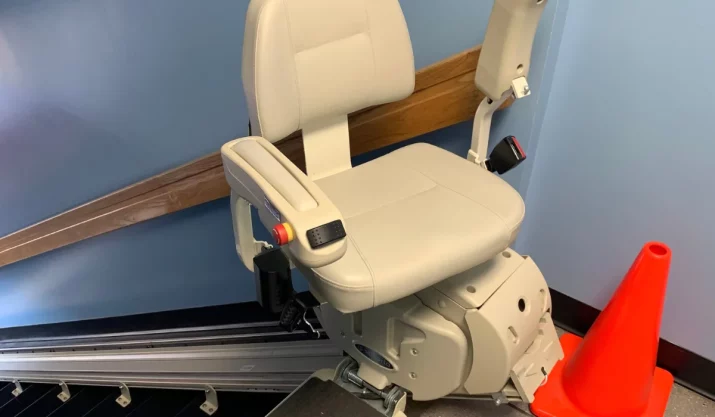
Most stair lifts place sensors on the footrest, which is the lowest point of the unit and the first part likely to contact an obstacle. Many models also have sensors on the carriage itself — the body of the unit that travels along the rail.
Having sensors in both locations gives the lift a wider detection range. Something blocking the path at floor level and something sticking out from the wall at mid-height can both trigger a stop. The exact sensor placement varies by brand and model, so it’s worth asking about this when you’re comparing options.
How the sensors respond
When a sensor detects an obstacle, the lift stops smoothly — not with a jarring jolt. The motor cuts out, and the lift holds its position on the rail. The rider can then call out for help, clear the obstacle themselves if it’s safe to do so, or use the controls to inch forward slowly once the path is open again.
This smooth stop response is deliberate. A sudden, hard stop on a staircase could itself be a hazard, especially for riders with balance issues or fragile bones. Good sensor systems are tuned to stop quickly but not harshly.
Why this matters in California homes specifically
California housing comes in a wide range of styles — Craftsman bungalows in Sacramento, split-level homes in the Bay Area, hillside properties in Southern California. Many of these homes were built decades ago with staircases that were never designed with accessibility in mind.
Narrow stairways, tight landings, and older carpet can all create conditions where an obstruction is more likely to go unnoticed by a rider. Sensors fill that gap. They don’t rely on the rider’s ability to see what’s below — they catch the problem automatically.
California’s outdoor spaces add another layer of consideration. For homes with exterior staircases — common on hillside properties or deck-equipped homes near the coast — outdoor stairlifts face additional challenges like leaves, debris, and wind-blown objects landing on the steps. Outdoor models typically have sensors suited for these conditions.
Sensors as part of a larger safety system
It helps to think of obstruction sensors as one piece of a bigger picture. They work alongside other built-in safety features to protect the rider at every stage of the trip.
Seatbelts and harnesses
Every reputable stair lift includes a seatbelt or lap belt. This keeps the rider secure in the seat if the lift stops unexpectedly. It’s a simple feature, but it’s the first line of protection against a fall.
Swivel seats
A swivel seat lets the rider turn to face away from the stairs before standing up. This reduces the risk of a misstep at the top or bottom landing — a moment when falls are surprisingly common.
Remote controls and call buttons
Most stair lifts come with remote controls so a caregiver or family member can send the lift up or down from either end of the staircase. This is especially handy for families who share the lift between two people or want to keep the stairway clear for other household members.
Weight limits and motor cutoffs
Quality stair lifts include weight sensors and motor safety cutoffs. These prevent the unit from operating under conditions outside its rated capacity. It’s a practical protection that also extends the life of the equipment.
Choosing a stair lift with the right sensor setup
Not all stair lifts are built the same way. When you’re shopping, ask the supplier directly about sensor placement, sensitivity settings, and how the unit responds when a sensor is triggered. A good supplier will walk you through a live demonstration rather than just pointing to a brochure.
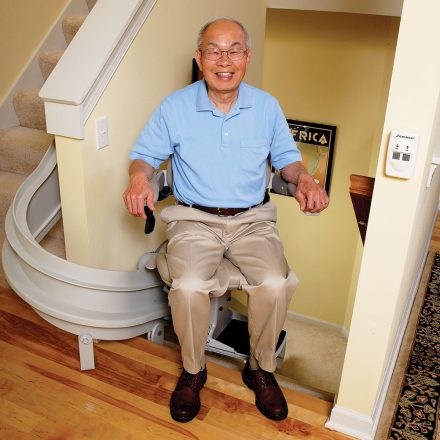
If your home has a curved or multi-landing staircase, sensor placement becomes even more important since the lift changes direction during travel. Indoor stairlifts designed for curved stairs are built differently than straight-rail models and should be evaluated carefully.
For California households where a full flight of stairs is no longer practical at all, it’s also worth knowing that vertical platform lifts and Home Lifts are alternatives that serve a similar purpose with a different set of features.
Talk to a California Mobility specialist
California Mobility has helped families across Sacramento and throughout California find the right stair lift for their home and their situation. We’re happy to walk you through how sensors work on the specific models we carry and help you figure out what setup makes the most sense for your staircase.
Get a free quote online at californiamobility.com/request-a-quote/ or call us directly at (916) 560-0607. There’s no pressure — just a straightforward conversation about what your home needs.
Frequently Asked Questions
Do stair lift obstruction sensors work on carpeted stairs? Yes. Obstruction sensors detect physical contact or proximity, not surface material. Whether your stairs are carpeted, hardwood, or tile, the sensors function the same way. The footrest and carriage sensors respond to whatever is in the lift’s path, regardless of what the steps themselves are made of.
What happens if a sensor malfunctions? If a sensor stops working correctly, most stair lifts are designed to default to a stopped or restricted state rather than continuing to operate. This is intentional — it’s safer for the lift to err on the side of stopping than to run without working sensors. A technician can diagnose and replace faulty sensors during a routine service visit.
Can the sensor sensitivity be adjusted? Some models do allow sensitivity adjustments, which can be useful in homes where the sensor is triggering too frequently due to low-hanging carpet or other conditions. This is typically a setting that a qualified installer handles during setup rather than something the homeowner adjusts on their own. Ask your supplier whether the model you’re considering has this option.
Are sensors on outdoor stair lifts different from indoor ones? Outdoor stair lift sensors are generally built to handle environmental conditions that indoor sensors don’t face — moisture, temperature swings, and debris like leaves or small branches. The basic function is the same, but the components are designed for more exposure. If you’re considering a lift for an exterior staircase, make sure the model is specifically rated for outdoor use rather than assuming an indoor unit will hold up.