

Stair lift error codes explained for San Jose users
Table of Contents
If your stair lift suddenly stops and flashes a light or beeps, it can feel alarming — especially if a family member depends on it every day. Understanding stair lift error codes takes most of the mystery out of these moments and helps you decide whether it’s a quick fix or time to call a technician. This guide walks San Jose homeowners through the most common codes, what they mean, and what to do next.
Key Takeaways
- Most stair lift error codes point to simple issues like an obstruction, an open safety edge, or a key switch that’s been turned off.
- San Jose’s mild but occasionally damp climate can affect outdoor stairlifts and units near garage entries — moisture and debris are worth checking first.
- Never try to force a stairlift past an error code — doing so can damage the motor or void your warranty.
- When a code keeps coming back after you reset it, that’s the signal to call a qualified technician rather than keep resetting.
What stair lift error codes actually are
Modern stairlifts are built with onboard diagnostic systems. When something goes wrong — or even when the lift just senses something unusual — it stops and displays a code. That code is the lift’s way of telling you where to look.
Codes show up differently depending on the brand. Some use blinking lights (one blink, two blinks, and so on). Others have a small digital display that shows a number or letter combination. Your owner’s manual will have a full list for your specific model, but many codes fall into the same general categories across brands.
The most common stair lift error codes and what they mean
Obstruction on the track or footrest
This is the most frequent reason a stairlift stops. Something — a shoe, a pet, a bag, a piece of mail — is blocking the footrest safety sensor or sitting on the rail. The lift stops instantly to prevent injury.
What to do: Clear the rail and the area around the footrest. Check that nothing is caught underneath. Press the reset button (usually on the arm or the main unit) and try again.
Safety edges and pressure sensors triggered
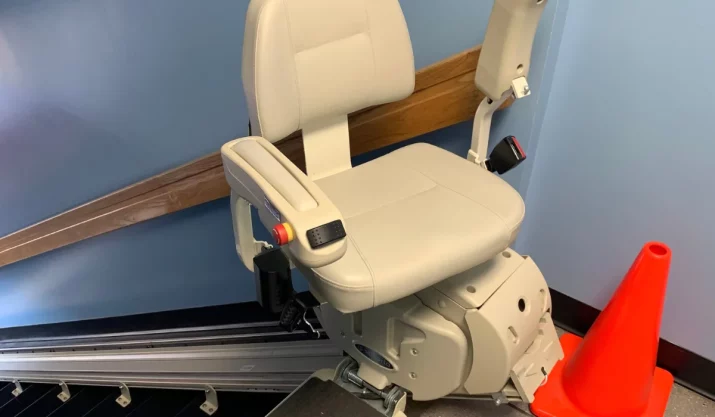
Stairlifts have soft safety edges — usually around the footrest and carriage — that stop the unit if they press against anything. In older San Jose homes with narrower staircases, curtains, handrails, or even loose carpet edges can brush against these sensors.
What to do: Walk the entire staircase and look for anything that might be touching the lift as it travels. Tuck back any fabric, check that carpet edges are secured, and run the lift slowly to see where the contact happens.
Key switch in the off position
This one catches a lot of people off guard. Most stairlifts have a key switch that locks the unit — it’s meant to prevent unsupervised use. If someone turned the key or bumped it, the lift won’t move and may show an error.
What to do: Look at the key switch on the arm or body of the lift. Turn it to the “on” position. If you’ve lost the key, call your dealer — California Mobility can help you get a replacement.
Battery or charging issues
Stairlifts typically run on rechargeable batteries that charge automatically when the seat sits at a charging point on the rail. If the lift has been parked away from a charging strip for a long time, or if there’s a wiring issue at the charging point, you may see a low-battery code.
What to do: Park the lift at the top or bottom charging position and leave it for at least an hour. If the code clears, the battery just needed time. If it keeps returning, the battery may need replacement — a normal service item after several years of use.
Limit switch errors
Limit switches tell the lift where the top and bottom of the rail are. If a limit switch gets out of alignment — which can happen after the lift gets bumped hard, or over time with vibration — the lift may stop short of the landing or refuse to start.
This one is not a DIY fix. A technician needs to inspect and realign the switch.
Remote or call/send control faults
Some error codes point to the handheld remote or the call/send controls mounted at the top and bottom of the stairs. A stuck button, a low battery in the remote, or a loose wire can trigger these.
What to do: Check the remote batteries first. Press each button on the wall controls to make sure none feel stuck. If the issue persists, it’s worth a service call.
Outdoor stairlifts in San Jose — a few extra things to check
San Jose’s climate is mostly mild, but morning fog, seasonal rain, and the occasional dusty stretch can affect outdoor stairlifts. Debris from eucalyptus trees, dried leaves, and grit from nearby hillsides can collect on the rail and trigger obstruction sensors.
If you have an outdoor unit, wipe down the rail with a dry cloth every few weeks and check that the cover is properly fitted when the lift isn’t in use. Moisture getting into charging contacts is a common cause of battery codes on outdoor models.
When to reset vs. when to call for service
A one-time error that clears after you remove an obstruction or flip the key switch is usually nothing to worry about. But if the same code comes back repeatedly — or if the lift makes an unusual noise, moves unevenly, or the code doesn’t clear after a reset — stop using it and call a technician.
Continuing to run a stairlift through a recurring error can turn a small fix into a much bigger repair. For indoor stairlifts and outdoor models alike, regular maintenance visits catch small issues before they become error codes at all.
Ready for help with your stairlift in San Jose?
If you’re seeing a code you can’t clear, or if your stairlift is due for a service check, California Mobility is here to help. We’re a family-owned company serving the Bay Area and Sacramento, and we work on most major stairlift brands.
Call us at (916) 560-0607 or request a quote online and one of our technicians will get back to you quickly.
We also carry home lifts, vertical platform lifts, and ramps if your needs have changed and you’re thinking about other options.
Frequently Asked Questions
Why does my stairlift keep stopping on its own without showing a code? If the lift stops but doesn’t display an error, the most likely cause is a safety sensor making brief contact with something on the staircase — a loose rug edge, a curtain, or even a pet that moves away before you look. Check the full length of the rail and the area around the footrest. If it keeps happening and you can’t find a cause, a technician can run a diagnostic to pinpoint it.
How do I reset a stairlift after an error code? Most stairlifts reset by turning the key switch off and back on, or by pressing a dedicated reset button on the arm or body of the unit — your owner’s manual will show you exactly where it is. After resetting, run the lift slowly through a short distance to make sure it’s operating normally before relying on it fully. If the same code appears again within a day or two, write down the code and call your dealer.
Are stairlift error codes covered under warranty? It depends on the nature of the problem and how old the unit is. Mechanical and electrical faults that aren’t caused by misuse are typically covered during the warranty period. Wear items like batteries may not be. California Mobility can review your warranty details and advise you before any service visit — just call (916) 560-0607.
My stairlift is several years old and keeps throwing errors. Is it time to replace it? Not necessarily — many stairlifts last 10 or more years with proper maintenance. But if you’re seeing multiple different error codes, the repair costs are adding up, or replacement parts are getting hard to find for an older model, it makes sense to talk through your options. California Mobility can give you an honest comparison of repair vs. replacement costs so you can make the decision that fits your budget and your situation.