

How rugs affect stair lift safety in Sacramento homes

Table of Contents
- Why carpet and rugs matter more than most people think
- What types of carpet are generally safe for stairlift installation
- Loose runner rugs: the bigger safety concern
- Sacramento homes: a few things worth knowing
- What to do before your stairlift assessment
- Can you install carpet after a stairlift is already in place?
- Talk to California Mobility before you decide anything
- Frequently Asked Questions
Many Sacramento homeowners are surprised to learn that the rugs and carpet on their stairs can directly affect how well a stairlift works. Stair lift carpet and rugs raise real questions about installation, track placement, and daily safety — questions worth answering before you buy. Whether your stairs are bare wood, wall-to-wall carpet, or covered with runner rugs, there’s a right way to handle each situation.
Key Takeaways
- Thick carpet and loose rugs can interfere with stairlift track installation and safe operation
- Most stairlifts can be installed on carpeted stairs, but the installer needs to know about it upfront
- Loose runner rugs on stairs are a trip hazard and should be removed or secured before stairlift use
- A home assessment by a trained installer helps identify any carpet or rug issues before installation day
Why carpet and rugs matter more than most people think
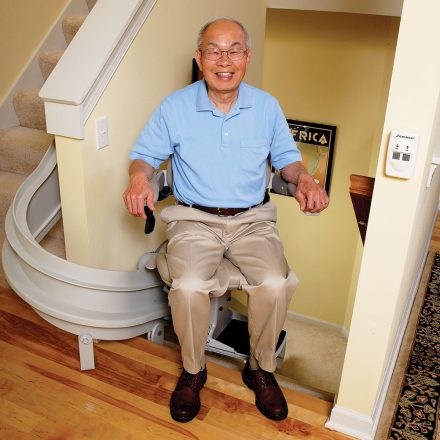
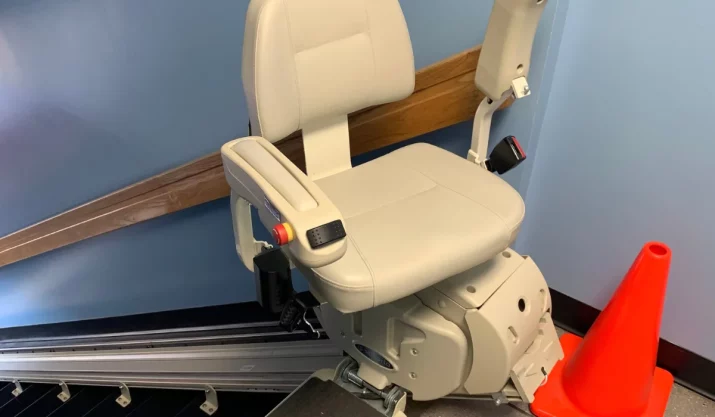
A stairlift runs along a track that gets anchored directly to the stair treads — not the wall. That means whatever is on your stairs affects how the track sits, how level it is, and how stable the whole system feels when in use.
Thin, tightly fitted carpet is usually not a problem. But thicker carpet — or carpet that is stapled down unevenly — can cause the track to sit at a slight angle. That small difference can affect how smoothly the chair glides and whether the footrest clears each step properly.
Loose rugs are a different issue altogether. A runner rug that shifts underfoot is dangerous for anyone, but especially for someone using a stairlift who is stepping on and off the chair at the top or bottom of the stairs.
What types of carpet are generally safe for stairlift installation
Low-pile and medium-pile carpet
Most stairlifts sold today are designed to work with carpeted stairs. Low-pile and medium-pile carpet — the kind found in most Sacramento-area homes — typically causes no issues. The installer will anchor the track through the carpet into the stair tread below, and the system will sit firm and level.
If your home has older carpet that is worn, bunched, or bubbling up at the edges, that’s worth flagging before the installation visit. It’s not necessarily a dealbreaker, but the installer should see it.
Thick or plush carpet
Very thick carpet can create a gap between the track and the stair surface that affects stability. In some cases, the installer may need to cut a narrow channel in the carpet along the edge where the track sits. This is a straightforward fix, but it does mean a small alteration to your carpet.
Talk to your installer ahead of time so there are no surprises on installation day. At California Mobility, we do a home assessment before every indoor stairlift installation — partly for this reason.
Loose runner rugs: the bigger safety concern
If you have a decorative runner rug on your stairs — the kind held down by friction or a few tacks — it needs attention before your stairlift goes in.
Here’s why: even if the rug does not interfere with the track itself, it creates a slip-and-trip risk when you step on or off the lift. That moment of transition, when a person shifts their weight from the seat to the stair, is when most stairlift-related falls happen. A rug that shifts even slightly underfoot makes that transfer much less safe.
The fix is simple. Either remove the rug from the stairs entirely, or replace it with a properly secured runner that uses gripper tape or non-slip backing on every step. Some families choose to go with bare hardwood or tile once the stairlift is installed, which also makes it easier to keep the track clean.
Sacramento homes: a few things worth knowing
Older Sacramento neighborhoods — like Land Park, Curtis Park, East Sacramento, and parts of Midtown — tend to have homes built in the 1930s through 1950s. These houses often have narrower staircases and original hardwood floors covered by carpet that’s been layered over the years.
If that sounds like your home, don’t assume a stairlift won’t work. Many of our customers in these neighborhoods have had successful installations. But a proper home visit matters more in older homes, because the stair dimensions and flooring conditions vary so much from house to house.
Sacramento’s dry summers and mild winters also mean less moisture-related swelling in wood floors — which is a small benefit when it comes to keeping carpet anchored and flat over time.
What to do before your stairlift assessment
You don’t need to make any changes before calling us. But here are a few things that will help the assessment go smoothly:
- Note whether your carpet feels loose or uneven on any step. Walk up and down slowly and pay attention.
- Check if your runner rug moves when you step on it. Even a half-inch shift matters.
- Tell us the carpet type if you know it — pile height, age, or whether it’s glued, stapled, or just laid in place.
- Let us know about any recent carpet repairs or replacements. New carpet on old padding can sit differently than expected.
These small details help our team come prepared with the right tools and expectations.
Can you install carpet after a stairlift is already in place?
Yes, but it takes coordination. The track runs along the side of the stair treads, so carpet installation or replacement needs to work around it. A flooring contractor who has worked near stairlift tracks before will handle this more easily than one who hasn’t.
If you’re planning to recarpet your stairs anyway, it’s often better to do it before the stairlift goes in — or to wait and do it in two phases, one side at a time. Let us know when you call and we can talk through the timing.
Talk to California Mobility before you decide anything
You don’t need to figure all of this out on your own. Our team has installed stairlifts in hundreds of Sacramento-area homes — on bare wood, low-pile carpet, plush runners, and everything in between. We’ll come to your home, look at your stairs, and give you a straight answer about what will work.
Request a free quote online or call us at (916) 560-0607. We’re a local, family-owned company and we’re happy to answer questions before you’re ready to buy.
If stairs aren’t the only barrier in your home, you may also want to look at our home lifts, vertical platform lifts, or ramps — depending on your layout and needs.
Frequently Asked Questions
Does carpet have to be removed to install a stairlift? No, in most cases carpet does not need to be removed. The track anchors through the carpet into the stair tread beneath it. However, very thick or uneven carpet may need a small adjustment. Your installer will assess this during the home visit.
Can a stairlift be installed on stairs with a runner rug? The stairlift itself can often be installed alongside a runner rug, but loose rugs should be secured or removed for safety. The bigger concern is the transfer point — stepping on and off the lift — where any rug movement underfoot increases the risk of a fall.
Will the stairlift track damage my carpet? The track is anchored into the stair treads with brackets, which will leave small marks in the carpet at anchor points. This is minor, but it’s worth knowing, especially if you plan to remove the stairlift later and restore the stairs. Talk to your installer if carpet preservation matters to you.
What if I want to replace my carpet after the stairlift is installed? It can be done, but it requires careful coordination with your flooring contractor. The track runs along the edge of the treads and will need to be worked around. Some homeowners choose to recarpet one section at a time. Call us at (916) 560-0607 and we can walk you through what to expect.