

What a Standing Stair Lift Price Includes and Who Should Consider One
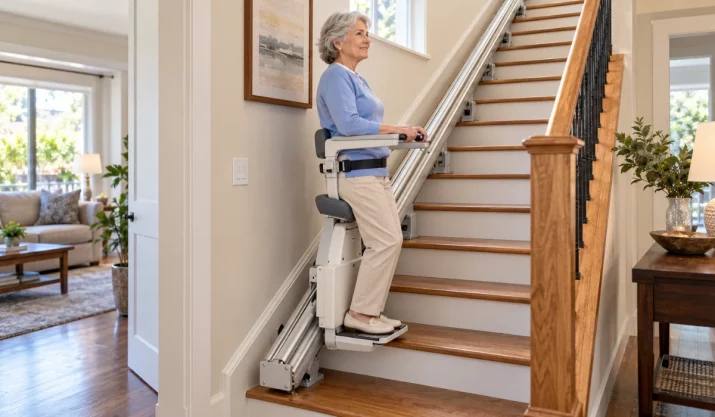
Table of Contents
- How Much Does a Standing Stair Lift Cost?
- What Does a Standing Stair Lift Price Include?
- How Do Staircase Design and Installation Affect Cost?
- Which Safety Features and Warranty Terms Matter?
- Who Should Consider a Standing or Perch Stair Lift?
- How to Compare Standing Stair Lift Quotes Fairly
- Choose the Right Stair Lift for Your California Home
- Standing Stair Lift Price: FAQs
A standing stair lift price depends on much more than the lift itself. Rail length, staircase shape, installation needs, safety equipment, and warranty coverage can all change the final quote, while a standing or perch configuration may also affect which equipment is needed.
If you’re comparing a standing stair lift price for a new installation, this guide explains estimated cost ranges, what should appear in the quote, why straight and curved staircases are priced differently, and when a perch lift makes more sense than a seated stair lift.
Key Takeaways
- A new perch-seat stair lift currently falls within a broad $2,500 to $25,000 market range because straight and curved installations have very different requirements.
- A fair quote comparison should account for the lift, rail, installation, required options, site conditions, and warranty rather than focusing on one advertised price.
- A standing stair lift may suit someone who finds deep knee or hip bending painful or has limited stair clearance, while a seated model can provide better support for other riders.
How Much Does a Standing Stair Lift Cost?
There’s no single national average for every standing or perch stair lift. A straight installation with a standard rail is a very different project from a curved lift that must follow turns or an intermediate landing.
According to Angi’s 2026 stair lift cost data, new perch-seat stair lifts range from $2,500 to $25,000 when both straight and curved installations are included. Its current data puts straight stair lifts at $2,000 to $9,000 and curved stair lifts at $10,350 to $25,000. These figures are useful for budgeting, but your actual standing stair lift cost comes from the staircase and equipment being quoted.
| Stair Lift Type | Current Market Range | Main Price Variables |
| Perch-seat stair lift | $2,500 to $25,000 | Straight or curved rail, options, and installation |
| Straight stair lift | $2,000 to $9,000 | Rail length, model, capacity, and features |
| Curved stair lift | $10,350 to $25,000 | Custom rail, turns, landings, and staircase geometry |
The large spread is worth paying attention to. A low-end straight perch lift and a custom curved system happen to belong to the same product category, but they don’t involve the same amount of rail work, fabrication, or installation.
What Does a Standing Stair Lift Price Include?
A useful quote should describe a complete installation rather than leave you guessing which costs come later. Look for the exact lift configuration, rail, measurement, delivery, installation, required options, and warranty coverage.
| Part of the Quote | What to Look For |
| Lift equipment | Exact model and standing or perch setup |
| Rail | Type and length required for your staircase |
| Measurement | Stair run, incline, landings, and available clearance |
| Delivery | Whether transportation is included |
| Installation | Mounting, setup, adjustment, and final testing |
| Options | Required equipment separated from convenience upgrades |
| Warranty | Parts, labor, duration, and exclusions |
Rail Length and Staircase Measurements
Rail length is one of the clearest reasons one stair lift quote can cost more than another. A longer straight staircase requires more track, and where the rail begins or ends can add another complication.
Consider a staircase that ends beside a doorway. A fixed rail extending across the opening may interfere with the normal path through the house, so the installation might need a folding rail or another parking arrangement. That equipment should appear in the proposal rather than surface as an unexpected charge later.
A professional measurement also establishes whether there’s enough room for the rider, the foot platform, nearby handrails, and safe access at each landing. Those details become especially relevant when the home has a narrow staircase.
How Do Staircase Design and Installation Affect Cost?
Staircase layout has a direct effect on both the rail and the amount of work required on installation day. A long staircase can cost more than a short one, but turns and landings usually create the bigger difference between straight and curved stair lift prices.
Straight Versus Curved Staircases
A straight stair lift follows one continuous incline. Many homes can use standard straight rail sections that are sized to the stair run, which keeps fabrication relatively simple.
A curved stair lift has to follow the actual route of the staircase. The rail may need to turn around a landing, change angle, or continue through a switchback. Those requirements call for more detailed measurements and a rail designed around the home’s layout.
| Cost Factor | Straight Staircase | Curved Staircase |
| Rail design | Standard rail in many homes | Staircase-specific rail |
| Turns | None | One or more |
| Intermediate landings | Usually outside the route | May be part of the route |
| Measuring process | Relatively simple | More detailed |
| Installation time | Usually shorter | Usually longer |
| Typical cost | Lower | Higher |
Stair Lift Installation
Site conditions can affect the job even when the stairs are straight. Installers need to account for handrails, doors, trim, landing clearance, and access to household power for battery charging. Some homes are ready once measurements are complete, while others need minor electrical or site preparation first.
Bruno’s current stair lift cost guide identifies staircase configuration, model, lift capacity, options, and installation as major price factors. It also says a dealer’s final price generally includes the lift, required or chosen options, delivery, and installation. Straight stair lift installation commonly takes about 2 to 4 hours, compared with roughly 4 to 8 hours for curved systems.
Those installation times are useful planning figures, not guarantees. The exact schedule depends on the home and the system being installed.
Which Safety Features and Warranty Terms Matter?
Safety features should match the rider and the proposed configuration. With a standing stair lift, the person travels in a supported upright or semi-standing position, so the way the lift supports and positions the rider deserves particular attention.
Safety Features to Compare
Some features come standard with the equipment. Others are optional or become necessary because of the staircase layout. The quote should make the distinction clear.
| Feature | What to Clarify |
| Rider restraint | How the rider stays in the intended position |
| Arm supports | Where the rider can hold or brace |
| Obstruction sensors | How the lift reacts when the path is blocked |
| Foot platform | Whether it suits the user’s stance and foot position |
| Call controls | Whether the lift can be called from another floor |
| Folding rail | Whether the rail must clear a doorway or walkway |
| Battery operation | Where the unit charges and how it behaves during an outage |
The goal isn’t to buy the longest feature list. It’s to pay for equipment that solves a real need for the rider or the home.
Stair Lift Warranty and Service
A stair lift warranty also affects the value of the quote. Major components, batteries, other parts, and installation labor may have different coverage periods, so broad phrases such as “lifetime warranty” need to be read carefully.
Compare what is covered, for how long, and who provides service after installation. A slightly higher quote can represent a different level of parts or labor coverage, which means two similar-looking prices may not offer the same long-term support.
Who Should Consider a Standing or Perch Stair Lift?
A perch stair lift is most useful when the rider can remain securely supported in an upright or semi-standing position but finds sitting deeply into a conventional chair uncomfortable. People who experience pain when bending their knees or hips may find this position easier to get into and out of.
A standing stair lift can also be worth discussing when stair width is limited. A seated rider occupies more horizontal space across the stairs, while a more upright riding position can improve clearance in some homes.
Standing Stair Lifts for Narrow Staircases
There’s no universal minimum width that makes a staircase suitable for every standing stair lift. The answer depends on the rider’s dimensions, stair angle, handrail position, rail location, nearby walls, and usable space at the top and bottom.
That’s why stair width alone shouldn’t determine the purchase. An installer needs to measure the actual staircase and consider how the person will get onto and off the lift.
When a Seated Stair Lift Is the Better Choice
A seated stair lift may make more sense when the rider needs greater body support or can’t comfortably maintain the position required by a perch model. It can also be the simpler choice if there’s adequate stair clearance and sitting down or standing up from the chair is manageable.
Balance matters here. The Centers for Disease Control and Prevention’s older adult falls data reports that more than 14 million adults age 65 and older, about one in four, report falling each year. A stair lift doesn’t remove fall risk, but changes in balance and mobility are good reasons to consider carefully which riding position provides suitable support.
How to Compare Standing Stair Lift Quotes Fairly
Before choosing between proposals, compare the scope rather than jumping straight to the final number. The quotes should describe the same type of new equipment and account for any required rail work or options.
| Compare | Question to Answer |
| Lift | What exact new model and perch configuration are included? |
| Rail | What type and length are included? |
| Installation | Is standard installation labor part of the total? |
| Safety equipment | Which items are standard, required, or optional? |
| Site preparation | Does the home need electrical or other work first? |
| Warranty | What coverage applies to parts and labor? |
| Service | Who handles adjustments and repairs? |
| Total price | Are any known project charges excluded? |
Use the proposal as a description of the work, not just a price sheet. When two quotes cover different equipment or services, comparing only the totals can make the less complete proposal appear cheaper.
Choose the Right Stair Lift for Your California Home
Price matters, but the right lift also needs to suit the staircase and the person using it. A standing model may be a practical choice for painful knee or hip bending or for some narrow staircase layouts. A seated stair lift can be a better fit when the rider needs more support.
California Mobility works with California homeowners and families to assess staircases and identify mobility equipment that fits the home and the rider’s needs. An in-home assessment gives you measurements and a project-specific recommendation rather than relying on a generic online range.
Contact California Mobility to schedule an in-home stair lift assessment and request a detailed quote for a new installation. You’ll have a clearer picture of the equipment, rail, installation requirements, and support included before making a purchase.