

Mobility Scooter Prices From Budget Models to Loaded Rides
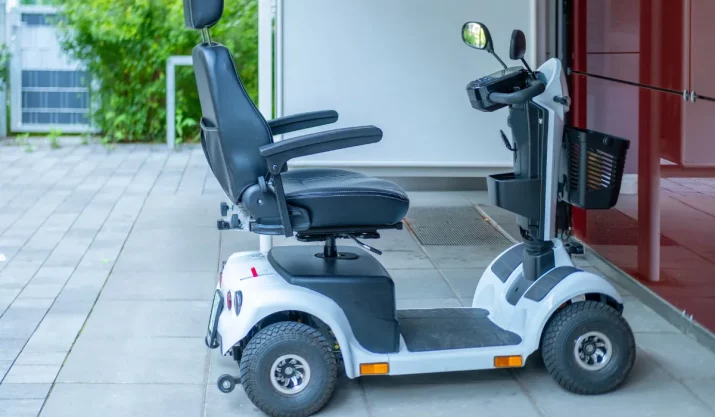
Table of Contents
- Mobility Scooter Prices at a Glance
- What You Get as Mobility Scooter Prices Rise
- Include Battery and Maintenance Costs in Your Budget
- Match the Scooter to Your Real Needs and Home
- Funding Options and Home Access Can Affect the Final Cost
- Choose a Scooter That Works With Your Home
- Mobility Scooter Prices: FAQs
Mobility scooter prices commonly start around $500 for basic consumer models and can climb into the thousands as you add battery capacity, suspension, better seating, higher weight capacity, lighting, or specialized folding systems. There’s no one national average retail price, so comparing scooters by the job they need to do is more useful than shopping around one number.
This guide breaks down mobility scooter prices across compact travel models, everyday scooters, and heavy-duty or feature-rich designs. You’ll also see what tends to change as the price rises, which ongoing expenses belong in your budget, how Medicare may affect your mobility scooter cost, and what to check around your California home before you buy.
Key Takeaways
- Current independent testing shows consumer scooter prices ranging from about $500 to $2,850, while specialized and heavy-duty models can fall outside that range.
- Spending more can buy useful improvements in battery range, suspension, seat comfort, lighting, weight capacity, or portability, but only if those features match the way you travel.
- Factor in batteries, maintenance, vehicle transport, and home access. A scooter that can’t comfortably move through your home or get past the front steps isn’t a good value at any price.
Mobility Scooter Prices at a Glance
A useful market reference comes from Consumer Reports’ 2026 mobility scooter testing. The independent nonprofit tested 10 models priced from $500 to $2,850 and evaluated range, charging, stability, portability, braking, seat comfort, weight, and ease of use. That price span reflects the products in its test group, not a national average, and it doesn’t set an upper limit for heavy-duty or specialized scooters.
For comparison, it helps to divide the market into broad shopping tiers. These are practical reference ranges rather than official industry categories.
| General Tier | Practical Price Reference | What Buyers Typically Prioritize |
| Compact travel | About $500 to $1,000 | Portability, easy storage, tight turning |
| Mid-range everyday | About $1,000 to $1,800 | Comfort, battery capacity, lighting, larger wheels |
| Feature-rich or premium | About $1,800 to $2,850+ | Advanced folding, lighter materials, upgraded seating, larger batteries |
| Heavy-duty | Varies widely | Higher weight capacity, suspension, ground clearance, larger tires |
The overlap between categories is real. A lightweight mobility scooter with an engineered folding frame can cost more than a larger, simpler model. Size is only one part of the price.
What You Get as Mobility Scooter Prices Rise
Higher mobility scooter prices make sense when the extra money solves a problem you encounter regularly. A longer range is useful when your normal trips demand it. Suspension earns its keep on rough pavement. A premium folding mechanism has value when the scooter goes into a car several times a week.
Compact Travel Scooters Favor Portability
A travel mobility scooter is usually designed around easy storage and transportation. Many compact models fold or separate into smaller pieces, which can help when the scooter needs to fit in a vehicle. Their smaller footprints also suit stores, medical offices, senior communities, and homes where turning room is limited.
The lower price often comes with smaller wheels, simpler seating, modest battery capacity, and limited suspension. Those are reasonable compromises for short errands and smooth surfaces. They become more noticeable when a portable mobility scooter is used for long outdoor trips or across cracked sidewalks.
Mid-Range Scooters Add Everyday Comfort
Mid-range models make more sense when the scooter becomes part of your normal week. This is where larger batteries, padded seating, bigger tires, lights, and suspension become easier to find.
Seat comfort is worth testing carefully. A seat that feels fine for ten minutes may offer too little support during a long shopping trip or an afternoon away from home. Adjustable armrests, a supportive back, and a swivel seat can be more valuable to a frequent rider than an extra mile per hour of top speed.
Mobility scooter range deserves similar scrutiny. Manufacturer figures help you compare models, but hills, rider weight, speed, temperature, tire condition, and battery age can change the distance you get from one charge. Buy enough range for a regular outing with some reserve rather than chasing the largest advertised number.
Heavy-Duty and Feature-Rich Scooters Solve Different Problems
Heavy-duty mobility scooters usually put more emphasis on weight capacity, outdoor performance, larger tires, substantial seating, suspension, and ground clearance. Those features suit riders who spend more time outdoors, cross uneven surfaces, or need a higher rated capacity.
A feature-rich scooter may reach a similar price for a completely different reason. Some premium models use lighter materials or sophisticated folding systems to make transportation easier. Paying more doesn’t always mean buying a larger machine.
| Your Main Need | Features Worth Paying For |
| Frequent vehicle transport | Low weight, folding, or easy disassembly |
| Longer regular trips | Suitable battery capacity and mobility scooter range |
| Rough sidewalks | Suspension and larger tires |
| Long periods seated | Supportive, adjustable seating |
| Higher rider weight | Appropriate weight capacity |
| Low-light travel | Headlight, taillight, and reflectors |
| Tight indoor spaces | Narrow width and manageable turning radius |
Include Battery and Maintenance Costs in Your Budget
The purchase price is only the beginning of the mobility scooter cost. Batteries eventually need replacement, tires wear, chargers can fail, and controls or drive components may require service. The amount varies too much between models to support a meaningful national maintenance average.
Check Battery Replacement Costs Before Buying
Mobility scooter battery replacement costs depend on battery chemistry, capacity, voltage, and model compatibility. Some scooters use widely available batteries. Others require a more specific battery pack.
Ask for the exact replacement battery and its current price while you’re still comparing models. That information is more useful than a broad industry estimate because it tells you what ownership of that particular scooter may cost.
Find Out Who Can Service the Scooter
Mobility scooter maintenance becomes much easier when technicians and replacement parts are available locally. Before buying, check who handles warranty work, how replacement tires or chargers are sourced, and whether the manufacturer continues to stock common parts.
Accessories deserve a quick look too. A basket, weather cover, cup holder, phone mount, or storage accessory may be useful, but they shouldn’t distract you from the bigger expenses. If the scooter is too heavy to load into your vehicle, for example, you may need a scooter lift or another transport solution.
Match the Scooter to Your Real Needs and Home
One of the easiest ways to overspend is to buy around specifications instead of your routine. Start with an ordinary week. Think about how far you travel, where you ride, how long you stay seated, and whether the scooter needs to go into a car.
A scooter with an extremely long published range may offer little extra value if your normal trip is two miles. Large outdoor tires can also make a scooter harder to store without helping much on smooth indoor floors. At the other extreme, choosing the cheapest compact scooter can become frustrating if your neighborhood has rough sidewalks and steep driveway transitions.
Measure the Route Before Choosing a Model
Measure the narrowest doorway, hallway turns, storage area, and charging location in your home. Check thresholds between rooms and the route from the storage spot to the exterior door. These measurements matter just as much as seat width or battery specifications.
California housing creates a wide mix of access conditions. A compact condo may favor a narrow scooter with a tight turning radius. An older raised home may have enough interior room but present a completely different problem at the entrance.
Look Beyond the Front Door
Steps, steep approaches, and small landings can determine whether the scooter can be used independently from home. In some properties, a properly designed ramp provides the most direct answer. Where space is tight or the height change is larger, a vertical platform lift may make more sense.
Planning for home access before the scooter arrives prevents an awkward situation where the equipment meets the rider’s needs but can’t easily reach the sidewalk, driveway, or vehicle.
Funding Options and Home Access Can Affect the Final Cost
If you meet the program requirements, Medicare’s wheelchair and scooter coverage may reduce what you pay for qualifying equipment. Medicare Part B can cover power-operated scooters as durable medical equipment when they are medically necessary for use in the home. Coverage requires the appropriate medical evaluation and documentation. After the Part B deductible, beneficiaries generally pay 20% of the Medicare-approved amount when the supplier accepts assignment.
Veterans and servicemembers may also qualify for help with certain accessibility projects through the VA Home Improvements and Structural Alterations program. Qualifying medically necessary improvements can include permanent ramping for access to a primary residence. Current lifetime HISA limits are $6,800 for specified qualifying circumstances and $2,000 for other qualifying disabilities. Portable ramps, porch lifts, and stair glides are among the items HISA excludes, so check the specific rules before planning the project.
Private insurance and Medicare Advantage plans have their own networks, cost-sharing rules, and approval procedures. Check the equipment, supplier, and documentation requirements before placing an order rather than assuming reimbursement will apply.
Choose a Scooter That Works With Your Home
The best mobility scooter isn’t necessarily the model with the longest range or the highest weight capacity. Compact travel scooters can be the right value when portability comes first. Mid-range scooters can justify their higher price for frequent riders who need more comfort, range, or suspension, while heavy-duty models make sense when greater capacity or outdoor performance solves an everyday problem.
Your home has to support that choice. Steps, raised entrances, narrow landings, and level changes can limit how useful a scooter is unless you plan the access route at the same time. California Mobility helps California homeowners evaluate those barriers and determine whether a ramp, stair lift, vertical platform lift, scooter lift, or home lift fits the property and the person’s mobility needs.
If you’re planning for a scooter and your entrance or interior layout may create a barrier, contact California Mobility to discuss the home side of the equation. A good access plan makes it easier to use the mobility equipment you chose instead of forcing you to work around the house every time you leave or return.