

Is a Mobility Scooter FSA Eligible Before Your Benefits Reset?
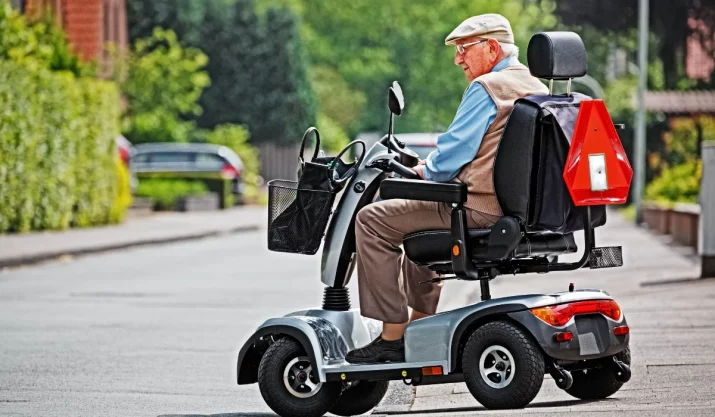
Table of Contents
- Is a Mobility Scooter FSA Eligible?
- What Documentation Do You Need for FSA Reimbursement?
- What Happens to FSA Funds When Your Benefits Reset?
- Can You Use HSA Funds for a Mobility Scooter?
- What Other Mobility Expenses May Be Eligible?
- Plan Your Mobility Scooter Purchase Before Your Benefits Reset
- Frequently Asked Questions
A mobility scooter may be FSA- or HSA-eligible when you need it primarily because of a medical condition or disability. Your plan may also require a letter of medical necessity, an itemized receipt, or other documentation before approving reimbursement.
If your Flexible Spending Account (FSA) plan year is ending, timing matters because unused funds may be forfeited or subject to limited carryover or grace-period rules. Know how medical necessity affects eligibility, what records to keep, how FSA and Health Savings Account (HSA) rules differ, and what to check before your benefits reset.
Key Takeaways
- A mobility scooter may qualify for FSA or HSA funds when it is primarily used for a medical purpose.
- Your plan may ask for an itemized receipt, provider documentation, or a letter of medical necessity before approving FSA reimbursement.
- Before your benefits reset, check your expense deadline, FSA carryover or grace-period rules, and claim-submission deadline.
Is a Mobility Scooter FSA Eligible?
A mobility scooter FSA-eligible purchase generally needs a clear medical purpose. Federal medical-expense rules focus on why you need the equipment, not simply whether the product is sold as a mobility aid.
The IRS Publication 502 explains that medical expenses generally include costs tied to diagnosing, treating, mitigating, or preventing disease, along with treatment affecting a structure or function of the body. The publication also specifically recognizes the cost of a wheelchair used mainly for the relief of sickness or disability as a medical expense.
That doesn’t mean every scooter purchase qualifies. It does show why medical necessity is the main issue.
When a Scooter Has a Medical Purpose
Suppose arthritis, an injury, balance problems, or another health condition makes it difficult to walk through a grocery store, medical building, or shopping center. A scooter used to compensate for that limitation has a clearer medical purpose than one purchased mainly for convenience during vacations or recreational outings.
Mobility limitations are common enough that this question affects many families. The Centers for Disease Control and Prevention (CDC) reports that 28.7% of U.S. adults have some type of disability, including 12.2% who have serious difficulty walking or climbing stairs.
Your benefits plan may still want proof that the scooter is connected to a medical need. Before buying, ask whether the administrator has specific requirements for FSA-eligible medical equipment and whether a mobility scooter needs additional documentation.
| What to Check | Why It Matters |
| Why you need the scooter | The expense should relate to a medical condition |
| How the scooter will be used | Medical use is different from general convenience |
| Whether your plan recognizes the expense | FSA reimbursement procedures can vary |
| Whether the seller provides an itemized receipt | A card statement may not provide enough detail |
What Documentation Do You Need for FSA Reimbursement?
A payment card working at checkout doesn’t always finish the claim process. An FSA administrator can ask you to substantiate an expense later, especially when an item has both medical and nonmedical uses.
Start with an itemized receipt. It should identify the product, seller, purchase date, and amount paid. Keep any eligibility emails, approval notices, or instructions from your administrator with the receipt so you don’t have to reconstruct the purchase later.
When You May Need a Letter of Medical Necessity
Some plans may require a letter of medical necessity, often called an LMN, for a mobility scooter. This document helps show that the equipment is being purchased because of a medical condition rather than for general convenience.
An LMN may include your diagnosis, the functional limitation caused by the condition, the equipment being recommended, and how long you’re expected to need it. If your administrator has its own form, use that version so your healthcare provider can supply the information the plan expects.
| Record | What It Helps Document |
| Itemized receipt | Product, seller, date, and amount paid |
| Product description | The type of medical equipment purchased |
| Letter of medical necessity | Why the scooter is needed for your condition |
| Provider documentation | The relationship between your condition and mobility limitation |
| Administrator correspondence | Eligibility guidance or approval instructions |
| Claim confirmation | Proof that reimbursement paperwork was submitted |
An LMN supports your claim, but it doesn’t guarantee reimbursement. The administrator still applies the rules of your specific health FSA.
What Happens to FSA Funds When Your Benefits Reset?
The biggest year-end risk is assuming you have more time than your plan actually gives you. Health FSAs generally operate on a plan year, and unused funds can be forfeited after the applicable deadlines.
Your deadline may not be December 31. Some employers use a different plan year, while others may provide an FSA carryover or FSA grace period within federal rules. Check your own plan dates before scheduling a mobility purchase.
Know the Difference Between Your Purchase and Claim Deadlines
The IRS Publication 969 explains the general rules for health FSAs and HSAs. For an FSA, the date by which an expense must be incurred and the date by which you must submit reimbursement paperwork can be different.
A run-out period gives you more time to submit a claim for an expense that was already incurred. It doesn’t automatically extend the period when you can make a new purchase.
| FSA Term | What It Means |
| Plan year | The period covered by your FSA |
| Expense deadline | When an eligible expense generally must be incurred |
| Grace period | Extra time some plans provide for eligible expenses |
| Carryover | A provision that may move part of an unused balance forward |
| Run-out period | Extra time to submit claims for expenses already incurred |
If you’re considering a scooter near the end of your plan year, check these dates before ordering. That gives you more time to obtain an LMN or other paperwork if your plan asks for it.
Can You Use HSA Funds for a Mobility Scooter?
A mobility scooter HSA-eligible purchase follows the same general principle: the equipment should qualify as a medical expense rather than simply provide personal convenience. A scooter used because a medical condition limits your ability to walk may meet that standard.
The major difference is what happens to unused money. HSA balances generally stay in the account from year to year, so you don’t face the same use-it-or-lose-it pressure that may apply to an FSA.
How FSA and HSA Rules Compare
Both accounts can cover qualified medical expenses, but they operate differently. Keeping receipts and medical documentation is useful whichever account you use.
| Feature | Health FSA | HSA |
| Unused balance | May be forfeited depending on plan terms | Generally stays in the account |
| Year-end timing | Can affect when an expense must be incurred | Balance usually remains available |
| Medical requirement | Expense must meet plan eligibility rules | Expense must be a qualified medical expense |
| Records | Administrator may request substantiation | Keep records supporting qualified expenses |
| Administration | Rules depend partly on the employer plan | Account belongs to the individual |
If you have access to both accounts, don’t assume the same payment or reimbursement process applies to each one. Confirm how the account you plan to use handles mobility equipment.
What Other Mobility Expenses May Be Eligible?
A scooter isn’t the only form of medical equipment that may qualify when a health condition limits mobility. Wheelchairs are specifically addressed in IRS guidance, while walkers, crutches, and similar mobility aids can also have a clear medical purpose.
Home accessibility equipment requires more care. A ramp, stair lift, home lift, or residential lift may help someone continue using more of the home, but permanent improvements can be treated differently from portable medical equipment.
Home Accessibility Products Can Follow Different Rules
A mobility scooter and a stair lift may solve related problems, but they don’t serve the same function. A scooter can help with longer distances, while a stair lift addresses movement between floors. A ramp deals with an entrance or level change, and a home lift can support access between different parts of a property.
Because permanent accessibility improvements can involve additional medical-expense considerations, don’t assume that approval for one mobility product means every related product will qualify for FSA or HSA funds. Check the specific expense before relying on reimbursement.
Plan Your Mobility Scooter Purchase Before Your Benefits Reset
If you hope to use remaining FSA funds, confirm the account rules before you shop. Check your balance, the final date an expense can be incurred, whether your plan offers an FSA carryover or grace period, and whether a mobility scooter requires a letter of medical necessity. You should also confirm what information needs to appear on the receipt.
The scooter itself still has to work for you. Seat dimensions, controls, turning space, storage, travel distance, and the places where you plan to use it can affect whether a particular model fits your routine. Using benefits on a scooter that’s uncomfortable or poorly suited to your daily environment defeats the purpose of the purchase.
California Mobility, a family-owned California company, serves seniors, people with disabilities, and families looking for practical mobility and accessibility solutions. If walking or navigating your home has become harder, the team can help you compare equipment based on how you actually live and move. Your benefits administrator should confirm FSA or HSA eligibility, while California Mobility can help you choose equipment that fits your mobility needs.