

Do stair lift covers help in San Francisco weather?
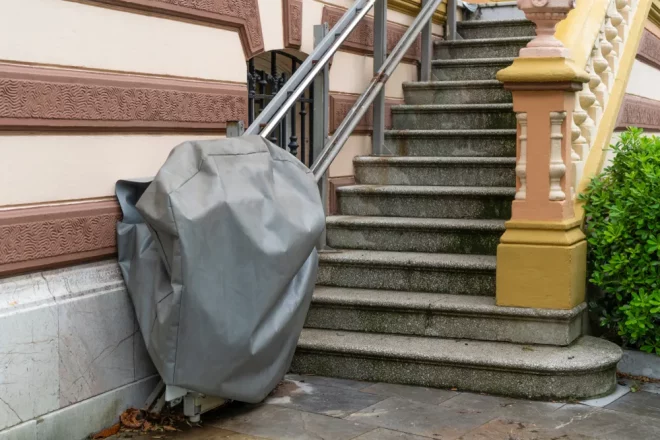
Table of Contents
- What makes San Francisco weather tough on outdoor stairlifts?
- How outdoor stairlifts are already built for the weather
- So is an outdoor stair lift cover actually worth it in San Francisco?
- What a good cover actually protects
- Don't forget maintenance — cover or no cover
- What if stairs aren't the right solution?
- Frequently Asked Questions
If you have an outdoor stairlift on your front steps or side entrance, you’ve probably wondered whether an outdoor stair lift cover is worth it given San Francisco’s famously damp, foggy climate. The short answer is yes — and the reasons go beyond just keeping the rain off. Here’s what you need to know before making a decision.
Key Takeaways
- San Francisco’s fog, salt air, and wet winters are genuinely hard on outdoor stairlift components
- A good cover protects your motor, rail, and upholstery from moisture and corrosion
- Most outdoor stairlifts already include weather-resistant features, but a cover adds an extra layer of protection
- Proper maintenance matters just as much as having a cover
What makes San Francisco weather tough on outdoor stairlifts?
San Francisco doesn’t get the heavy rainfall that some parts of California see, but the weather here has its own challenges. The city averages over 100 foggy days a year, and that moisture settles on everything — railings, steps, and yes, stairlift components.
Add in the salt air from the bay and the ocean, and you have conditions that can accelerate rust and corrosion. This is especially true in neighborhoods like the Outer Sunset, the Richmond, and along the northern waterfront, where the fog rolls in thick most mornings and doesn’t burn off until afternoon — or sometimes not at all.
The rainy season runs roughly from November through April. During those months, outdoor lifts can see repeated cycles of wet and dry that wear on seals, lubricants, and electrical components over time.
How outdoor stairlifts are already built for the weather
The good news is that most outdoor stairlifts are designed with exposure in mind. They typically use stainless steel or powder-coated aluminum rails that resist rust. The motors are sealed against moisture, and the upholstered seats are made from weather-resistant materials that won’t crack or mold the way standard fabric would.
Some models also come with a built-in cover — a hard shell or fitted cover for the seat and controls that the user deploys when the lift isn’t in use. This is different from an aftermarket weatherproof cover that fits over the entire unit.
So if you’re buying a new unit, ask specifically about what weather protection comes standard. Not all outdoor stairlifts are equal in this regard.
So is an outdoor stair lift cover actually worth it in San Francisco?
This is the question most people are really asking, and the honest answer depends on a few things.
Where your stairlift is installed matters. A lift on a covered front porch with a roof overhang is in much better shape than one fully exposed on a south-facing staircase. If your lift gets direct exposure to fog, wind, and rain with no overhead protection, a cover gives you real added protection.
How often the lift is used also matters. If the lift is used several times a day, covers may get left off or become an inconvenience. But if it sits unused for days at a time — say, during a hospital stay or vacation — having it covered during those stretches helps prevent moisture from sitting in the seat or seeping into the controls.
The salt air factor is real. This is San Francisco specifically, and it’s worth taking seriously. Salt air doesn’t just affect cars and window frames — it can get into electrical contacts and corrode metal parts that aren’t fully sealed. A cover adds a physical barrier between your lift and that salt-laden moisture.
In most cases, yes — a cover is worth the modest extra cost, especially if your lift is in an exposed location.
What a good cover actually protects
A proper outdoor stairlift cover typically wraps around the seat, armrests, and controls. Here’s what it’s shielding:
- The seat and upholstery: Even weather-resistant materials last longer when not constantly wet. Mold and mildew can still build up in damp conditions.
- The control panel: Buttons and joysticks have seals, but repeated moisture exposure wears those seals down over time.
- The motor housing: Most motors are well-protected, but a cover keeps debris and heavy rain from hitting the unit directly.
- The battery: Many stairlifts run on onboard batteries. Prolonged cold and damp can affect battery performance, especially in the dead of winter.
Don’t forget maintenance — cover or no cover
A cover helps, but it doesn’t replace regular maintenance. Have your outdoor stairlift inspected at least once a year. A technician will check the rail for corrosion, lubricate the drive mechanism, and make sure all the electrical connections are tight and clean.
If you notice the lift running slower, making unusual sounds, or jerking on the rail, don’t wait for your annual check — call sooner. Catching small problems early is almost always less expensive than dealing with a bigger repair later.
Also wipe down the rail occasionally with a dry cloth, especially after foggy spells or rain. It takes two minutes and helps keep grit and moisture from building up in the track.
What if stairs aren’t the right solution?
Not every home in San Francisco is a good fit for a stairlift. Some Victorian-era homes have very steep or narrow staircases, and others have exterior layouts that make a different solution more practical. A vertical platform lift may work better if you need to bridge a level change without a traditional staircase run. For some homes, a home lift is worth considering for interior access between floors. And for low rises or porch access, ramps can be a simple, low-maintenance option.
The right fit depends on your home’s layout and your specific mobility needs.
Ready to talk through your options?
California Mobility is a family-owned company serving San Francisco and communities throughout California. We’ll help you figure out what makes sense for your home and your budget — no pressure, no confusing sales pitch.
Request a free quote online or call us at (916) 560-0607. We’re happy to answer questions over the phone before you commit to anything.
Frequently Asked Questions
Do all outdoor stairlifts come with a cover? Not all of them, no. Some models include a built-in cover for the seat and controls as a standard feature, while others offer it as an optional add-on. When you’re comparing models, ask specifically what weather protection is included. If a cover isn’t standard, it’s usually worth adding — especially in a coastal city like San Francisco.
Can I use an indoor stairlift outside if I add a cover? No. An indoor stairlift is not built for outdoor use, and adding a cover won’t change that. Indoor models use materials and electrical components that aren’t rated for moisture exposure. Using one outside — even with a cover — voids the warranty and creates a safety risk. Always use a unit specifically designed for outdoor installation.
How often should I replace the cover on my outdoor stairlift? Most covers last several years with normal use, but inspect yours every season. Look for cracks, tears, or areas where the waterproofing has broken down. If water is getting through, replace it. A worn cover can actually trap moisture against the unit, which is worse than no cover at all.
Will my outdoor stairlift work fine during San Francisco’s rainy season without any extra cover? It depends on the model and the installation location. A well-built outdoor stairlift with a manufacturer-included seat cover should handle typical San Francisco winters reasonably well. But if your lift is fully exposed — no porch roof, no overhang — adding an aftermarket cover during the rainy months is smart preventive care that can extend the life of your unit.