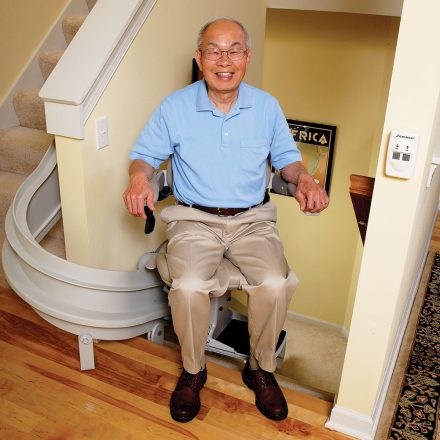


Stair lift tips after hip replacement for Los Angeles households
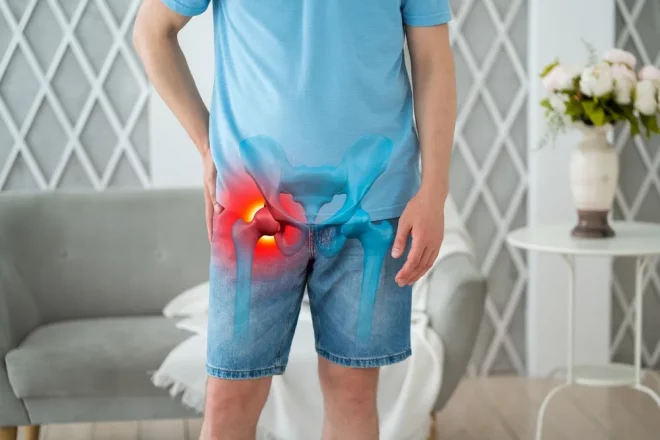
Table of Contents
Coming home after a hip replacement is a big moment — but for many Los Angeles households, it also means facing a staircase before your body is ready for it. A stair lift for hip replacement recovery can make the difference between staying safely in your own home and rushing back to a rehab facility. The tips below will help you plan ahead, choose the right equipment, and get the most out of your recovery.
Key Takeaways
- Install a stair lift before you leave the hospital so your home is ready on day one of recovery
- Most standard stair lifts work well for hip replacement patients, but seat height and swivel features matter
- Los Angeles homes — from hillside properties to multi-story Craftsmans — often have stair layouts that need a professional measurement before purchase
- Outdoor stair lifts are worth considering if your front entry has steps, since getting in and out of the house is part of everyday life
Why stairs are a real problem after hip replacement
Hip replacement surgery puts strict limits on how much you can bend your hip in the weeks right after the procedure. Your surgeon will likely tell you not to flex the hip past 90 degrees, not to cross your legs, and not to twist at the hip. Climbing stairs the traditional way forces you to do several of those things at once.
In the early weeks, even a short staircase can feel impossible — or dangerous. A fall on the stairs during recovery can cause serious setbacks, including dislocation of the new joint. That is not a risk worth taking.
A stair lift lets you sit down and ride up or down without putting stress on the hip. You are not gripping a banister and hoisting yourself up step by step. The lift does the work.
Choosing a stair lift for hip replacement recovery
Not every stair lift is the same, and a few features make a bigger difference for hip replacement patients specifically.
Seat height
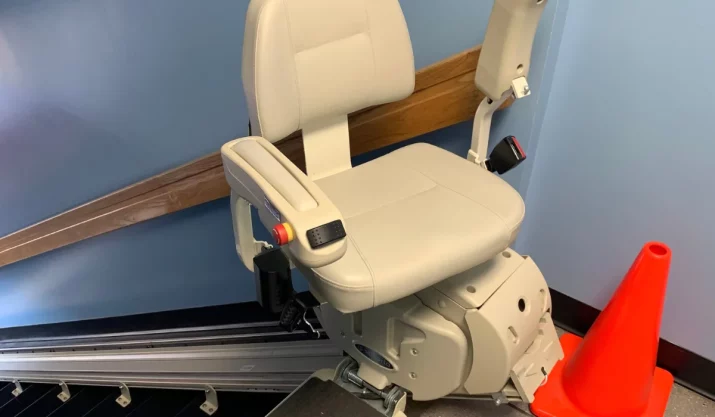
After hip surgery, you should not drop down into a very low seat. Look for a stair lift with a higher seat height, or ask about models that let you adjust the seat. Getting in and out of the lift should feel more like sitting in a firm dining chair than sinking into a sofa.
Swivel seat
A swivel seat rotates at the top or bottom landing so you can exit the lift facing straight out — no twisting required. This is one of the most helpful features for anyone recovering from hip surgery. Many indoor stairlifts include a powered swivel seat as a standard or optional feature.
Armrests and footrest
Good armrests give you something solid to push up from when you stand. A footrest that folds out of the way as you exit keeps the landing clear so you are not stepping around it. Both features are worth asking about when you compare models.
Los Angeles housing and what it means for your stair lift
Los Angeles is not a one-size-fits-all city when it comes to homes. A stair lift that fits a straight staircase in a tract home in the Valley is a different product from one needed on a curved staircase in a hillside home in Silver Lake or a narrow Victorian stair in a historic West Adams property.
Many LA homes also have outdoor staircases — front entry steps, back deck stairs, or the kind of long outdoor stairways you see on hillside lots in Eagle Rock or Mount Washington. If those exterior steps are part of your daily routine, an outdoor stair lift rated for California’s climate is worth looking into. Even though LA weather is mild, outdoor lifts still need UV-resistant materials and sealed components to handle sun exposure and the occasional marine layer moisture near the coast.
The best way to know what you need is to have someone measure your actual staircase before you order anything. A professional assessment takes about 30 minutes and saves you from buying the wrong product.
When to order — before surgery, not after
This is the tip most people wish they had heard sooner. Order your stair lift before your surgery date, not while you are sitting in the hospital waiting to go home.
Installation typically takes one to two hours, but there is also lead time for ordering the right model and scheduling a crew. If you are scrambling to get equipment in place the day before discharge, you may end up with the wrong product installed in a hurry — or no product at all and a staircase standing between you and your bedroom.
Talk to your orthopedic surgeon or occupational therapist about your home layout before surgery. They can give you guidance on what your first weeks at home will look like and what you will need.
Other equipment to consider alongside a stair lift
A stair lift handles vertical travel between floors. But depending on your home, you may have other access challenges too.
If you have a split-level entry with just a few steps, a vertical platform lift or a ramp might be a better fit than a stair lift for that specific spot. For homes with three or more floors, some families look into a home lift as a longer-term solution that serves the whole household, not just the recovery period.
Think about every transition point in your home: front door, garage entry, interior floors. A single stair lift often solves the main problem, but it helps to walk through the whole layout with someone who knows mobility equipment.
Ready to get your home set up before surgery? The team at California Mobility can measure your staircase, recommend the right lift, and get it installed before you come home from the hospital. Request a free quote online or call us at (916) 560-0607. We serve households across Los Angeles and all of California.
Frequently Asked Questions
Can I use a stair lift right after hip replacement surgery? Yes — stair lifts are specifically helpful in the early recovery period when hip movement is most restricted. You sit on the lift, ride up or down, and exit without needing to climb steps under your own power. Just make sure the seat height and swivel function suit your needs so you are not bending the hip too sharply when you get on and off.
How long will I need the stair lift after hip replacement? Most hip replacement patients are back to climbing stairs on their own within two to three months, depending on the individual and their physical therapy progress. Some families choose to keep the lift long-term for general convenience or because another household member can use it. If you only need it short-term, ask about rental or lease options when you request a quote.
Will a stair lift fit my Los Angeles home’s staircase? Most staircases can accommodate a lift, but the track and model have to match your specific setup — straight, curved, narrow, or steep. LA homes vary a lot in stair design, so a professional measurement is the right starting point. A California Mobility technician can assess your staircase and tell you exactly what will work before you commit to anything.
Is a stair lift covered by insurance after hip replacement surgery? Medicare generally does not cover stair lifts as durable medical equipment. Some private insurance plans or long-term care policies may offer partial reimbursement, and there are financing options available through equipment dealers. It is worth checking your policy and asking your provider directly, since coverage rules can vary.