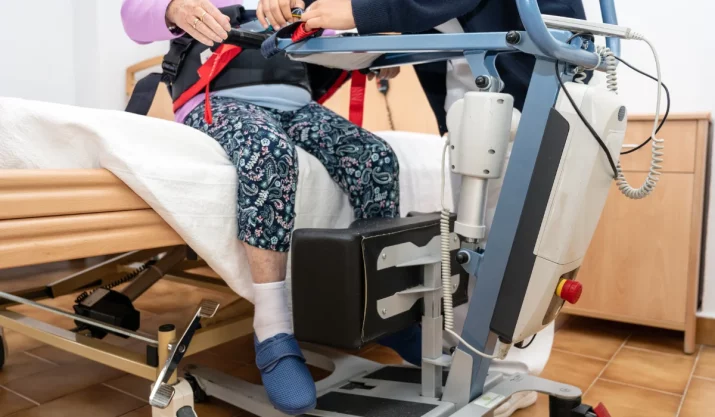


Platform lift battery backup basics for Los Angeles homes
Table of Contents
Power outages happen more often than most people expect in Southern California — from summer heat events to Santa Ana wind shutdowns. If your household depends on a vertical platform lift, understanding how vertical platform lift battery backup works could make a real difference in your daily safety and independence.
Key Takeaways
- Most modern vertical platform lifts include a built-in battery backup that keeps the lift running through short outages
- Los Angeles power events — from LADWP grid stress to PSPS shutdowns — make battery backup especially worth understanding
- Battery backup systems vary by lift model, so knowing your unit’s capacity helps you plan ahead
- Regular battery checks and professional service keep the backup system ready when you actually need it
How a vertical platform lift battery backup actually works
A vertical platform lift is a short-travel lift that moves a platform up and down between two levels — typically from a ground floor to a porch, deck, or raised entry. Most models sold today run on standard household current, but they also carry a battery that kicks in automatically when the power cuts out.
The battery connects to the lift’s motor controller. When the system senses a loss of AC power, it switches over to DC battery power without any action needed from the user. Most of the time, the rider won’t notice a difference at all.
The battery recharges itself whenever the lift is plugged into working power. You don’t need to do anything special to maintain the charge during normal use — the system handles that on its own.
How many trips can you expect on battery power?
This varies by manufacturer and model, but most battery backup systems are designed to handle a limited number of full cycles — often somewhere in the range of several trips up and down before the charge runs low. Some higher-capacity systems will do more.
The key point is that battery backup is meant to get you out of a stuck position or through a short outage. It is not designed to replace full electrical service for days at a time.
If your household experiences frequent or extended outages, talk to your installer about what your specific model can handle and whether a higher-capacity battery option is available.
Why this matters more in Los Angeles than in many other places
Los Angeles has a few specific factors that make battery backup more than a nice-to-have feature.
Summer heat and grid demand. During heat waves, LADWP and SCE grids come under heavy strain. Rolling outages and brief interruptions have happened during extreme heat events, sometimes with little warning. If a family member uses the lift to access a bedroom, bathroom, or main entry, being stranded on one level during a heat event is a real concern.
PSPS events. Pacific Gas & Electric isn’t the only utility that shuts off power during high-wind and fire-risk periods. Parts of the Los Angeles area served by SCE have experienced Public Safety Power Shutoffs that lasted hours or longer. A battery backup gives you some working time even when the utility intentionally cuts power.
Older housing stock and wiring. Many Los Angeles homes — especially in neighborhoods like Echo Park, Silver Lake, Mid-City, and the older San Fernando Valley suburbs — were built decades ago. Older wiring can experience more frequent small interruptions and flickers that, without battery support, could strand a lift mid-travel. Battery backup smooths over those brief interruptions automatically.
Hillside homes. A significant number of Los Angeles homes are built on hillside lots where the main entry is several feet above grade. For those homeowners, a vertical platform lift is often the most practical way to get from the driveway or street level to the front door. Losing access to that lift during an outage isn’t just inconvenient — it can cut someone off from their own home.
What to look for when comparing lift models
Not every lift includes battery backup as a standard feature, and the quality of backup systems varies. Here are a few practical things to ask about when you’re comparing options.
Is the battery included, or is it an add-on? Some manufacturers include the backup battery in the base price. Others list it as an optional upgrade. Make sure you know what’s in the package before you sign anything.
What type of battery does the lift use? Most platform lifts use sealed lead-acid or AGM (absorbed glass mat) batteries. These are low-maintenance and reliable. Some newer models use lithium-based batteries, which tend to hold a charge longer and have a longer service life.
How long has the battery been sitting? If a lift has been in storage at a dealer’s warehouse for a while, the battery may have partially discharged. Ask when the unit was last tested.
How often should the battery be replaced? Most backup batteries need replacing every three to five years, depending on use and climate. In warmer climates like Los Angeles, heat can shorten battery life, so lean toward the shorter end of that range when planning ahead.
If you’re also considering a stairlift for interior stairs, the same battery backup questions apply — you can browse indoor stairlift options here or outdoor stairlifts here.
Keeping the battery ready year-round
Once your lift is installed, the maintenance side of battery backup is simple. During your annual service visit, a technician should test the battery under load, check the connections, and let you know if replacement is coming up.
Between service visits, the best thing you can do is leave the lift plugged in and powered on when it’s not in use. This keeps the battery topped off. Unplugging the lift for long periods — like during an extended trip away from home — can allow the battery to drain down, which shortens its lifespan over time.
If the lift ever shows a low-battery warning light or behaves sluggishly, don’t ignore it. A weak battery may still move the lift, but it may not complete a full cycle, which could leave someone stranded partway through a trip.
Ready to find the right lift for your Los Angeles home?
California Mobility is a family-owned company serving Los Angeles and communities throughout California. We can help you find a vertical platform lift with the right battery backup for your home and your situation.
Request a free quote online or call us directly at (916) 560-0607. We’re happy to answer questions — no pressure, no sales pitch, just straight answers.
Frequently Asked Questions
Will my vertical platform lift work during a PSPS outage? Yes, for a limited time. The battery backup will keep the lift running through short outages, including intentional shutoffs. The exact number of trips depends on your model and the condition of the battery. If you live in an area with a history of PSPS events, ask your installer what your specific unit’s backup capacity is.
How do I know if my lift’s battery needs to be replaced? The most common signs are a warning light on the control panel, slower-than-normal travel speed, or the lift stopping before completing a full trip on backup power. If you’re not sure, schedule a service visit. Battery replacement is a routine, affordable repair — far less costly than being stranded during an outage.
Can I use a whole-home generator instead of relying on the battery? A generator can power the lift just fine, as long as it provides clean, stable AC power. However, there’s usually a delay of several seconds between when utility power fails and when a generator kicks on. During that gap, the lift’s built-in battery backup covers the transition. So even if you have a generator, the battery still earns its place.
Does heat in Los Angeles affect battery backup performance? It can. High ambient temperatures — especially in areas like the San Fernando Valley where summer heat regularly climbs well above 100°F — can cause batteries to degrade faster than they would in cooler climates. Keeping the lift out of direct sun when possible and staying on top of the recommended service schedule helps extend battery life in Southern California conditions.