

Home lift door types for San Jose residences
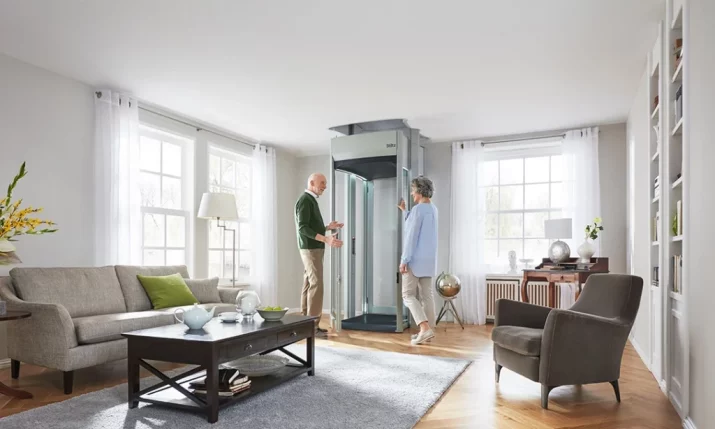
Table of Contents
If you’re looking into a home lift for a San Jose home, the door setup is one of the first real decisions you’ll face. Home lift door types vary quite a bit, and the right choice depends on your floor plan, how the lift will be used, and who will be using it most.
Key Takeaways
- The most common home lift door types are swing doors, folding doors, and sliding doors — each with different space and safety trade-offs
- San Jose’s mild but humid Bay Area climate can affect door materials over time, so durability matters
- Door type affects both the footprint of the lift and how easy it is for older adults or wheelchair users to enter and exit
- A professional installation assessment helps match the door type to your specific home layout and landing space
Why the door type matters more than most people expect
Most families shopping for a home lift focus on weight capacity or cabin size first. The door setup tends to be an afterthought — until installation day, when it turns out the swing door needs 18 inches of clearance that doesn’t exist in the hallway.
Getting this decision right early saves time, money, and frustration. It also makes a real difference in day-to-day use, especially for someone using a walker or wheelchair.
The main home lift door types explained
Swing doors
Swing doors are hinged doors that open outward or inward, similar to a standard room door. They’re the most traditional option and tend to be the most affordable.
The catch is clearance. A swing door needs open floor space to arc through when it opens. In tighter San Jose homes — think older Willow Glen bungalows or compact Cambrian Park ranchers — that clearance may not be available on every landing.
Swing doors work well when landings are generously sized. They’re also straightforward to operate, which matters if the person using the lift has limited hand strength or grip.
Folding doors (also called bi-fold or accordion doors)
Folding doors divide in the middle and fold back against the door frame when opened. They need much less swing clearance than a traditional door, making them a popular pick for homes where space is tight.
They do have more moving parts, which means a bit more maintenance over time. The folding mechanism should be checked periodically to make sure it’s moving freely and latching properly.
For San Jose homes in denser neighborhoods like Evergreen or Berryessa, where room configurations can be snug, folding doors are often the practical middle ground.
Sliding doors
Sliding doors move horizontally along a track rather than swinging or folding. They take up almost no floor space when opening, which makes them a strong choice for very compact landings.
The trade-off is the track itself. Tracks need to be kept clean and free of debris to work smoothly. In a home where a lot of foot traffic moves through, or where pets are around, track maintenance becomes part of the routine.
Sliding doors are common on vertical platform lifts as well as enclosed home lifts. They tend to give the lift a cleaner, more modern look.
Automatic vs. manual doors
Beyond the door style, you’ll also choose between automatic and manual operation. Automatic doors open and close on their own as part of the lift cycle. Manual doors require the user to open and close them by hand.
For someone with reduced grip strength, balance issues, or who uses a power wheelchair, automatic doors are usually the better fit. They remove one more physical task from the process.
Manual doors cost less and have fewer mechanical parts that can wear out. For someone who is mobile but just needs lift assistance between floors, manual doors are often fine.
How San Jose’s housing stock shapes the decision
San Jose has a wide mix of home styles — mid-century ranch homes in neighborhoods like Almaden Valley, two-story Eichlers in south San Jose, and larger newer builds further out toward Evergreen. Each layout presents different challenges.
Ranch homes are single-level, so a lift is typically going up to a raised garage level or a small step-up addition. The landing space is often limited. Folding or sliding doors tend to work better here.
Two-story homes with a traditional staircase give more room to work with on upper landings. Swing doors become more viable. Still, it’s worth measuring carefully — a hallway that looks wide can surprise you once a lift is in place.
The Bay Area’s climate is mild compared to much of California, but San Jose does get morning fog and seasonal humidity, especially in winter. If any part of the lift or its doors are near an exterior wall or a garage, moisture-resistant materials are worth asking about.
Matching door type to the person using the lift
The person using the lift every day should drive the decision more than anything else. Here are a few practical questions to think through:
- Does the user have good grip strength, or would automatic doors make things easier?
- Is the user in a wheelchair? If so, the door opening width and operation style need to accommodate that.
- Will multiple family members use the lift, including someone who might need it in a hurry during a health episode?
A home lift should make daily life easier, not add new obstacles. Taking the time to think through who uses it — and how — usually points clearly toward one door type over another.
Talk to California Mobility about your San Jose home
California Mobility is a family-owned company serving San Jose and communities throughout California. We carry a range of home lift options and can walk you through which door configuration makes sense for your floor plan, your budget, and the person who’ll be using the lift every day.
Request a free quote online or call us at (916) 560-0607. We’re happy to answer questions before you’re ready to commit to anything.
Frequently Asked Questions
What is the most common home lift door type for residential use? Swing doors are the most traditional option and are widely used in homes with enough landing clearance. Folding doors have grown in popularity because they work better in tighter spaces, which describes a lot of older San Jose homes. The best answer really depends on your specific layout.
Can I get automatic doors on a residential home lift? Yes. Many home lifts offer automatic door options as either a standard feature or an upgrade. Automatic doors are a practical choice if the main user has limited hand strength or mobility challenges. Ask about this specifically when you’re comparing lift models.
How wide does the door opening need to be for a wheelchair user? Most wheelchair users need a clear door opening of at least 32 inches, and 36 inches is more comfortable. This is true whether you’re looking at a home lift or any other doorway in the house. A California Mobility specialist can measure your space and recommend a lift model with the right opening width.
Do home lift doors require a lot of maintenance? Swing and folding doors have relatively simple mechanisms and mainly need periodic checks to make sure hinges and latches are working properly. Sliding doors require track cleaning to keep them moving freely. Automatic door systems have more components, so annual professional servicing is a good habit to keep everything running reliably.