

What track overrun means for San Diego stair lifts
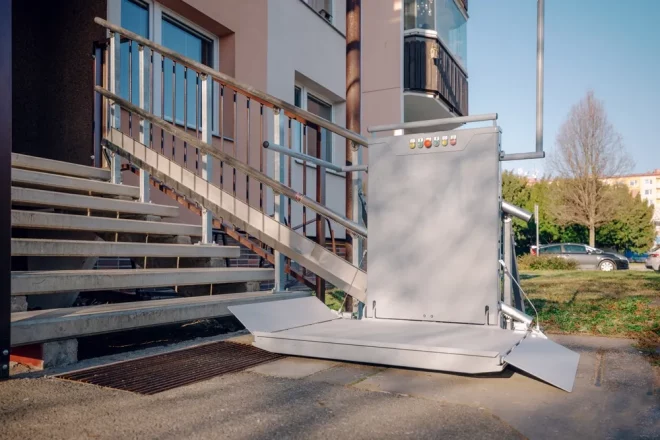
Table of Contents
- What track overrun actually is
- Why overrun matters more than most people expect
- San Diego homes and the overrun challenge
- How installers figure out the right overrun
- What you can do before the installer arrives
- Ready to find out if your San Diego staircase works for a lift?
- Frequently Asked Questions
If you’ve started shopping for a stairlift and heard the term “stair lift track overrun,” you’re not alone in wondering what it means. It refers to the extra length of track that extends beyond the top and bottom steps — and getting it right is one of the most important parts of a successful installation. In San Diego, where older ranch-style homes, hillside properties, and beach bungalows all come with their own staircase quirks, understanding overrun can save you a lot of headaches before the installer ever shows up.
Key Takeaways
- Track overrun is the section of rail that extends past the first and last steps, and every stairlift needs it to operate safely.
- Homes in San Diego — especially older craftsman bungalows, hillside properties, and multi-level condos — often have tight landings that require careful measurement before installation.
- Too little overrun can make it hard to get on and off the lift safely; too much can block a doorway or hallway.
- A proper in-home assessment is the only reliable way to confirm your staircase has enough room for the right amount of overrun.
What track overrun actually is
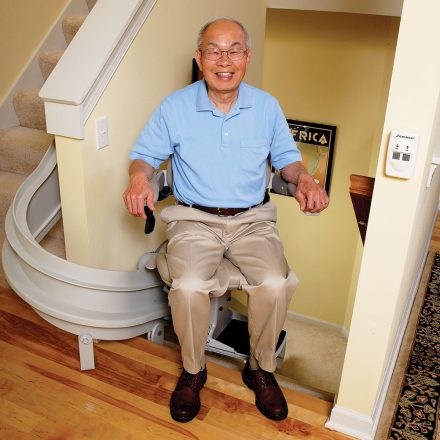
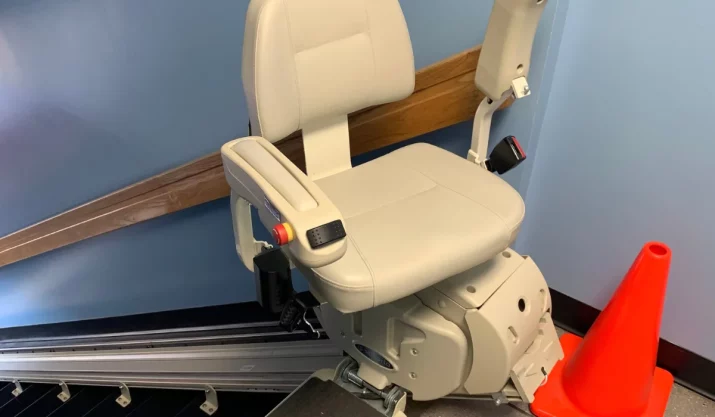
A stairlift rail doesn’t stop exactly at the top step or the bottom step. It runs a little past both ends — that extra length is the overrun. At the bottom, it gives the carriage (the part you sit on) enough space to pull completely clear of the stairs so you can step off safely onto level ground. At the top, it does the same thing in reverse.
Without enough overrun, the seat can’t travel far enough for a safe, stable exit. You’d be stepping off while the chair is still partially over a step, which is exactly the kind of awkward, risky situation a stairlift is supposed to prevent.
Why overrun matters more than most people expect
Most homeowners focus on the stairlift seat, the weight capacity, or the remote control features. Overrun tends to get overlooked — until it causes a problem.
The amount of overrun needed depends on the stairlift model, the angle of the stairs, and the chair’s fold-up dimensions. A curved stair rail typically requires more overrun than a straight one. Powered footrests and swivel seats — both of which are great features for people with limited mobility — also add to the overrun required.
Get it wrong, and you could end up with a track that blocks a door or crowds a hallway. Get it right, and the lift operates cleanly and safely every time.
San Diego homes and the overrun challenge
San Diego’s housing stock is wonderfully varied, but that variety creates real challenges for stairlift installations.
Hillside homes in neighborhoods like Mount Helix or La Mesa often have steep internal staircases with tight upper landings. There may be a bedroom door or bathroom entrance at the very top of the stairs — meaning extra track overrun could swing right into a doorframe if it isn’t planned carefully.
Older bungalows in North Park, Golden Hill, or South Park were built before accessibility was part of the conversation. Their staircases were designed for foot traffic, full stop. Landings at the top and bottom are often compact, and there isn’t always a natural place for extra track to extend.
Multi-story condos and townhomes near the coast in areas like Pacific Beach or Mission Hills sometimes have staircases built into narrow footprints. Every inch counts.
Outdoor staircases — common in San Diego given the year-round mild weather and the popularity of tiered yards and hillside decks — have their own overrun considerations. Marine air and salt exposure mean outdoor installations need weatherized equipment, and the surrounding landscape can limit how far the track can realistically extend. If you have outdoor stairs, take a look at outdoor stairlifts designed specifically to handle those conditions.
How installers figure out the right overrun
A good installer measures the full staircase run, including any walls, doors, or obstructions near the top and bottom landings. They look at where doors swing, where furniture sits, and whether hallways narrow near the staircase exit points.
They also factor in the specific lift model being installed. Different manufacturers build their carriages to different dimensions, and overrun requirements vary between models. This is one reason why buying a stairlift online without a site visit can go sideways — dimensions that look fine on a spec sheet may not work in a real home.
For a straight staircase, this measurement process is fairly quick. For a staircase with a landing partway up (an L-shaped or U-shaped stair), it’s more involved. Those installations use curved track sections, which require more precise overrun planning at every transition point.
What you can do before the installer arrives
You don’t need to be an expert to prepare for this conversation. A few simple observations can help things move faster.
Walk to the top of your stairs and note whether there’s a door within a couple of feet of the last step. Do the same at the bottom. Measure the width of your staircase if you can — a standard tape measure works fine. Take note of any light switches, handrails, or outlets that sit close to the stair edges.
If you have an indoor stairlift in mind, jot down roughly how many steps you have and whether the staircase goes straight or turns. That information helps a lot when it comes time to discuss models and track configurations.
If stairs aren’t the right solution for your home at all, it’s worth knowing there are other options. Vertical platform lifts and home lifts can work well in homes where staircase geometry simply doesn’t allow for a comfortable stairlift installation.
Ready to find out if your San Diego staircase works for a lift?
The best way to answer questions about track overrun — and everything else that goes into a stairlift installation — is a free in-home assessment. California Mobility serves San Diego and surrounding communities throughout Southern California, and we’ve worked with all kinds of staircases, from tight beach bungalows to wide hillside estates.
Request a free quote online or call us at (916) 560-0607. We’ll come to you, measure your space, and give you honest answers about what will and won’t work — no pressure, no guesswork.
Frequently Asked Questions
What is the minimum overrun needed for a stairlift? The minimum overrun varies by manufacturer and model, but most straight-rail stairlifts require at least 8 to 12 inches of clear space beyond the top and bottom steps. Curved rail systems and lifts with powered swivel seats typically need more. The only way to get an accurate number for your specific staircase is to have an installer measure in person.
Can overrun be shortened if space is tight? In some cases, yes. Certain models are designed with a more compact carriage that requires less overrun, and some installations use a folding or hinged rail section at the bottom to reduce the track footprint when the lift is not in use. Your installer can tell you whether those options are suitable for your staircase layout.
Will the track overrun block my door or hallway? It depends on how close your door or hallway opening is to the top or bottom step. This is one of the first things a good installer checks during a site visit. In many San Diego homes, especially older ones with compact upper landings, this is a real consideration — but it’s usually solvable with the right model choice and careful track placement.
Does overrun affect stairlifts for outdoor staircases differently? The physical overrun requirements are similar indoors and outdoors, but outdoor installations add a few extra variables. The track has to be positioned so that water doesn’t pool or collect at the overrun sections, and nearby landscaping, walls, or fencing can limit how far the track can extend. San Diego’s coastal climate is generally kind to outdoor equipment, but choosing a properly weatherized lift model still matters.