

How to make stair lift rides more comfortable in San Francisco
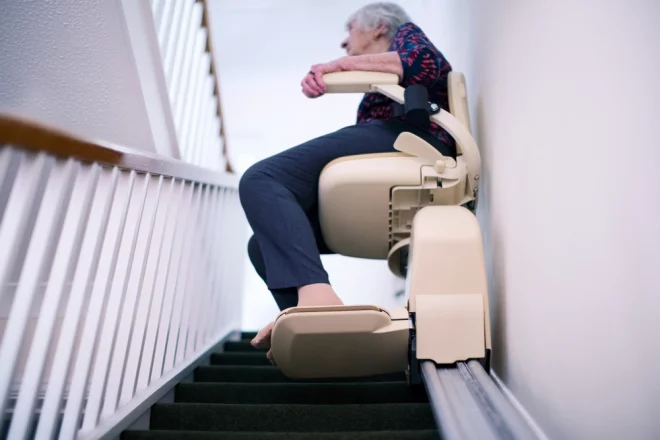
Table of Contents
San Francisco’s steep hills and tall Victorian homes mean a lot of people rely on stairlifts every single day. If your rides feel bumpy, uncomfortable, or just a little off, you’re not alone — and the fix is usually simpler than you’d think. These stair lift ride comfort tips will help you get the most out of every trip up and down your stairs.
Key Takeaways
- Seat height, armrest position, and footrest adjustment make a bigger difference than most people realize
- San Francisco’s damp, foggy climate can affect your stairlift’s performance if it isn’t maintained regularly
- Small changes to how you sit and transfer can reduce joint strain and make rides feel much smoother
- If comfort problems keep coming back, a quick service visit often solves them faster than DIY fixes
Why comfort matters more than you might think
A stairlift that feels rough or awkward isn’t just annoying — it can make people avoid using it altogether. That’s a real problem when stairs are the only way to reach your bedroom or bathroom.
The good news is that most comfort issues come down to fit and setup, not a broken machine. Getting things dialed in for your body and your home’s staircase can make every ride feel much better.
San Francisco homes throw in a few extra challenges. Many houses in neighborhoods like the Sunset, the Mission, or Pacific Heights have narrow staircases, tight turns, or unusually steep angles. Those features affect how a lift is installed and how it feels to ride.
Stair lift ride comfort tips you can use right away
Get the seat adjusted for your body
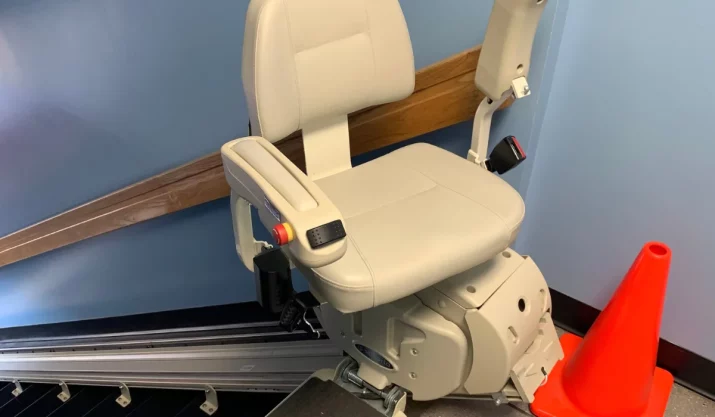
This is the most overlooked step. Stairlifts come with adjustable seat heights, and many people never change the factory setting. If your knees feel too high or your feet dangle, the seat is probably wrong for your height.
Ask your installer to walk you through the adjustments, or call your provider to schedule a quick tune-up. A seat set even an inch or two too low can cause hip and lower back strain over time.
Set the footrest at the right level
Your feet should rest flat and feel supported throughout the ride. If the footrest is too low, you’ll brace yourself the whole way up, which wears you out fast.
Most footrests adjust up and down with a simple tool. Your installer can show you the right position, and it only takes a few minutes to set correctly.
Check your armrest position
Armrests that are too far out or too low can make it hard to push yourself up at the top of the ride. That extra effort adds up, especially for people with shoulder or wrist pain.
Many models let you angle or height-adjust the armrests. If yours feel awkward, don’t assume that’s just how they are — check with your provider to see what’s adjustable.
Slow the speed down if you need to
Stairlifts have speed settings, and faster isn’t always better. If you feel a little unsettled at the start or stop of a ride, a slower speed can help a lot.
This is especially worth thinking about if you’re on a steep staircase. San Francisco staircases often have sharper inclines than you’d find in single-story homes, and a gentler speed setting can feel much more secure.
How San Francisco’s climate affects your stairlift
The Bay Area is famous for its fog and damp air, especially in neighborhoods close to the water like the Outer Richmond or the Sunset. That moisture can work its way into the stairlift’s track and moving parts over time.
A damp track can cause the carriage to feel sticky or jerky during a ride. Regular cleaning and lubrication — usually once or twice a year — keeps things running smoothly.
If you have an outdoor stairlift on a front stoop or back deck, this matters even more. Outdoor models are built to handle the weather, but they still need routine care to stay comfortable and reliable.
Small habits that make a big difference
How you sit down and stand up matters
The way you transfer onto and off the stairlift affects how safe and comfortable the ride feels. Lower yourself slowly onto the seat and make sure you’re fully seated before you start the lift.
At the top or bottom, use the armrests to push yourself up rather than twisting your back. Taking a second to get settled before you move saves strain on your joints.
Use a cushion if the seat feels hard
Some stairlift seats are firmer than others. A thin, non-slip seat cushion can add a lot of comfort without getting in the way of how the safety belt fits.
Just make sure the cushion doesn’t raise you so high that your head gets too close to the ceiling on a steep staircase. This is worth checking if your San Francisco home has low ceilings over the stairs, which is common in older Craftsman and Edwardian houses.
Keep the track clean
Dust and debris on the track can cause small bumps and jerks during the ride. A dry cloth wipe-down every couple of weeks is usually all it takes.
Avoid spraying cleaning products directly on the track — some can leave a residue that attracts more dust. Your owner’s manual will have specific recommendations, and your installer can show you what to use.
When to call a professional
If you’ve tried the tips above and the ride still feels rough or uncomfortable, it’s time to have someone take a look. Strange noises, jerky starts and stops, or a seat that won’t stay at the right angle are all signs that a service visit makes sense.
California Mobility serves the San Francisco area and can usually spot the problem quickly. Sometimes it’s a worn part, sometimes it’s just a setting that got bumped. Either way, it’s worth a call before a small issue becomes a bigger one.
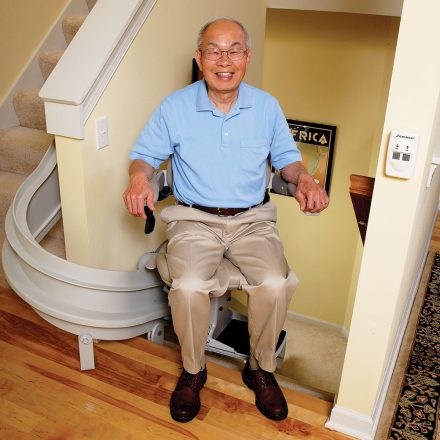
If your staircase has a sharp curve or landing, a curved indoor stairlift built specifically for your stairs may simply ride better than a straight model that was adapted to fit. A professional assessment will tell you whether what you have is the right fit for your home.
And if stairs are no longer the right solution at all, options like home lifts or vertical platform lifts are worth exploring.
Ready for a more comfortable ride?
California Mobility is a family-owned company that has been helping California families with stairlifts, home lifts, ramps, and more for years. We serve San Francisco and surrounding Bay Area communities and can come to your home to assess your staircase, check your current setup, or help you find the right solution.
Request a free quote online or give us a call at (916) 560-0607. We’re happy to answer questions — no pressure, no sales pitch.
Frequently Asked Questions
How often should a stairlift be serviced in a foggy climate like San Francisco? Most manufacturers recommend a service visit once a year, but in damp climates like San Francisco’s, twice a year is a better rule of thumb. Fog and moisture can cause the track and moving parts to corrode or stiffen faster than in drier areas. A quick annual or bi-annual checkup keeps the ride smooth and catches small problems before they turn into bigger ones.
Can I add a cushion to my stairlift seat without affecting safety? Yes, in most cases a thin, non-slip cushion works fine. The main things to check are that the cushion doesn’t raise you so high that your head hits the ceiling on steep sections, and that the seat safety belt still fits securely over your lap. If you’re unsure, ask your installer — they can take a look and give you the okay.
My stairlift feels jerky at the bottom of the stairs. Is that a comfort issue or a mechanical problem? It could be either. Sometimes jerkiness at the start or stop is just the speed setting, which is easy to adjust. Other times it points to a worn part or a dirty track. If cleaning the track and lowering the speed setting doesn’t help, it’s worth having a technician take a look to rule out anything mechanical.
Are curved stairlifts more comfortable than straight ones on San Francisco staircases? On a staircase that has a landing or a turn, a curved lift designed specifically for that staircase almost always rides more smoothly than a straight lift adapted to fit. The carriage moves more naturally through the turns instead of jolting at each transition. If your staircase isn’t perfectly straight, it’s worth asking about a custom curved option when you get a quote.