

Best parking positions for stair lifts in San Francisco homes
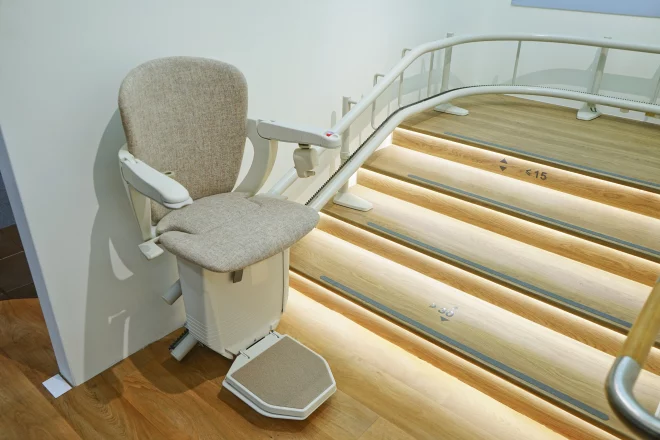
Table of Contents
Getting your stair lift parking position right makes a big difference in how well the lift works for your whole household. In San Francisco, where homes often have narrow staircases, steep angles, and multiple floors, a poorly parked lift can block hallways, create trip hazards, or leave the chair where you need it least. Here’s what you need to know to set things up correctly from day one.
Key Takeaways
- The best parking position depends on how and where you use the stairlift most — top, bottom, or both ends of the staircase.
- San Francisco’s Victorian and Edwardian homes have specific layout challenges that affect parking decisions, including tight landings and offset doorways.
- Most modern stairlifts let you program two parked positions, so you can customize where the chair waits when not in use.
- A professional site assessment helps you choose parking positions that work for every person in your home, not just the primary user.
Why stair lift parking position matters more than most people think
When a stairlift isn’t in use, it sits parked at one end of the staircase — or folds away at a programmed spot. Where it parks affects whether the hallway stays clear, whether someone else in the house can get past safely, and whether the chair is ready for you when you need it.
In a standard single-family home with a wide staircase, this is usually simple. But San Francisco is full of Victorians, Edwardians, and post-war row houses where staircases are steep, narrow, and flanked by walls on both sides. A parked chair sitting at the bottom of the stairs can block the front entry hall. Parked at the top, it might obstruct a bedroom doorway or a bathroom threshold.
Getting this right isn’t complicated once you know what to look for. It just takes some thought about how your household actually moves through the home each day.
How stairlift parking positions work
Most indoor stairlifts have a simple control that lets you send the chair to either end of the staircase at the touch of a button. Many models also allow you to program a “default” parked position — the spot where the chair automatically returns after a ride.
Some lifts go one step further with dual-call controls, meaning you can call the chair from both the top and bottom landing using a wall-mounted button or a remote. This is especially handy in households where more than one person uses the lift or where a caregiver helps from a different floor.
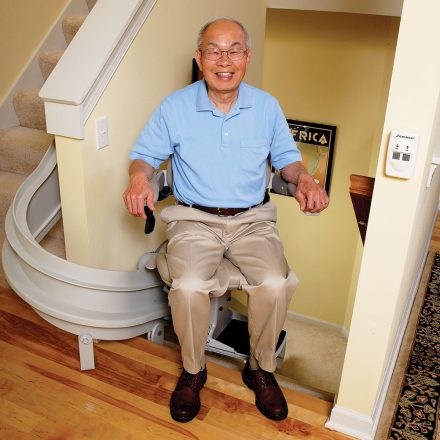
If you have a curved or multi-level staircase — not uncommon in San Francisco’s tall, narrow row homes — the lift may park mid-staircase between landings. This setup needs careful planning to avoid blocking an intermediate floor doorway.
Common San Francisco home layouts and what they mean for parking
Victorian and Edwardian row houses
These homes are everywhere in neighborhoods like the Mission, the Haight, and the Sunset. They typically have a long, straight staircase running from the ground floor entry to the upper sleeping floors. The bottom landing often opens directly into a narrow entry hall or leads toward the kitchen and back of the house.
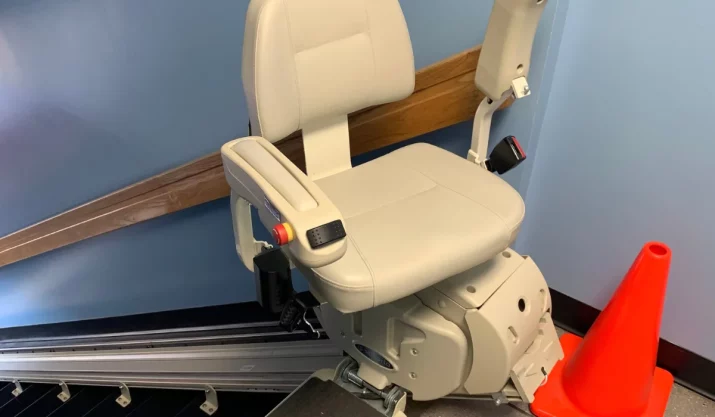
Parking the chair at the bottom of these staircases can block foot traffic through the entry. In many cases, it works better to park the chair at the top by default and use the remote to call it down only when needed. A folding rail footrest and a swiveling seat help the chair take up less space when parked.
Multi-unit buildings and in-law units
San Francisco has a lot of homes that have been divided into flats or have an in-law unit on the ground level. If your staircase connects a private unit to a shared entry or another floor used by different occupants, parking placement affects other people too.
In these situations, parking the chair at the top — your own floor — keeps it out of shared spaces and reduces the chance of someone tripping over the footrest in a common area.
Steep hillside homes
Parts of San Francisco like Twin Peaks, Noe Valley, and Bernal Heights have homes built on serious slopes. These properties sometimes have an outdoor stairlift connecting a street-level entrance to the front door, or an internal staircase that climbs at an unusually steep angle.
On outdoor lifts exposed to San Francisco’s coastal fog and damp air, parking the chair under a covered area at the top or bottom of the run helps protect the upholstery and electrical components. If neither end has a covered spot, a fitted weatherproof cover is worth adding.
Practical tips for choosing your parking position
Think about your most common trip. If you wake up on the upper floor and need to get downstairs for coffee every morning, parking the chair at the top makes that first trip easy. If you spend most of your day downstairs and only go up at night, parking at the bottom keeps the chair ready where you are most of the time.
Consider everyone who uses the stairs. Other people in your home — a spouse, an adult child, a caregiver — still walk the stairs on foot. Make sure the parked chair doesn’t sit in the middle of a landing they have to step around repeatedly.
Use the swivel feature at landings. Most stairlifts have a seat that swivels to face the landing at the top and bottom. When the chair is parked and swiveled, it’s easier for the user to stand up safely. This also changes how much space the chair occupies, so factor that in when deciding where to park.
Ask about intermediate parking. If you have a vertical platform lift or a multi-stop lift, your installer can help you set intermediate positions that work with your floor plan.
Get the right setup for your home
Choosing the right stair lift parking position is easiest when you have an expert walk your staircase with you before installation. The team at California Mobility knows San Francisco homes — the tight landings, the older construction, the unusual floor plans — and can help you figure out what will actually work for how you live.
Request a free quote online or call us at (916) 560-0607. We’re a family-owned company and we’re happy to answer questions before you make any decisions.
Frequently Asked Questions
Can I change the stair lift parking position after installation? Yes. Most stairlifts allow the default parking position to be adjusted by a technician, and some models let you set it yourself through the hand control. If your needs change — say, you start using a different floor as your main living space — this is a straightforward update. Ask your installer about this when the lift is first set up.
What happens if the stairlift is parked at the wrong end when I need it? You simply call the chair using the wall-mounted call button or a handheld remote. It will travel to your end of the staircase and wait for you. Most modern stairlifts move at a steady, controlled pace, so you won’t be waiting long. Having a remote stored in a regular spot — like on a bedside table — makes this effortless.
Does San Francisco’s fog and damp weather affect where I should park an outdoor stairlift? It can. The Bay Area’s persistent moisture can wear on upholstery and electrical parts over time if the chair sits exposed for long periods. Where possible, park the chair under an overhang or covered area. If that’s not an option, a weatherproof cover designed for your lift model adds useful protection and extends the life of the unit.
How does parking position affect other people using the stairs on foot? A parked stairlift takes up part of the staircase width. In San Francisco’s typically narrow Victorian staircases, this matters. The goal is to park the chair where it leaves a clear, safe walking path for anyone using the stairs on foot. Your installer can measure the remaining clearance at each potential parking spot and help you find the position that works best for the whole household.