

Cane sizing guide for Sacramento seniors
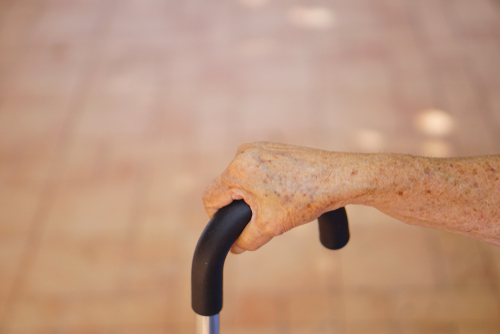
Table of Contents
- Why cane sizing matters more than most people think
- How to measure cane height at home
- Choosing the right handle style
- Picking the right tip — and why it matters on Sacramento terrain
- Which hand holds the cane?
- When a cane isn't enough
- Talk to California Mobility about your home accessibility needs
- Frequently Asked Questions
Getting the right cane makes a real difference in how safely and comfortably you move through your day. This cane sizing guide walks you through everything you need to know — from measuring the correct height to picking a handle that fits your hand. Whether you’re shopping for yourself or helping a parent stay independent, a few simple steps can set you up for success.
Key Takeaways
- Stand in your normal shoes and bend your elbow slightly — the top of your cane should reach your wrist crease.
- The wrong cane height causes poor posture, joint strain, and a higher fall risk.
- Handle style and tip type matter as much as height for daily comfort and stability.
- If stairs or uneven flooring are limiting your mobility at home, a stairlift or ramp may be a better long-term solution.
Why cane sizing matters more than most people think
A cane that’s too tall forces you to hunch your shoulder. One that’s too short makes you lean forward and puts extra strain on your back and hip. Either way, your balance suffers — and in Sacramento’s mix of older ranch homes, split-levels, and neighborhoods with uneven sidewalks, that’s a real concern.
The good news is that getting the right fit is straightforward. You don’t need a doctor’s appointment or special equipment. You just need a few minutes and someone to help you measure.
How to measure cane height at home
Follow these steps to get an accurate measurement:
- Wear your everyday shoes. The heel height changes your standing posture, so always measure with the footwear you plan to wear most often.
- Stand up straight with your arms relaxed at your sides. Don’t lock your knees, and don’t lean against anything.
- Find your wrist crease. That bony bump where your hand meets your wrist is your landmark. The top of your cane should line up right there.
- Check your elbow angle. When you grip the cane, your elbow should bend at about 15 to 20 degrees — a slight, natural bend. If your arm is straight or your elbow is sharply bent, adjust the cane length.
Most adjustable aluminum canes let you set the height in one-inch increments. If you’re buying a wooden cane, a hardware store can trim it to the right length for a few dollars.
A quick height estimate by your own height
This isn’t a substitute for measuring, but it gives you a ballpark:
- Under 5’3″ — cane around 33–34 inches
- 5’3″ to 5’7″ — cane around 35–36 inches
- 5’7″ to 5’11” — cane around 37–38 inches
- Over 5’11” — cane around 39–40 inches
Always confirm with a proper measurement before you buy.
Choosing the right handle style
The handle is where comfort lives. You’ll be gripping this thing for hours, so it’s worth thinking through your options.
Crook (or hook) handle — The classic curved top. Fine for hanging your cane on a chair or countertop, but not great if you have arthritis or weak grip strength. The curved shape can put pressure on the palm.
T-handle (or fritz handle) — A flat, horizontal grip that spreads weight across your palm more evenly. This is a popular choice for seniors dealing with hand pain or reduced grip strength.
Offset handle — The shaft is set back slightly from the handle so the cane sits directly under your body weight. This takes stress off your wrist and is often recommended after hip or knee surgery.
Ergonomic or molded handles — Shaped to fit the contours of your hand. Very comfortable for long walks, but they’re made for a specific hand (right or left), so make sure you order the correct one.
Picking the right tip — and why it matters on Sacramento terrain
The rubber tip at the bottom of your cane is your contact with the ground. A worn tip can slip on smooth floors, wet sidewalks, or the polished concrete that’s common in newer Sacramento buildings.
Single tip — Standard on most canes. Works fine on flat, predictable surfaces. Replace it when the rubber starts to look worn or flattened — usually every six to twelve months with daily use.
Quad tip (four-point base) — Gives you a wider base of support. Helpful if balance is a bigger concern. The downside is that all four points need to land flat on the ground, so they can feel awkward on uneven outdoor surfaces like older Sacramento sidewalks that have been pushed up by tree roots.
Ice tip or all-terrain tip — If you walk outside frequently during Sacramento’s cooler, wetter winters, a tip with better grip on wet pavement is worth the small extra cost.
Which hand holds the cane?
Use the cane on the side opposite your weaker or injured leg. If your right knee bothers you, hold the cane in your left hand. This lets the cane and your strong leg work together to take weight off the sore side.
This surprises a lot of people, but it’s the standard guidance from physical therapists. If you’ve been using your cane on the wrong side, switching might feel odd for a few days — but your body will adjust.
When a cane isn’t enough
A cane helps with mild balance issues and light support. But if you find yourself holding onto walls, avoiding certain rooms, or skipping trips up and down the stairs entirely, that’s a sign your home setup may need more than a walking aid.
Sacramento homes — especially the older ones in Midtown, East Sacramento, and Land Park — often have stairs that become genuine barriers over time. A properly sized cane won’t change that.
Indoor stairlifts let you keep using every floor of your home safely. For outdoor steps leading to a front door or garage, outdoor stairlifts are a reliable option. If you need a step-free entry or have a wheelchair, a vertical platform lift or a ramp might be the right fit. And for multi-story homes, a home lift can make every level accessible again.
Talk to California Mobility about your home accessibility needs
If you’ve got the cane dialed in but stairs or doorway thresholds are still holding you back, California Mobility can help. We’re a family-owned company serving Sacramento and the surrounding area, and we’ve helped thousands of California families make their homes safer and more accessible.
Call us at (916) 560-0607 or request a free quote online — no pressure, just honest answers about what will actually help.
Frequently Asked Questions
What is the correct way to size a cane? Stand in your regular shoes with your arms relaxed at your sides. The top of the cane should line up with the crease of your wrist. When you grip the handle, your elbow should have a slight bend of about 15 to 20 degrees. If the cane is adjustable, set it to that height and take a few steps to make sure it feels stable and natural.
Should I use a cane on my left or right side? Hold the cane on the side opposite your weaker or injured leg. For example, if your left hip or knee is the problem, the cane goes in your right hand. This pairing lets your strong leg and the cane share the load together, which takes strain off the affected side and improves your overall balance.
How often should I replace the rubber tip on my cane? Check the tip every few months. If the rubber looks flat, cracked, or worn through on one side, replace it right away. A worn tip is one of the most common causes of cane slips. Replacement tips are inexpensive and sold at most pharmacies and medical supply stores in Sacramento.
When should someone switch from a cane to a stairlift or home lift? A cane works well for mild balance support on flat ground. If someone is avoiding stairs, gripping walls for support, or has had a fall at home, a cane alone isn’t enough. At that point, home modifications like a stairlift, platform lift, or ramp can make a bigger difference in both safety and independence than any walking aid can.