

San Diego Home Lift Maintenance Guide (2026 Version)
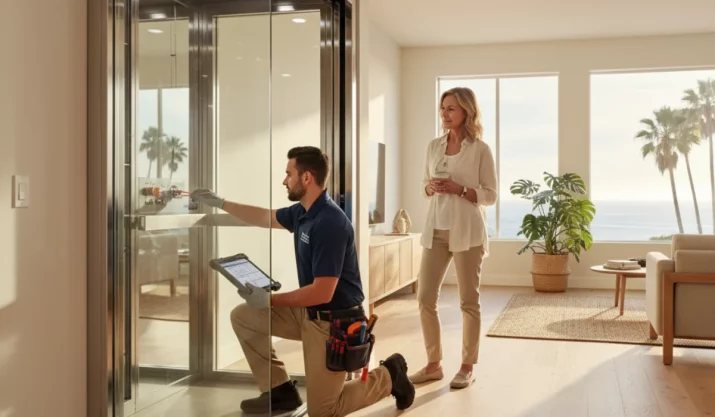
Table of Contents
- Key Takeaways
- Understanding Home Lift Maintenance
- How Often to Schedule Regular Maintenance
- Common Maintenance Tasks for Residential Home Lifts
- Signs You Need Professional Service
- Meeting California Safety Standards and Building Codes
- Preventing Repairs and Extending Home Lift Lifespan
- When to Consider Upgrades or Modernization
- Easy DIY Tips Between Service Visits
- Making the Right Maintenance Choice for Your San Diego Home
- FAQs
A Home Lift can make daily life easier and safer for San Diego families, especially seniors and people with mobility challenges. Like any machine, it needs steady maintenance to stay reliable.
Whether you live near the coast in La Jolla or in the hills of Escondido, regular maintenance keeps your home lift safe and running smoothly. Many homeowners do not realize that residential home lifts need the same attention as a car or a heating system.
Without regular service, minor issues can grow into big problems. You could face downtime, high repair costs, or safety risks.
This guide explains how to keep your San Diego Home Lift in good shape, the warning signs to watch, and when to call a pro. It also covers California safety rules and inspections.
Key Takeaways
- Regular home lift maintenance prevents breakdowns and extends the life of your lift.
- San Diego homeowners must follow California safety codes and schedule inspections.
- DIY care is helpful, but certified technicians should handle mechanical and electrical work.
- Consistent service protects your investment and prevents expensive repairs.
Understanding Home Lift Maintenance
Home Lift maintenance means checking, cleaning, and servicing the parts that keep your home lift safe and reliable. In San Diego, salty ocean air can cause rust on metal parts, handrails, and control panels, especially near the coast. Regular cleaning and moisture control help stop these issues before they grow.
A typical Home Lift includes the machine room, motor, rails or guides, cables, and the car. When dirt builds up or lube dries out, you may hear squeaks, feel slower rides, or see doors close unevenly. Over time, these minor issues hurt performance and raise safety risks.
Routine maintenance keeps your home lift running smoothly, extends its lifespan, and helps it meet California safety standards. Proper care also supports the overall functionality of your Home Lift, keeping every trip safe and efficient.
If your home lift system is old or breaks often, it may be time to upgrade. Homeowners who want to learn what to know before installing a Home Lift can plan for easier service and long-term reliability.
At California Mobility, we install Home Lifts in San Diego and can suggest reliable models that fit your space and style.
How Often to Schedule Regular Maintenance
Most Home Lifts should receive regular maintenance at least once or twice a year to ensure Home Lift safety.
If your home lift is used frequently, such as in a multi-level family home, a vacation rental, or a residence with multiple users, quarterly service is a wise choice. Regular maintenance keeps your system operating smoothly and helps prevent sudden breakdowns that can interrupt daily life.
During a service visit, our certified technicians inspect the main parts. We check the machine room, cables, and motor for wear. We test door alignment and make sure the emergency stop, phone, and battery backup all work. These checks matter in San Diego, where humidity and power outages can affect electrical systems.
Add ride speed and noise to your Home Lift maintenance checklist. If your home lift slows down or makes odd sounds, schedule a tune-up. These early signs often indicate that your system may need a professional tune-up before bigger problems occur.
If you’re considering upgrades, think about learning how to choose the best Home Lift in San Diego, CA, to find the right size and design for your space. A steady service schedule protects your safety and may keep your warranty valid.
At California Mobility, we offer dependable plans that help San Diego homeowners follow state safety codes and keep home lifts running like new.
Common Maintenance Tasks for Residential Home Lifts
Maintaining a residential home lift includes a mix of professional service and a few simple steps you can handle at home. Together, these efforts help keep your home lift safe, quiet, and dependable for years.
- Cleaning: Use a soft, damp cloth to wipe down control panels, doors, and floor tracks to remove dust or sand. In coastal San Diego areas, salt and moisture can accumulate more quickly, leading to rust if not cleaned regularly. Keeping surfaces clean also prevents debris from affecting door sensors or movement.
- Lubrication: Proper lubrication keeps gears, rails, and pulleys running smoothly and prevents friction between moving parts. Only trained technicians who know which products are compatible with your home lift model should do this.
- Safety Checks: Test key safety features monthly, including the emergency stop button, backup battery, and phone system. These systems protect you in the event of a power outage or equipment failure.
- Observation: Pay attention to changes such as new noises, vibrations, or slow door movement. These can be early signs of wear that a professional should check.
At California Mobility, we provide regular maintenance services in San Diego to ensure every home lift meets California’s strict safety standards. Learning how to choose the right Home Lift company in San Diego helps you find professionals who deliver consistent service and honest evaluations.
Signs You Need Professional Service
Even with consistent care, parts wear over time. Watch for early signs to avoid sudden breakdowns and high repair bills. Simple daily checks protect performance and safety.
Look out for:
- Slow or uneven home lift movement: If your home lift takes longer than usual to reach each floor or feels bumpy during travel, the motor or control system may need adjustment.
- Grinding or knocking sounds from the machine room: Unusual noises often indicate worn bearings, misaligned parts, or loose hardware, all of which require professional attention.
- Delays or jerky door movement: Doors that hesitate or close unevenly could have sensor or track problems that affect safe operation.
- Flickering lights or unresponsive control panels: Electrical issues or worn wiring may interfere with signals between the car and the control system.
- Stops that don’t line up evenly with the floor: This could mean the braking system or cables are out of balance, creating a safety hazard.
Addressing these problems quickly keeps your home lift running smoothly and safely. If you notice any of these signs, contact a professional for prompt and dependable home lift service.
Meeting California Safety Standards and Building Codes
California and the City of San Diego have strict rules for residential home lifts. Regular inspections ensure your system meets these safety standards and remains code-compliant.
Technicians test emergency stops, handrails, phones, and communication systems to make sure they meet state and ADA guidelines. Regular inspections not only protect your safety but also prevent fines or warranty issues.
Homeowners comparing Home Lift costs often find that regular maintenance reduces major expenses in the long run, since regular service catches and fixes minor issues early.
At California Mobility, our licensed team ensures every Home Lift installation and maintenance visit meets San Diego building codes and California regulations.
Preventing Repairs and Extending Home Lift Lifespan
A steady maintenance schedule keeps your home lift safe and extends its lifespan. Most Home Lifts last about 20 to 25 years, but neglect can shorten that dramatically.
Motors, brakes, and cables handle stress every day. Regular lubrication and replacement of parts prevent these components from wearing out too soon. Upgrades such as modern control panels and improved safety systems also boost performance and reliability.
Homeowners interested in finding the best places to install a Home Lift in a California house can plan the placement to reduce strain on the system and make future maintenance easier.
At California Mobility, we help San Diego homeowners protect and enhance their home lifts with long-term maintenance and upgrade options. If your current system is outdated or no longer meets your needs, explore our wide selection of modern Home Lifts designed for comfort, safety, and style.
When to Consider Upgrades or Modernization
Technology improves each year, and older systems fall behind. If you have frequent breakdowns, slow rides, or old safety features, plan an upgrade.
Modern Home Lifts are smoother, quieter, and more energy efficient. Many include battery backups for power outages and improved communication systems for emergencies.
For those seeking quiet Home Lifts, newer traction or pneumatic designs are ideal for keeping household noise to a minimum.
Our certified technicians can inspect your system and recommend upgrades that fit your home’s needs and budget.
Easy DIY Tips Between Service Visits
You can take a few simple steps to help your home lift run smoothly between professional maintenance visits:
- Keep the home lift car clean and free from moisture.
- Do not overload the home lift beyond its rated capacity.
- Make sure doors close completely after each trip.
- Pay attention to new sounds or behavior changes and tell your technician during your next visit.
These habits reduce wear and help your technician identify issues early.
If you prefer professional care, we offer flexible maintenance packages that keep your home lift reliable year-round.
Making the Right Maintenance Choice for Your San Diego Home
Good upkeep protects your safety, comfort, and independence. With regular maintenance and professional care, your home lift can last for decades while meeting California safety codes.
Do small tasks yourself or rely on certified technicians. At California Mobility, we offer dependable service to keep your home lift running smoothly.
If it has been more than six months since your last service, contact us today or request a free quote to schedule a visit. We proudly serve San Diego homeowners with expert maintenance, inspections, and installations year-round.