


Ramp ideas for garage entry in San Diego homes
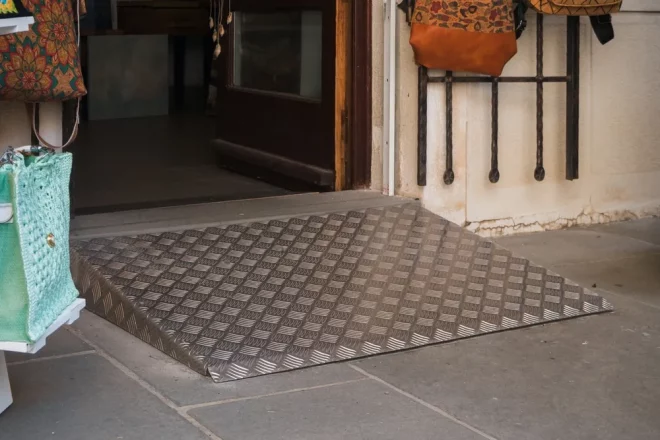
Table of Contents
- Why garage entry matters more than people expect
- Choosing a wheelchair ramp for garage entry: four main options
- How much slope do you actually need?
- San Diego climate and ramp materials
- Other mobility options to consider alongside a ramp
- Ready to make your garage accessible?
- Frequently Asked Questions
Getting in and out of the garage shouldn’t be a daily struggle. Whether you use a wheelchair, walker, or scooter, a wheelchair ramp for garage entry can make that transition safe and simple. San Diego homes come in all shapes and sizes, so there’s no single solution that works for everyone — but there’s almost always a good one.
Key Takeaways
- A threshold ramp handles small curbs or lips, while a longer modular or portable ramp works for raised garage floors or step-down entries.
- San Diego’s mild, dry climate is easy on most ramp materials, but marine air near the coast can accelerate rust on lower-quality metal.
- ADA guidelines recommend a 1:12 slope ratio — one inch of ramp for every inch of rise — so measure your rise before you shop.
- A professional assessment takes the guesswork out of choosing the right ramp and makes sure the installation is safe and code-compliant.
Why garage entry matters more than people expect
For a lot of families, the garage is the main way in and out of the house. You park, walk through the garage, and go straight inside. It feels routine — until a wheelchair, scooter, or walker enters the picture.
That one-to-three inch lip or step between the garage floor and the interior hallway can stop a wheelchair user cold. In some San Diego homes, especially older ranch-style houses in neighborhoods like Clairemont or El Cajon, the garage sits lower than the living space, creating a step of six inches or more.
The good news is that the fix is usually straightforward. The right ramp style depends on how much rise you’re dealing with, how wide the doorway is, and whether the ramp needs to stay put or move around.
Choosing a wheelchair ramp for garage entry: four main options
1. Threshold ramps
A threshold ramp is a wedge-shaped piece that bridges a small rise — typically one to four inches. These are the simplest option and the least expensive.
They work well when your garage entry has just a small lip or curb at the door. Many are made from rubber or aluminum and require no installation at all. You place them, and they’re ready to use.
2. Portable folding ramps
Portable ramps fold in half and can be moved from place to place. They come in lengths from two feet up to about ten feet.
These are a solid choice if you need occasional access or if you’re renting and can’t make permanent changes. They’re also handy for households with more than one entry point that needs to be accessible. Look for a ramp rated for the actual weight of the user plus their chair or scooter — ratings vary widely.
3. Modular ramp systems
Modular ramps are sectional aluminum systems that bolt together on-site. They can be configured in straight runs, L-shapes, or switchbacks depending on the space you’re working with.
These are semi-permanent, meaning they can be taken apart and moved if you change homes or your needs shift. They’re a popular middle ground between a quick portable ramp and a fully built wooden ramp. Browse modular ramp options from California Mobility.
4. Custom-built wooden ramps
A custom wooden ramp built to fit your specific garage layout can look like a natural part of the home. For San Diego homes with finished garages or direct-access layouts, this option is often the most attractive.
Wood ramps do require regular upkeep, especially if you’re close to the coast. Salt air in areas like Ocean Beach or Pacific Beach speeds up weathering, so you’ll want to seal and inspect the wood at least once a year. Pressure-treated lumber holds up better than untreated pine.
How much slope do you actually need?
The standard guideline is a 1:12 slope — for every one inch of rise, you need twelve inches of ramp length. So if your garage entry has a six-inch rise, plan for at least six feet of ramp.
That math matters a lot in smaller garages where space is tight. If you don’t have room for a straight run, a switchback ramp or a vertical platform lift might be a better fit. Vertical platform lifts take up less horizontal space and work well for rises of a foot or more.
A gentler slope — 1:16 or 1:20 — is easier to push a manual wheelchair up and is worth the extra length when space allows.
San Diego climate and ramp materials
San Diego’s weather is one of the best in the country for outdoor equipment. You won’t deal with snow, ice, or the kind of freeze-thaw cycles that crack concrete up north. That said, a few things are worth keeping in mind.
Coastal areas like La Jolla, Coronado, and Mission Beach have enough salt in the air to corrode lower-grade aluminum or steel over time. Look for ramps made with marine-grade or anodized aluminum if you’re within a few miles of the water.
Non-slip surfaces are still a must. San Diego does get morning dew and occasional rain, and a smooth surface becomes slippery fast. Most quality ramps come with textured surfaces or rubber treads — check for that before you buy.
Other mobility options to consider alongside a ramp
A ramp handles the garage entry well, but it’s worth thinking about the rest of the home at the same time. If there are stairs between floors, an indoor stairlift can keep every level of the house accessible. For outdoor steps leading to a front door or deck, an outdoor stairlift or home lift might be worth a look.
Planning ahead often saves money. If you’re already having a professional out to assess the garage entry, ask them to walk through the whole home.
Ready to make your garage accessible?
California Mobility has helped families across San Diego find the right ramp and mobility equipment for their home and budget. We’ll come out, take a look at your space, and give you a straight answer about what will work.
Request a free quote online or call us at (916) 560-0607. We’re a family-owned business and we’re happy to answer questions — no pressure, no sales pitch.
Frequently Asked Questions
How do I measure the rise for a garage entry ramp? Close the door and measure the vertical distance from the garage floor to the finished floor of the interior hallway — that’s your rise. Use that number to calculate how long your ramp needs to be using the 1:12 ratio. If you’re not sure, a professional can measure during a free home assessment.
Do I need a permit to install a ramp in my garage in San Diego? Portable and threshold ramps typically don’t require a permit because they’re not permanent. Modular or custom-built ramps that attach to the structure may need one, depending on the size and how they’re anchored. It’s worth a quick call to the City of San Diego’s Development Services Department or asking your installer before work begins.
What weight capacity should I look for in a garage entry ramp? Most standard ramps are rated for 600 to 800 pounds, which covers the combined weight of a user and a manual wheelchair. Power wheelchairs and scooters are heavier, so check the combined weight of the user and equipment and choose a ramp rated well above that number. Never use a ramp right at its rated limit.
Can a ramp work if my garage has a narrow doorway? Standard interior door widths run 32 to 36 inches, and most ramps are built to fit within that range. If the doorway is narrower, you may need a custom-width ramp or a different solution entirely. A mobility specialist can measure the opening and recommend the right fit.