

Toilet height options for California seniors
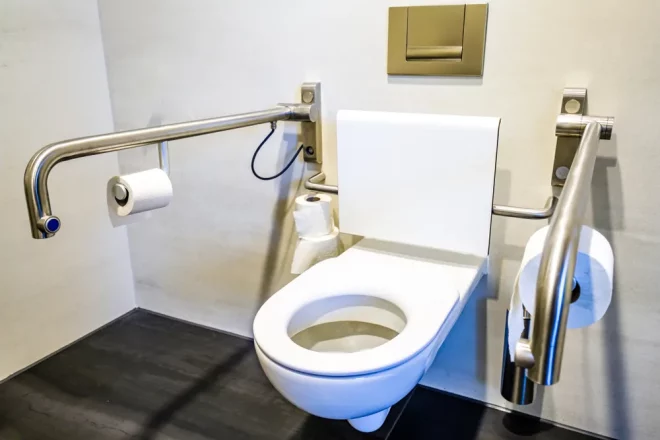
Table of Contents
Getting on and off the toilet is one of the most physically demanding tasks of the day, especially for older adults dealing with arthritis, weak knees, or hip problems. Choosing the right toilet height and comfort for seniors can make a real difference in both safety and independence at home. This guide breaks down your main options so you — or someone you love — can make a confident decision.
Key Takeaways
- Standard toilets sit too low for many seniors; comfort-height models (17–19 inches) are easier on hips and knees
- Raised toilet seats are an affordable, no-plumbing option that works in rental homes and California apartments
- Grab bars mounted near the toilet dramatically cut fall risk during sits and stands
- Toilet height is one piece of a bigger home safety picture — stairs, thresholds, and room transitions matter just as much
Why toilet height matters more as we age
Most standard toilets sit about 15 inches from floor to seat. That’s fine when you’re 35 and your knees cooperate. By your 70s or 80s — especially after a hip replacement or with ongoing arthritis — that low seat turns a simple task into a painful struggle.
Lowering yourself down puts major stress on the hip and knee joints. Getting back up is often even harder, since it requires both leg strength and balance. Falls in the bathroom are common and can be serious, so this is not a minor comfort issue.
California’s senior population is large and growing, and many older adults here live in homes that were built decades ago with standard plumbing fixtures. The good news is that you have several solid options, ranging from a simple seat attachment to a full toilet replacement.
The main toilet height options for seniors
Comfort-height (ADA-height) toilets
These toilets are 17 to 19 inches from floor to seat — roughly the same height as a standard chair. They’re sometimes called “comfort height” or “ADA compliant” toilets.
If you’re remodeling a bathroom or replacing an old toilet anyway, this is usually the best long-term solution. Installation requires a plumber, but the result is a clean, built-in look with no extra hardware to deal with.
Comfort-height toilets work especially well for taller adults and for people with hip or knee replacements who have been told to avoid deep bending.
Raised toilet seats
A raised toilet seat is a plastic attachment that sits on top of your existing toilet bowl and adds 2 to 6 inches of height. No plumbing required — most clip on in minutes.
They’re a practical choice if you’re renting a home or apartment in Sacramento, San Diego, San Francisco, or anywhere else in California where you can’t make permanent changes. They also work well as a short-term solution after surgery.
Look for a model with locking arms on both sides. The armrests give you something to push against when standing up, which reduces strain on your knees and back significantly.
Toilet safety frames and grab bars
A toilet safety frame is a freestanding metal frame that wraps around the toilet. Like raised seats with arms, it gives you something solid to grip when sitting down or standing up.
Grab bars mounted directly to the wall are an even sturdier option. A properly installed wall grab bar — anchored into studs or with toggle bolts rated for the load — can support full body weight. A toilet safety frame cannot always do that, especially on slippery tile floors common in older California bathrooms.
Many families install both: a comfort-height toilet or raised seat, plus a grab bar on the wall nearby. That combination addresses both the height gap and the balance challenge at the same time.
Bidet toilet seats
This one comes up more often lately. A bidet seat replaces your standard toilet seat and adds washing functions, which reduces the need to reach and twist after using the toilet. That reaching motion can be genuinely difficult — and risky — for people with back problems or limited flexibility.
Some bidet seats also include a raised seat profile, though not all of them do. If this option interests you, check the seat height before buying.
What toilet height won’t fix
Toilet height and comfort for seniors is one piece of a larger home safety picture, but it’s not the whole picture.
If getting to the bathroom is the hard part — walking a long hallway, climbing stairs in the middle of the night, or managing a step-in threshold — a taller toilet won’t solve those problems. Many California homes have bathrooms on upper floors, which means stairs are part of every bathroom trip.
An indoor stairlift can make those nighttime trips to an upstairs bathroom much safer. For homes with outdoor steps leading to the entry, an outdoor stairlift or a ramp might be what’s actually needed.
If someone uses a wheelchair or scooter, a vertical platform lift or Home Lift can open up access to every floor of the house — not just the bathroom.
How to choose the right option for your home
Start by measuring your current toilet seat height. Stand next to it and notice how far down you have to go to sit, and how hard it is to get back up. That tells you roughly how much height you need to add.
Talk to your doctor or physical therapist if you’ve had a recent hip or knee procedure. They often have specific recommendations about seat height based on your surgery type.
If you’re not sure where to start or want a home safety assessment, talking to a mobility equipment specialist is a practical next step.
Ready to make your California home safer?
California Mobility helps seniors and families across California find the right equipment for their homes and their budgets. Whether you’re looking at stairlifts, platform lifts, ramps, or have questions about home accessibility in general, we’re happy to talk it through with you.
Request a free quote online or call us directly at (916) 560-0607. We’re a family-owned business, and we treat every customer that way.
Frequently Asked Questions
What is the best toilet height for seniors with bad knees? Most people with knee problems find a toilet height of 17 to 19 inches — the range called “comfort height” or “ADA height” — to be much easier to use than a standard 15-inch seat. If you can’t replace the toilet, a raised seat with armrests can get you close to the same result. Ask your physical therapist what height they recommend based on your specific knee condition.
Can I add a raised toilet seat to any toilet? Most raised toilet seats are designed to fit standard round or elongated toilet bowls, which covers the vast majority of toilets in California homes. Before buying, check the seat’s product description for compatibility, especially if you have an older or unusually shaped toilet. Models with locking clamps tend to be more secure than those that simply rest in place.
Are grab bars required by law in California homes? Grab bars are required in new multi-family housing and commercial bathrooms under California building code and the ADA, but they are not legally required in existing single-family homes. That said, installing one near your toilet is one of the most effective things you can do to reduce fall risk. A licensed contractor can anchor them properly so they hold up under real use.
Will Medicare or Medi-Cal cover a raised toilet seat or comfort-height toilet? Medicare generally does not cover raised toilet seats or toilet replacements because they are considered convenience items rather than durable medical equipment. Medi-Cal coverage rules vary and depend on medical necessity documentation from a physician. It’s worth checking with your plan directly, and some nonprofit organizations in California offer assistance programs for low-income seniors who need home safety modifications.