

Soft start and stop features for San Diego home lifts
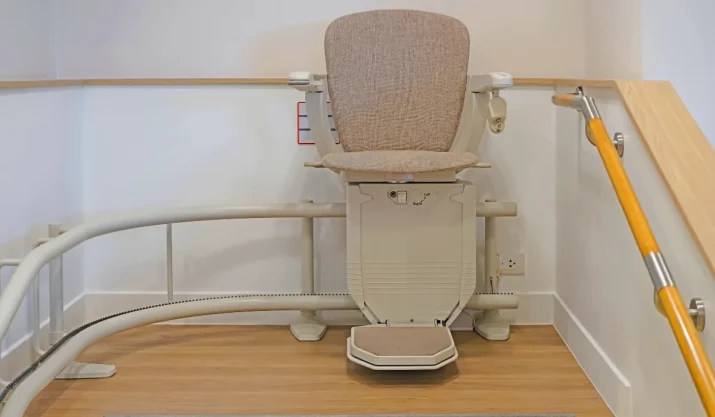
Table of Contents
If you’ve ever ridden an home lift that lurched when it started or bumped to a halt, you already understand why home lift soft start stop technology matters. For older adults or anyone with balance concerns, that sudden jolt can be startling — and even risky. San Diego homeowners choosing a home lift deserve to know exactly how this feature works and why it should be at the top of your checklist.
Key Takeaways
- Soft start and stop technology gradually ramps the lift’s speed up and down, eliminating sudden jolts at the beginning and end of each trip.
- This smoother ride is especially helpful for people with balance issues, joint pain, or conditions like vertigo.
- Most quality home lifts sold in California come with soft start and stop as a standard feature, not an upgrade.
- When comparing lifts, ask specifically how the drive system manages speed transitions — not all systems perform equally.
What soft start and stop actually means
The name describes it pretty well. Instead of the lift motor switching on at full power and then cutting off abruptly, a soft start and stop system gradually brings the platform up to its travel speed, then gently slows it down before it reaches the landing.
Think of the difference between a city bus driver who punches the gas and brakes hard versus one who eases in and out of each stop. The destination is the same, but the ride is completely different.
On a home lift, this is handled by the drive system — usually a hydraulic, worm gear, or cable-driven mechanism — paired with an electronic controller that regulates how quickly power ramps up and down. The result is a smooth, consistent ride every single time.
Why it matters more than you might think
For healthy adults, a small jolt at the start of a lift ride is just a minor annoyance. For someone with osteoporosis, hip or knee replacements, or a condition like Parkinson’s disease, that same jolt can cause a stumble, a grab for the handrail, or worse.
San Diego has one of the largest senior populations in California. Many residents here have lived in their two-story homes for decades and want to keep doing so. A home lift is often what makes that possible — but only if the ride itself feels safe and comfortable.
Vertigo is another factor worth mentioning. Sudden acceleration can trigger dizziness in people who deal with inner ear problems, which are more common in older adults. A lift that starts and stops smoothly removes that trigger entirely.
Caregivers and family members also benefit. When you’re assisting an older parent onto a lift platform, the last thing you want is an unexpected lurch that throws both of you off balance.
How San Diego homes factor in
Most San Diego homes aren’t high-rise buildings. They’re two- or three-story houses in neighborhoods like Mission Hills, Kensington, La Mesa, or up in the hillier parts of East County. The lifts going into these homes typically travel a short vertical distance — often 10 to 14 feet.
Short travel distances mean the lift hits its top speed quickly and starts slowing down almost right away. That makes the quality of the start and stop transitions even more noticeable. On a longer commercial home lift ride, a rough transition at the beginning gets smoothed out by the extended travel. On a short home lift run, there’s no room to hide a poorly tuned drive system.
This is one reason why it’s worth choosing equipment that’s properly calibrated for residential use, not just specified on paper.
San Diego’s climate is generally mild, but homes near the coast can see humidity that affects mechanical components over time. A well-maintained hydraulic or gear-driven system will hold its smooth-ride characteristics longer when it’s serviced on a regular schedule.
What to look for when comparing home lifts
Not every lift handles soft start and stop the same way. Here’s what to ask when you’re shopping:
Ask about the drive system. Hydraulic lifts tend to offer very smooth starts and stops naturally because fluid pressure builds and releases gradually. Worm gear and chain-drive systems can also perform well, but the quality of the electronic controller matters a lot.
Ask how the speed is controlled. Some lifts use a simple fixed-speed motor with a timer-based slowdown. Better systems use variable frequency drives or proportional controllers that continuously adjust based on position. The latter tends to feel noticeably smoother.
Ask for a demonstration. Any reputable dealer should be able to show you the lift in action. Pay attention to the moment it starts moving and the moment it arrives at the landing. If either feels abrupt, ask why.
Ask about long-term calibration. Soft start and stop performance can drift slightly as components wear. Find out whether your installer will re-tune the system during regular maintenance visits.
If you’re also considering a vertical platform lift for an outdoor area — common in San Diego homes with deck-to-yard level changes — the same questions apply. Outdoor lifts face more exposure to temperature swings and salt air near the coast, so a well-sealed, properly calibrated drive system matters even more.
Soft start and stop compared to stairlift technology
It’s worth knowing that indoor stairlifts also use soft start and stop technology in most modern models. The ride feel is slightly different because a stairlift travels along a rail at an angle rather than straight up and down, but the principle is the same.
If you’re deciding between a stairlift and a home lift, the smooth-ride feature alone won’t make that decision for you — footprint, budget, and your home’s layout will matter more. But it’s good to know that whichever direction you go, today’s quality equipment is built with rider comfort in mind.
Ready to find the right lift for your San Diego home?
California Mobility is a family-owned company that has helped California homeowners find the right mobility equipment for their homes. We’ll walk you through your options, answer your questions honestly, and make sure whatever you choose works well for your specific home and situation.
Request a free quote online or call us at (916) 560-0607. We’re happy to talk through what soft start and stop looks and feels like on the specific models we carry — no pressure, just straight answers.
Frequently Asked Questions
Is soft start and stop a standard feature or an add-on? On most quality home lifts sold today, soft start and stop is built into the standard drive system rather than offered as an extra. That said, it’s always worth asking your dealer to confirm, because budget-tier equipment sometimes uses simpler controls that don’t manage speed transitions as well. When in doubt, ask for a live demonstration before you commit.
Can soft start and stop be adjusted after installation? Yes, in most cases it can. The electronic controller that governs the speed profile is usually adjustable by a technician. If a rider finds the start too abrupt or the stop a little bouncy, a certified installer can often fine-tune the settings during a service visit. This is one reason why ongoing service from the company that installed your lift is valuable.
Does a rough start or stop mean something is wrong with the lift? Not always — but it’s worth having it checked. A lift that starts or stops more abruptly than it used to may have a controller issue, a low hydraulic fluid level, or worn drive components. In some cases it’s a simple adjustment. Either way, don’t ignore a change in ride quality. Contact your installer and have them take a look.
How is a home lift different from a stairlift when it comes to ride smoothness? A home lift travels straight up and down in an enclosed shaft or open tower, while a stairlift follows the angle of your staircase on a rail. Both use soft start and stop technology, but many people find a vertical home lift feels more like a traditional home lift ride, which can feel more natural and stable. The best choice depends on your home layout, mobility needs, and budget — and our team is happy to help you think it through.