

Transfer safety tips for California caregivers
Table of Contents
- Why transfer safety matters more than most caregivers realize
- Setting up the space before you begin
- Proper body mechanics for the caregiver
- Transfer safety from bed to chair: a step-by-step approach
- When mobility equipment changes everything
- A note on outdoor spaces in California
- Ready to make transfers easier at home?
- Frequently Asked Questions
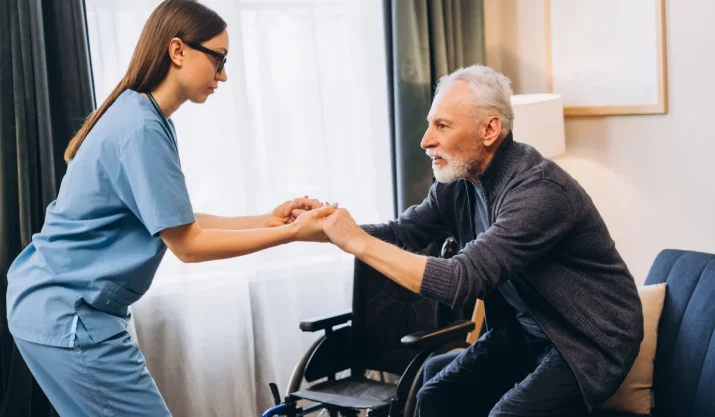
Helping a loved one move from bed to a chair is one of the most common — and most injury-prone — moments in daily caregiving. Getting transfer safety from bed to chair right protects not just the person you’re caring for, but your own back and shoulders too. These practical tips are written for California caregivers who want to do this well, every single time.
Key Takeaways
- Always position equipment and furniture before you start the transfer — small prep steps prevent big injuries
- Use your legs, not your back, and stay as close to your loved one as possible throughout the move
- Gait belts and transfer boards are simple, affordable tools that make transfers much safer for both of you
- If transfers are becoming too difficult or too frequent, mobility equipment like stairlifts or home lifts can reduce how often risky manual moves are needed
Why transfer safety matters more than most caregivers realize
Falls during transfers are one of the leading causes of injury for both seniors and their caregivers. A moment of imbalance — a slippery floor, a weak grip, an unexpected shift in weight — can send both people to the ground.
California homes come in all shapes and sizes, from single-story ranch houses in the Central Valley to older multi-story Craftsman homes in the Bay Area. Many of these homes weren’t designed with mobility in mind. That means caregivers are often working in tight spaces, around furniture that doesn’t move, or on tile and hardwood floors that offer little grip.
The good news is that most transfer injuries are preventable. The right technique, the right tools, and a little preparation go a long way.
Setting up the space before you begin
Good transfers start before you even touch the person you’re helping. Take a minute to set up the environment so nothing gets in your way mid-move.
- Lock the wheelchair or chair. If it can roll or tip, it will. Always lock wheels before the transfer starts.
- Clear the path. Remove rugs, footrests, or anything you might trip over. Area rugs on hardwood floors are a common hazard in California homes — consider removing them from high-traffic areas entirely.
- Adjust the bed height. If the bed is adjustable, raise or lower it so the transfer surface is close to the same height as the chair. Less height difference means less effort and less risk.
- Position the chair at an angle. Place the wheelchair or chair at a 45-degree angle to the bed, on the person’s stronger side if they have one. This shortens the arc of the transfer.
Proper body mechanics for the caregiver
This is where most caregiver injuries happen. Twisting your spine while lifting someone else’s weight is a fast track to a serious back injury.
Keep your back straight
Bend at your hips and knees, not at your waist. Think of it like a squat — your back stays long and neutral while your legs do the work.
Stay close
The closer you are to the person you’re transferring, the less leverage their weight has against your body. If you’re reaching out to grab someone, you’re already in a risky position.
Don’t twist — pivot
Move your feet to turn your body. Never rotate your spine while bearing weight. Small shuffling steps are the right move here.
Use a gait belt
A gait belt is a simple canvas or nylon belt that wraps around the person’s waist. It gives you a firm, safe grip without grabbing at clothing or skin. Most home health supply stores in California carry them, and they’re inexpensive. If you’re doing daily transfers, this is worth every penny.
Transfer safety from bed to chair: a step-by-step approach
Here’s a basic sequence for a standard assisted transfer. Adjust it based on how much the person can help and their physical condition.
- Sit them up first. Help the person move from lying down to sitting on the edge of the bed. Let them sit for 30–60 seconds before standing — this prevents a blood pressure drop that can cause dizziness.
- Put on footwear. Non-slip shoes or socks help prevent slipping during the stand. Bare feet or socks-only on tile floors are a common cause of falls.
- Position yourself. Stand in front of and slightly to the side of the person. Your knees can gently block their knees to prevent buckling.
- Rock and rise. Ask the person to lean forward slightly and use the momentum to help them stand. Count together — “one, two, three” — so the movement is coordinated.
- Pivot and lower. With small steps, turn together until the back of their knees touch the chair. Ask them to reach back for the armrests, then guide them down slowly.
For people who can bear little or no weight, a transfer board or a mechanical lift may be needed. If you’re not sure which is right for your situation, a physical therapist or occupational therapist can show you.
When mobility equipment changes everything
If you’re doing multiple transfers every day, your body will feel it over time. Reducing the number of high-effort transfers is one of the best things you can do for your own health.
Mobility equipment doesn’t replace good technique — it reduces how often that technique is needed. A stairlift means a loved one can get upstairs on their own, so you’re not assisting a stair climb twice a day. A vertical platform lift can help someone move between floor levels without any transfer at all. A home lift can open up the whole house to someone who would otherwise be stuck on one floor.
For getting in and out of the home, ramps eliminate the need for step-by-step assistance at the front door — a spot where transfers go wrong more often than you’d think.
Even one or two fewer difficult transfers a day adds up to a lot less strain on your body over weeks and months.
A note on outdoor spaces in California
California’s outdoor living spaces — patios, decks, backyard access steps — are used year-round in ways they simply aren’t in colder states. That means outdoor transfers happen more often here. If your loved one is using a wheelchair or walker and you have exterior steps, an outdoor stairlift or a ramp can make those spaces accessible without needing you right there every time.
Ready to make transfers easier at home?
If transfers are getting harder or you’re worried about keeping your loved one — and yourself — safe, the team at California Mobility is here to help. We’re a family-owned company serving Sacramento and communities all across California. We’ll come to your home, take a look at the layout, and talk through what equipment might actually help.
Request a free quote online or give us a call at (916) 560-0607. No pressure, just honest advice from people who understand what caregivers are dealing with.
Frequently Asked Questions
What is the safest way to do a transfer from bed to a wheelchair? The safest approach combines proper positioning, good body mechanics, and the right equipment. Lock the wheelchair, place it at a 45-degree angle to the bed on the person’s stronger side, use a gait belt for a firm grip, and pivot with your feet rather than twisting your back. If your loved one can bear some weight, a stand-and-pivot transfer is usually safest for both of you.
How do I protect my back when helping someone transfer? Always bend at your knees and hips — not your waist — and keep your back in a neutral position throughout. Stay close to the person you’re helping, and move your feet in small steps instead of twisting your spine. A gait belt helps you maintain a secure grip without awkward reaching, which is one of the most common causes of caregiver back strain.
What equipment helps with bed-to-chair transfers at home? A gait belt is the most basic and widely recommended tool for assisted transfers. Transfer boards work well for people who can’t stand but can slide. For people with very limited mobility, a mechanical or ceiling lift may be the safest option. A physical or occupational therapist can assess your specific situation and recommend the right fit.
Can mobility equipment reduce how often transfers are needed? Yes, in many cases it can. Stairlifts, home lifts, and vertical platform lifts allow seniors to move through their homes more independently, which means fewer moments where a caregiver needs to physically assist a transition between surfaces or levels. Fewer manual transfers means less daily strain on the caregiver and less fall risk for the senior.