


What happens to a home lift in a power outage in Sacramento?
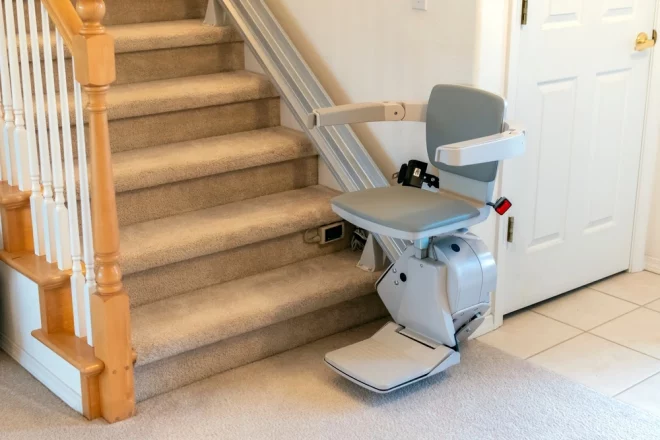
Table of Contents
- How most home lifts handle a power outage
- What to do if you're inside a home lift during an outage
- Sacramento-specific things to think about
- Does a power outage damage the lift?
- Comparing your options for multi-floor access
- Ready to find the right lift for your Sacramento home?
- Frequently Asked Questions
Power outages happen in Sacramento more than most people expect — from summer heat waves that strain the grid to winter storms rolling in off the Sierra Nevada. If you or a family member depends on a home lift to get between floors, a Home Lift power outage is a fair thing to think about before it happens. The good news is that modern lifts are built with exactly this situation in mind.
Key Takeaways
- Most home lifts sold today include a battery backup that lowers the lift safely to the ground floor during a power outage.
- You will not be permanently stuck between floors — every home lift is required to have a manual lowering or emergency release system.
- Sacramento’s summer heat waves and PG&E outages make battery backup a feature worth asking about specifically when you shop.
- A quick conversation with your installer about your home’s layout and outage history can help you pick the right backup option.
How most home lifts handle a power outage
The short answer is: they lower you safely to the nearest floor and let you out.
Most residential home lifts and vertical platform lifts sold today run on standard household current, usually 120V or 240V. When the power goes out, the lift stops. But stopping mid-shaft is not the same as being trapped.
Every code-compliant home lift is built with at least one way to get you down safely without grid power. The two most common options are a battery backup system and a manual lowering valve. Which one your lift uses depends on the model and the manufacturer.
Battery backup: the most common solution
Battery backup is the feature you’ll hear about most often, and for good reason. It does exactly what the name says — a rechargeable battery keeps the lift running long enough to complete the current ride or, at minimum, return to the ground floor.
Most battery backups can handle several complete trips up and down, not just one. That means if an outage hits while you’re upstairs, you can ride down, and if a family member is visiting, they can ride up and back as well.
The battery recharges automatically whenever grid power is on, so there’s no manual charging to remember. For Sacramento households that deal with rolling PG&E outages during heat emergencies, this is worth asking about specifically when you compare models.
Manual lowering for hydraulic lifts
Some hydraulic home lifts use a different approach. A hand-operated valve, usually located in a small panel near the lift shaft, lets a caregiver slowly lower the car to the ground floor using gravity. No power required at all.
This is a reliable backup, but it does require someone else to operate the valve from outside the lift. If you live alone, manual lowering is not as practical as a battery system. Make sure you understand which type your lift uses before you buy.
What to do if you’re inside a home lift during an outage
Stay calm. The lift is designed to stop safely, and the cab is not going to fall.
If your lift has battery backup, it may simply finish the trip or return to the lowest landing on its own. If it stops between floors, use the emergency button or intercom inside the cab to signal for help.
Do not try to force the doors open between floors. Home lift doors are designed to open only when the cab is level with a landing. Forcing them creates a fall risk.
If you live alone, it’s a good habit to keep a phone or medical alert device with you whenever you use the lift. That way you can reach someone quickly if the lift stops unexpectedly.
Sacramento-specific things to think about
Sacramento’s power situation has its own character. The valley heat can push temperatures above 105°F in July and August, and the strain on the grid can lead to planned or unplanned outages. If you’re in a foothill community like El Dorado Hills or Folsom, you may also see outages from fire-related Public Safety Power Shutoffs (PSPS) that PG&E runs in high-wind conditions.
For households where the lift is a daily necessity — not just a convenience — that kind of outage pattern makes battery backup less of an optional upgrade and more of a basic requirement.
Older Sacramento homes, particularly bungalows and two-story Craftsman-style houses in midtown or the Fab Forties neighborhoods, sometimes have limited panel space. It’s worth confirming with your installer that your electrical panel can support the lift and the battery charger without a panel upgrade.
Does a power outage damage the lift?
A clean power outage — the lights just go off — generally does not damage a home lift. The motor stops, the safety brakes engage, and the cab holds position.
Power surges are a different story. A sudden spike when power returns can stress the lift’s electronics. A whole-house surge protector is inexpensive insurance, and many lift manufacturers recommend one anyway.
If your lift is connected to a generator, make sure the generator output is clean and stable. Some older or lower-quality generators produce power that’s not consistent enough for a lift’s motor controls. Ask your installer about generator compatibility when you set up the system.
Comparing your options for multi-floor access
A Home Lift is not the only way to move between floors if you have mobility challenges. Stairlifts also run on battery backup systems and will complete a ride or return to the base in an outage. Vertical platform lifts — which are more compact than full home lifts and often used for shorter rises — typically include battery backup as well.
If your situation involves getting from ground level to a raised entry, a wheelchair ramp is worth considering. Ramps require no power at all and are completely outage-proof by design.
Ready to find the right lift for your Sacramento home?
The team at California Mobility has been helping Sacramento-area families choose and install home lifts for years. We can walk you through battery backup options, talk through your home’s layout, and make sure you’re not caught off guard the next time PG&E has a rough afternoon.
Request a free quote online or call us at (916) 560-0607. We’re happy to answer questions — no pressure, no obligation.
Frequently Asked Questions
Can I get permanently stuck in a Home Lift during a power outage? No. Every code-compliant Home Lift is required to have an emergency lowering system — either battery backup or a manual lowering valve. These systems are designed to bring the cab to the lowest floor and allow the doors to open so you can exit safely. Being briefly stopped between floors is possible, but being permanently trapped is not.
How long does a Home Lift battery backup last? Most battery backup systems will handle several complete trips between floors before the charge is depleted. The exact number depends on the model and the weight being carried. In a typical outage where you just need to get to the ground floor and stay there, the battery will more than cover that. Batteries recharge automatically when grid power is restored.
Will Sacramento’s summer heat affect my Home Lift’s battery backup? Extreme heat can reduce battery performance over time, just as it does with car batteries. Keeping the battery in a climate-controlled mechanical space rather than an unconditioned garage or closet helps extend its life. Regular service visits — which California Mobility recommends annually — include checking battery health so you’re not surprised.
Does a Home Lift work with a home generator? Many Home Lifts can operate on generator power, but compatibility depends on the generator’s output quality. Lifts need steady, consistent power, and some older or lower-cost generators produce power that’s too inconsistent for the motor controls. If you have a whole-house standby generator or are planning to install one, let your lift installer know so they can confirm compatibility before anything is connected.